
DESERT PATROL IX: MANILA V
BY GUIDO FRANCO
Presented here is the ninth part of Desert Patrol (une aventure sous les tropiques), a travel memoir by French Swiss photographer Guido Franco published in 1980 and introduced here. It concerns what Franco saw of the pederastic scene involving local boys and foreigners on his return to Manila from Pagsanjan in early 1980.
[Manila]
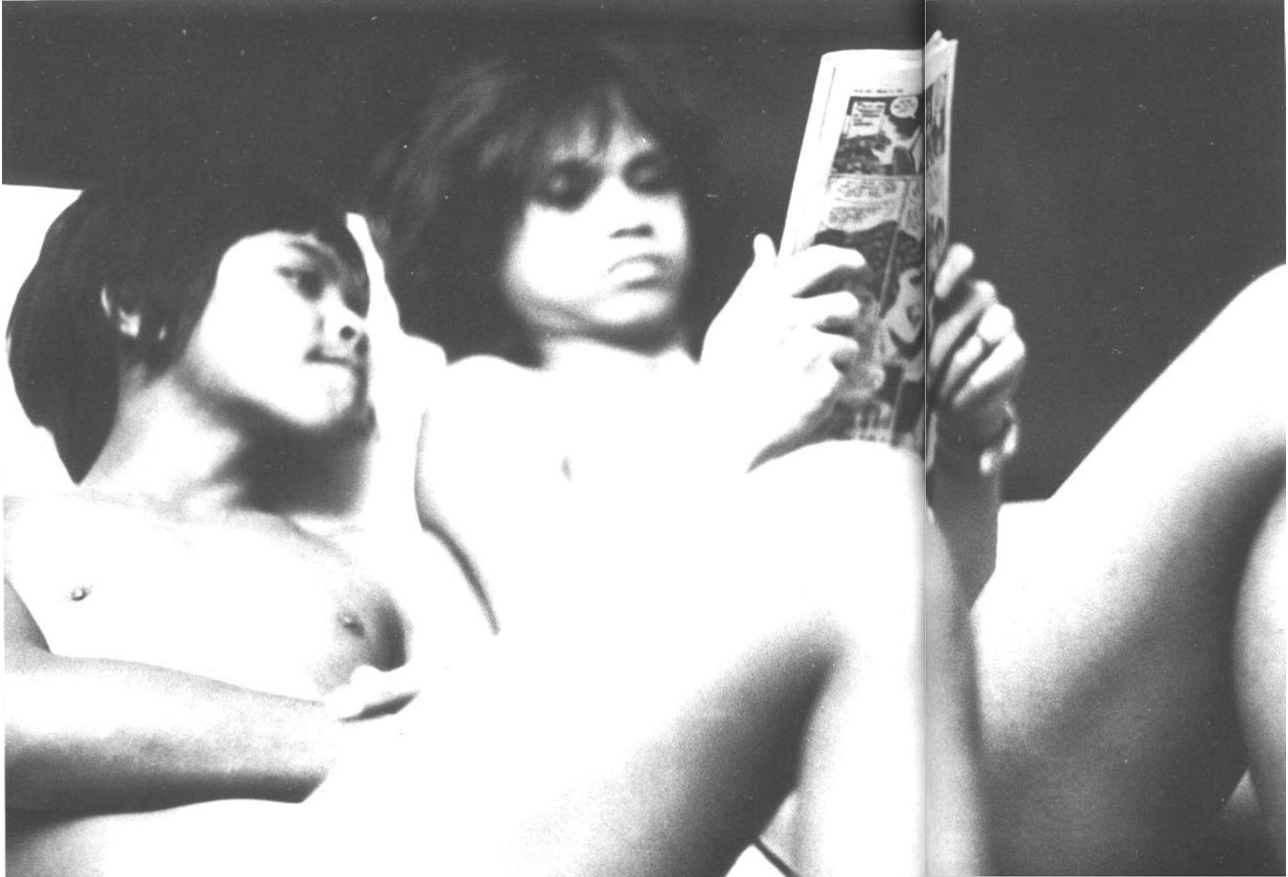
We’ve come back to Manila because Lapu-Lapu[1] has caught the clap, we don’t know exactly how. According to him it’s because he med Edwin at Harrison and that boy had the tulo.[2] In fact it seems rather that it was Irene, the girl he brought us one evening at Rizal Park. Where that becomes a little complicated is that neither Lapu-Lapu nor I truly screwed her. She was closed up like a piggy-bank, so I didn’t insist. It was only Eddie who jumped onto her with fervour and managed to get through, one may well ask why. How the business managed to make its way from Eddie who is full of beans to Lapu-Lapu who has a forty-degree fever remains a mystery which may be elucidated only by a profound knowledge of tropical customs.
So here we are back at San Carlos,[3] which would be of no account did Lapu-Lapu not go out on a ramble with his friends every time he felt better, and come back in the evening in a worse condition than ever. Does he think that I’m going to stay here for ever to watch over him! I myself want to go elsewhere, to the Islands, to Mindanao!
“To the Moros? We would be eaten alive.[4] You can go there alone. No question, I’m not going there.”
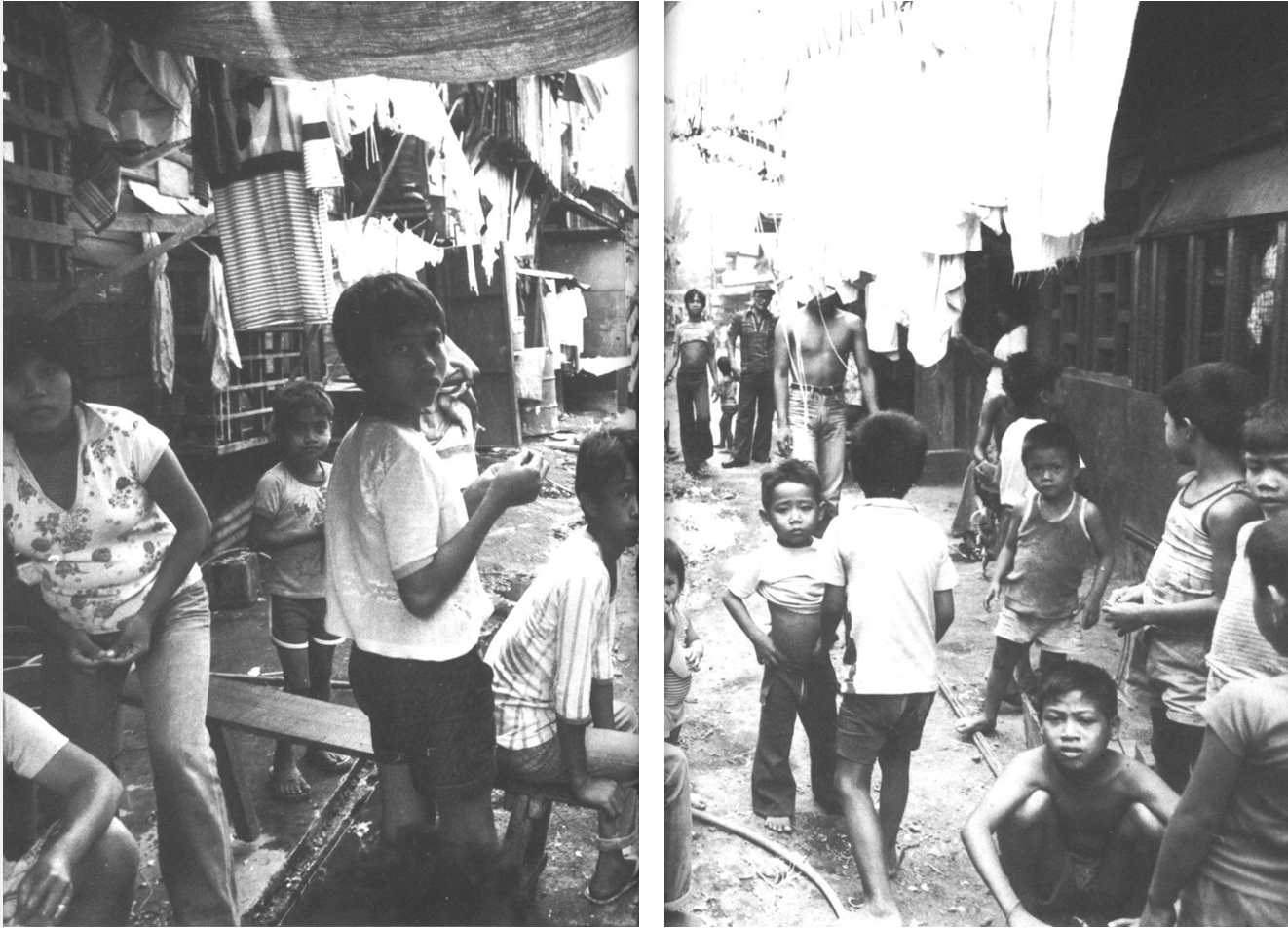
In fact he would rather go to his cousin A-Chi in Tondo. He takes her to Rizal Park with Eddie to do roller-skating, but there’s no question of touching her! “She’s my sister’s daughter,” Lapu-Lapu explains. “So in fact I’m her uncle!”
Every time we go to Tondo, his father clears the way:
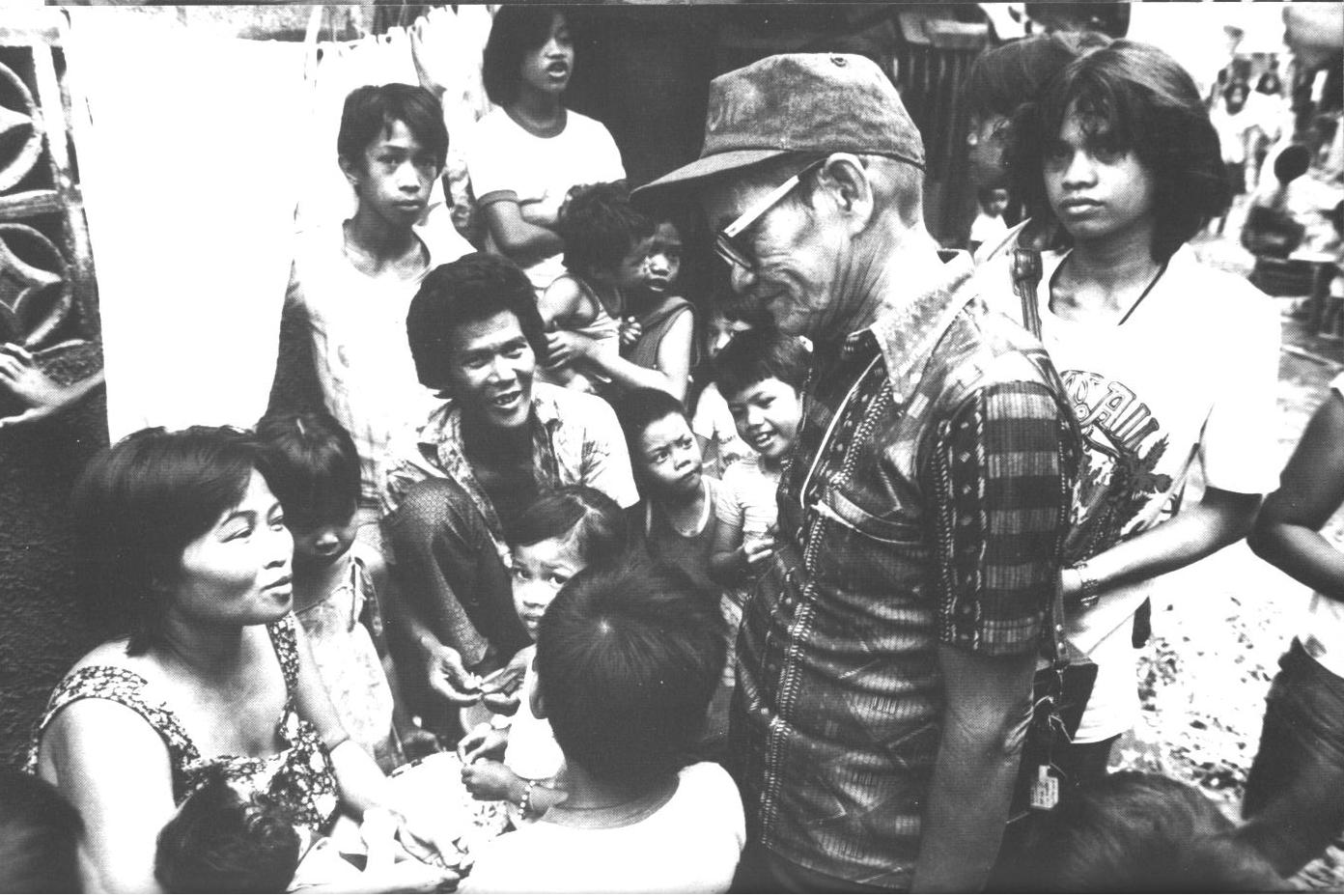
“It’s the tourist who took Lapu-Lapu to Europe,” he tells people, so they will let us go through. “Yes, my son will soon be leaving again, and will become an important person!”
While Lapu-Lapu, Eddie and Dong are dancing with their “nieces”, we are installed in front of the telly which is churning out twaddle “made in USA”, and some beer has been sent for. They even came back with a fan, borrowed from the neighbours. Children come in from the street, and go out. In fact there’s no discontinuity between the street and the house, it’s one and the same spectacle, it’s the life of the village, the life of the forest, which is continuing here right in the heart of Manila.
* * *
Also this evening, at the Cultural Centre, two steps from the “Philippines Plaza” (which is said to belong to Mme. Marcos[5]) the Bolshoi Ballet is giving a performance for the rich and elegant of Manila. Close by, around a garden where in the afternoon children can hire bicycles, some life-size photos, stretching for a kilometre, demonstrate to the people the history of the Marcos government and exalt the Philippine nation. The best photos have caressed with the tele-lens scenes of rural life, factories, well-polished little students waiting for the presentation of prizes or the visit of Mme. Marcos.
But ... no one is looking at them.
“Understand me well,” David explains to me. “In this kind of third-world country one has the advantage that a strong government permits the creation of a middle class that will later permit it the accession to a true democracy. If not, it’s Communism and they’ve had it.
It seems to me that I have already heard this kind of sham reasoning somewhere, but I have no wish to discuss it.
We are seated in the Fishnet at a table covered with peanut shells, and Jaime caresses his chin.
“You are very pogi[6],” says the cherub. “And I am very bacla.”[7]
Jaime is David’s most recent discovery. It seems that he comes from Alongapo via some American base.
Finally something special!
David keeps a jealous eye on him. No touching! the little marvel, it seems he intends to try him this evening, it’s promising, it’s promising.
“As you have doubtless understood, I’m a Professor of History,” David confides. “At the University of Philadelphia.”
But he has let drop the fact that now he is living at the San Carlos with two cases, which he parks, locked, on his chest of drawers (to see whether any one is stealing from him) and a black and white television set. His family is in the real-estate business and he has no worries. He introduces me to all the queers at the Fishnet, Jim, Joe, Morris (one might have thought retired customs officers, carpenters, telephone inspectors). And John, it seems he took some one to court in the United States and won. Now he wanders around with an Army pension, dressed entirely in black, and with a kind of Minox, to which I would have been completely indifferent had the fellow not constantly insisted on sitting beside me when I was taking photographs, stealing my angles and ideas, asking me for advice, wanting me to take him, his little pets, and so on.
According to what he tells me, he is not partially defective, and that is why the American Army pays him a pension. None of all that would be of any interest were it not for his insistence on photographing Raphael.[8] He follows him into the lift, and the restaurant. Yesterday evening he came into our room, he wanted that photo. All right, go on then. No, he wanted it naked. Is something wrong with your head, you idiot? Raphael wanders around naked at Ibiza, we told him, you only have to photograph him there, and at once the fellow wanted to go to Ibiza (where is it? he asks me) with his American army pension he would be bored stiff telling himself every day that he’s retarded, I suppose now I should give him my address in Ibiza, and I can already see him landing with his Minox to photograph Raphael.
* * *
As for Jaime, it was not a success. The following day I saw David again at the Fishnet, but without his cherub.
“And so, your little marvel?”
David shakes his head.
“For me a boy has to be perfect.”
“What more can you want than that boy,” I protest. “He looked as roguish as can be, and he was even quite funny.”
“He let me down while we were making love,” David told me. “Yes, I had to go and answer the phone, and that was it, phut! he’d gone.”
“A detail,” I suggest.
“What do you mean a detail? I tell you again, for me a boy has to be perfect. And then, he is interested only in money.”
“Well then, give him the few pesos he asks for. Being in the real estate business yourself, you can easily offer him that.”
But David no longer wants to listen.
“You don’t understand. Once a boy has disappointed me, he has disappointed me. I’m an idealist. And then look, I told him not to smoke, and there he is, smoking in the street.
Good gracious! Why should Jaime stop smoking to please a Yank, I ask myself. Jaime is well advised not to give a damn about the Yank and the other pedos. Certainly he doesn’t give a damn about me, even, but I don’t give a damn about him.
I am well aware that I am in the great queer circus of the Philippines, and that everyone has a part to play. The punter pays. The pretty boy responds to him for his money, and especially for his patter.
“You are very pogi,” said Jaime, to have David on. “And I am very bacla!”
“You are very pogi!” he repeats to the Yank, who in the end becomes irritated.
“All he wants is money. He has no true love for me.”
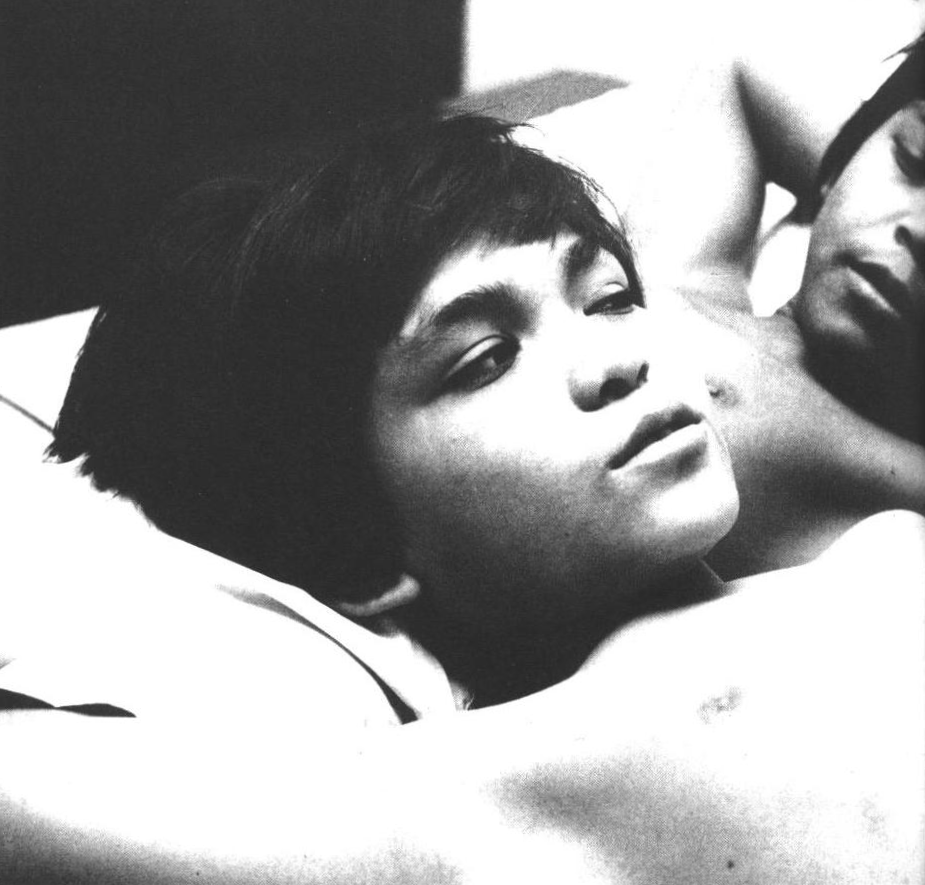
Hey, David, wake up! What about you, do you have any love for this little rogue? Or are you only aiming at his bum, because your governesses stopped you from touching there when you were that age?
Jaime loves nothing, and he has good reasons. He only gives his performance, he and his friend Nardo, and Alex who sleeps between times.
“You want me to fuck Nardo?” Jaime asks me when I got him to come for some photos.
“Well, try it,” I told him, “to see.”
Nothing at all, obviously, pure cinema. Nardo climbs onto Jaime (or Jaime onto Nardo?) and they fuck impressively for you, let your cameras turn, no I’m not complaining about them, they don’t screw each other this way as much as our boys at School.
God knows I am telling the Truth!
I too have caught the tulo. I don’t know how, probably Irene, even though …
“I never want to see her again,” I shouted at Lapu-Lapu.
See what a state I’m in now, having to gobble up antibiotics and so on.
We called a doctor, who practises not far from the Hilton; he came to San Carlos on foot for fifty pesos, not dear, but even after swallowing entire boxes of all the junk he prescribed for me, nothing worked. It was because—he told me—the tulo of Manila isn’t like any old clap as it exists elsewhere. Here there have been the Spanish, the Yanks, the Japanese, and now the charters from Bosch Italy. It’s a kind of clap that is not bothered by any little antibiotic. Nothing works.
Now I wander around hugging the walls, I no longer see clearly, I hardly any longer know my name, and in the evening when I go to the Bahag with Dana and Mercy I seem to be going through the end of the world. There is no longer any question of going to Mindanao. It’s an achievement if I manage to get myself to the Fishnet.
“If you like, I will introduce a Frenchman to you,” Lapu-Lapu proposes. “He is very keen to meet you.” A rendezvous was made at the Fishnet, and we had to go there quickly since I had obviously forgotten everything.
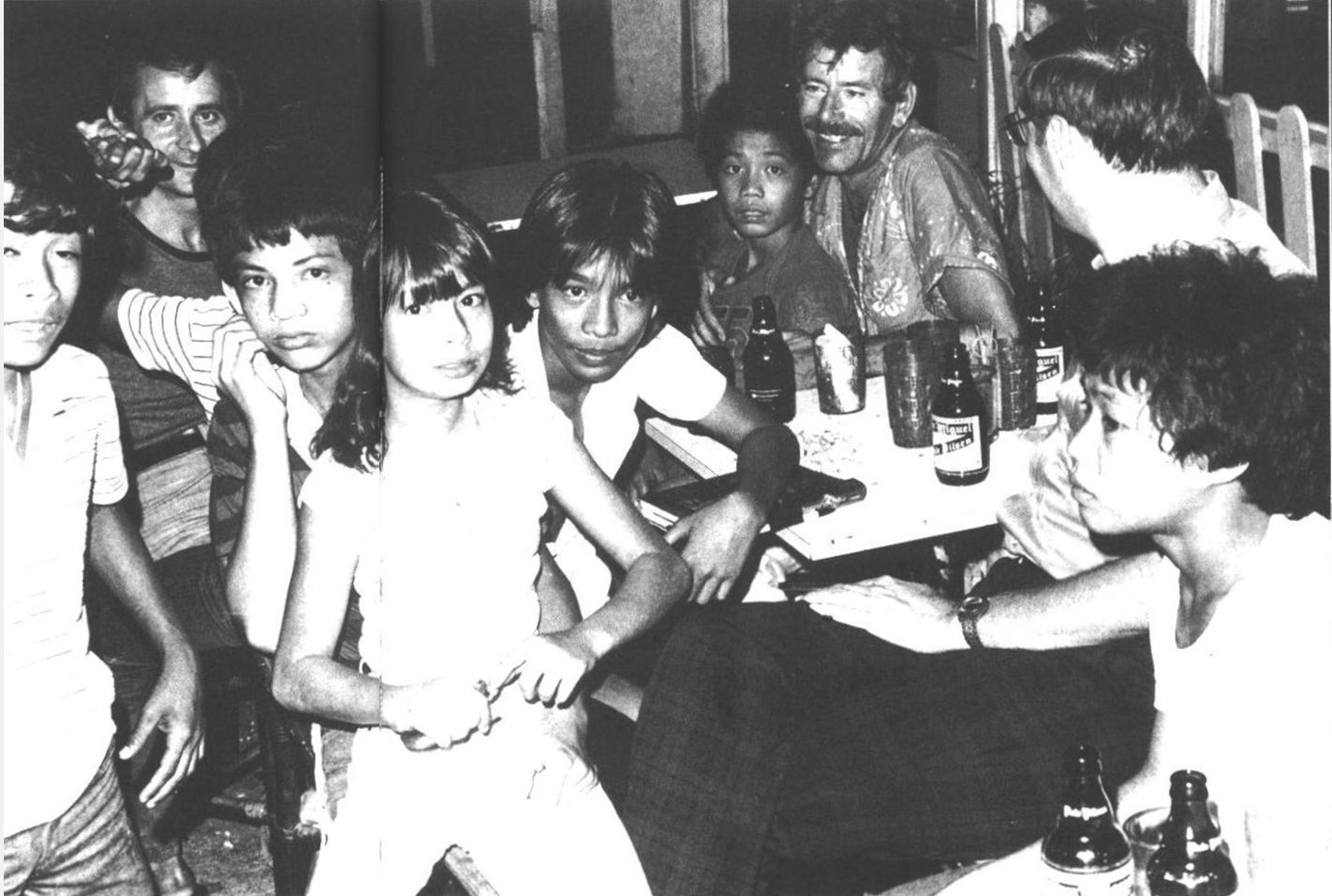
Jean-Charles was still there, collapsed at a table. I had imagined him tall and handsome, but no, he was a Quasimodo. He could hardly emerge from behind a table to shake my hand, among the peanut shells and abandoned beers. He had three or four kids around him, plus a customs officer and a telephone inspector, the usual scene.
“Is that your little sweetheart?” I ask him, indicating a little kid with prominent ears.
“Roland, you mean? Ah no, I’m having some problems with him in fact.”
“Do you want to take him to France?”
The descendant of Louis XIV and Richelieu fixed his gaze on me (he must have had one too many).
“To France, to Thailand, all over the place! But that’s just it, he doesn’t want to come.”
“That would certainly upset your plans,” I concede.
He clutches me.
“I’ll tell you what it is. He’s infatuated with a tart, Lola. I myself don’t care if he screws that girl (I’ve screwed her myself, he says jovially), but I believe she’s having a bad influence on him. Since he’s been with her, he avoids me. I’ve even beaten him.”
“It’s becoming clearer,” I acknowledge.
“But the problem is that I love him, he is under my skin, he is Jean-Charles. If only I could convince him to ditch Lola.”
“Yes, that would be a good move, I admit. And I, how do I fit into the picture?”
“Well, you have a definite experience. You took Lapu-Lapu to Europe, isn’t that so?”
“Well yes, but I don’t see where that gets us, all that.”
“You could perhaps give me some advice. On the passport question, did that go well?”
“Fine, I assure you. One or two false declarations, one or two signatures, a thousand pesos, and Bob’s your uncle. The agencies take care of everything.”
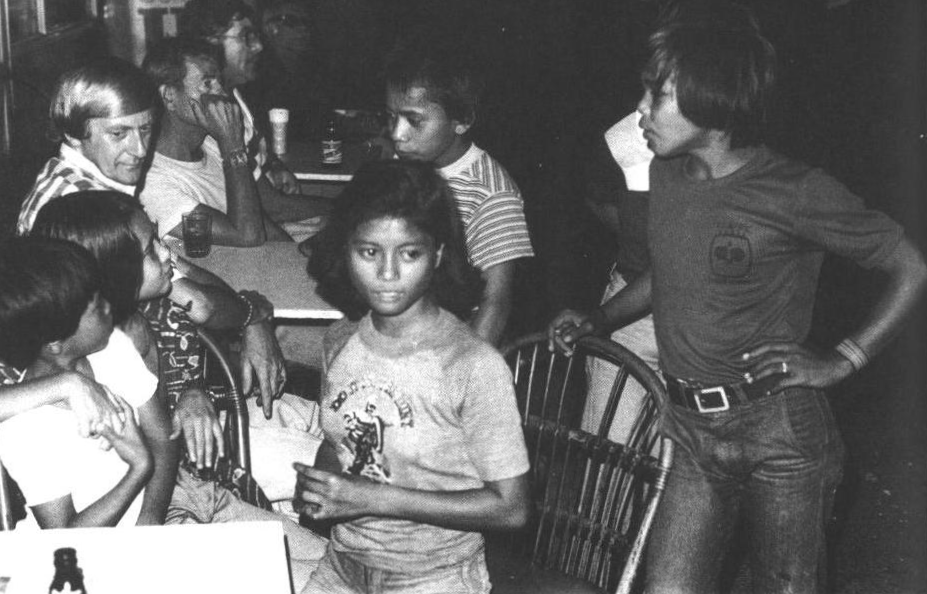
“You see!” He strikes the table with his fist. “That’s what I endeavour to explain to this Roland, but he won’t listen to me. You understand me,” he said, holding me with both hands, “Roland has a bad character.”
“Haven’t you been a little hard with him there,” I hazard, resorting to all my knowledge of applied psychology.
“Ah! How did you guess that? Yes, I think the last thrashing I gave him left him rather shaken. And now he is frightened of going with me.”
“Hello,” he said, “here he is!”
From a distance I picked him out with his foot-soldier’s kepi from the 1914 war, the same one that Jean-Charles sported. He emerged from a dive at United Nations, still with his Lola!
“Is he coming over here?”
“Not at the moment, he’s not coming! He’s not coming!”
* * *
Eddie[9] has not been seen for several days, he has disappeared, and I have just understood why. The rogue had robbed a client while he was sleeping (drunk?) at the Dutch Inn, and he got away in the early hours with three hundred dollars, several hundred pesos, and a gold lighter. Since then he had been hiding in Quezon City at his mother’s place, and no longer emerged except to go to the cinema.
The good life, eh!
The client had sworn that he would catch Eddie, so the boy had bought a revolver with the cash, and some marihuana that he shared with his friends so they would keep their mouths shut.
He came this evening (without his revolver) to San Carlos, but he had to be very careful not to be seen, for fear of meeting that tourist!
As he left, he put a kitchen knife into the belt of his jeans (one never knows) and he was determined to defend himself.
Not only that, his father had just come back from a trip and had obviously discovered that the little rascal was no longer going to school, to say nothing of the tattoo on his bum! Things were going to get hot!
But Eddie is so high on marihuana that he fears nothing!
* * *
“By the way, I was a Professor of History, did I tell you?” David asked me.
“Hm . . . and you spend eight months of the year here screwing boys. Haven’t you better things to do? Don’t you even get bored?”
I’m sitting on his black plastic sofa, and he has taken a cola from the fridge. We have come to finish the evening off in his room.
“No,” he said. “I have brought a few classics.”
He even wanted to show me a rare copy of Lao-Tzu, and an unpublished version of Confucius, but for the moment that did not interest me.
His little kid was sitting next to us, looking totally bored.
“Why don’t you take a photo of Jaime,” he suggested.
David sent the boy off to the bathroom to get undressed; he came back pink and naked (he is of mixed race) with a towel around the hips, and playing the fool to amuse David.
“You can take the towel away, the gentleman is a friend,” the History Professor whispered to him.
We were wondering what kind of a bum his little sweetheart could have for him to dedicate so much interest in it. Upon examination it was a very ordinary bum of a thirteen or fourteen-year-old; he had a minuscule prick over which at home a kid in kindergarten would blush, and in contrast, well rounded balls, to which the Professor drew my attention, and indeed the boy was quite proud of them, lying on the bed and showing them to anyone who wanted to see them.
So then I had to take a photo of his little darling, standing next to the television.
After all that, it isn’t surprising that the boys of Manila have only a poor opinion of the baclas[10] and other tourists. How could you be respected when you keep five kids in your room in the greatest dissoluteness, and you snap them in Polaroid, with black underwear embellished with lace and glass beads. It isn’t serious. It’s not necessary to have gone through the University to understand that.
“You are all sex maniacs,” yells little Dana, while David, John and his camera, myself and the other baclas, are doubled up with laughter at the Fishnet during the hour for nippers and iced beer. Jaime is fondling David under the chin, and then he starts to take off his clothes in the middle of the street, to show us his briefs.
“I really don’t see what you have to reproach that boy for,” I tell him, but David is ill at ease. His Jaime is bare-bottomed right on the United Nations footpath, and he is miming the movements of love, yelling:
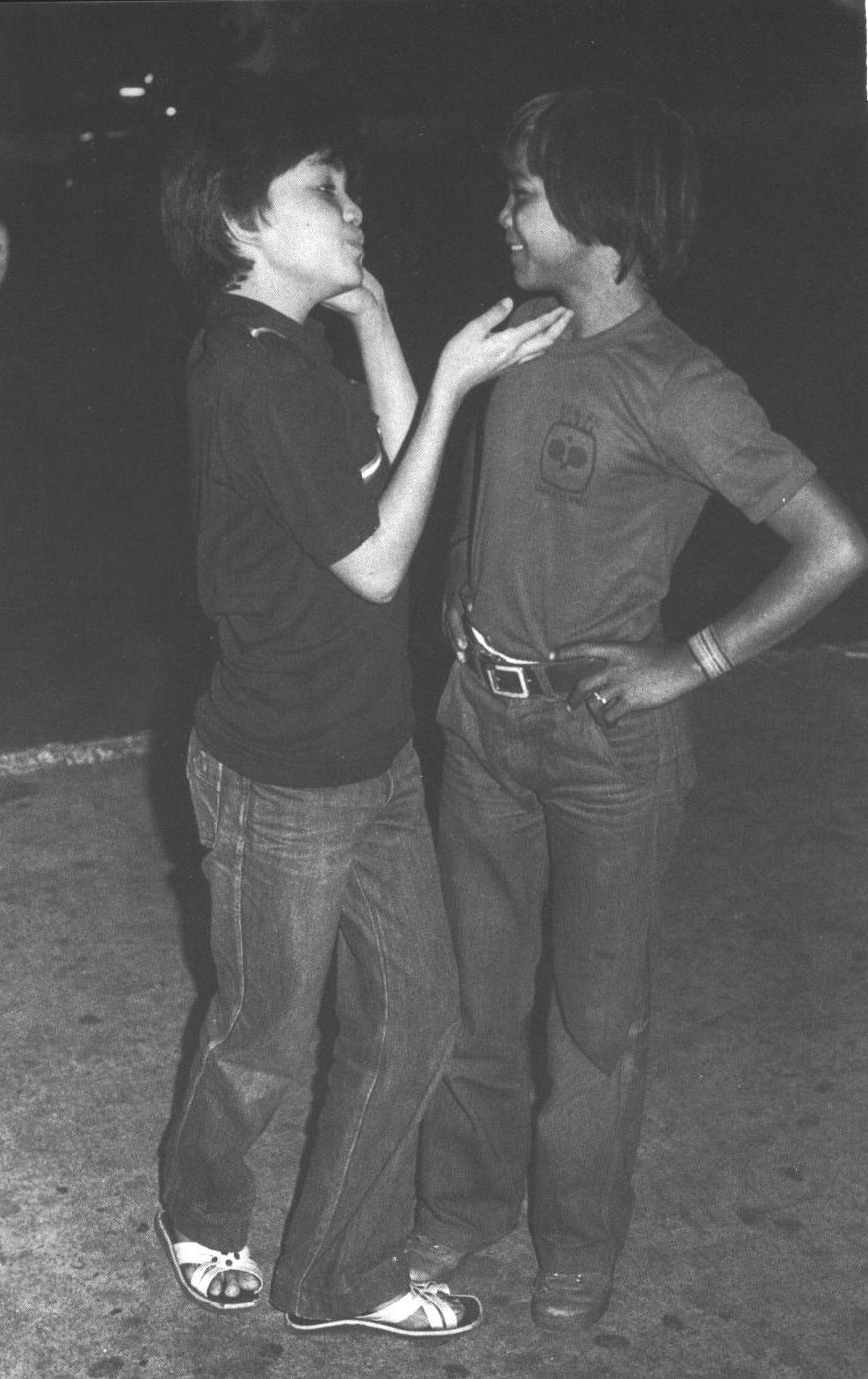
“You are very pogi, David! and I am very bacla!”
“It really is necessary to draw the line somewhere,” David tells me, “otherwise, perhaps you don’t realize, but inside there are sailors with tarts, proper people, and when they are drunk they will come out and bash up the queers.”
But Jaime is not stupid, he pulls up his jeans and starts dancing with Nardo so that I can snap them, John dashes up with his Minox, I find this performance sickening, but it keeps me alive.
In Paris people queue up in front of the cinemas, on Sundays they overrun the Museums, and it is because they don’t have a true life.
Here it is chaos, but at least one is right in the middle of it.
Culture exists so that every one is bored stiff in accordance with pre-established plans. All of that was carefully devised. At the Musée des Invalides they keep the remains of Napoleon’s trousers, so that people can go and look at them, touch them, suck up to them. Pariscope brings out two thousand films that you can go and see, but there’s no screwing in the auditoriums. You are permitted to stuff yourself with chocolate ice-cream during half an hour of advertising in the half light. Grub is always authorised. Get fat and die! And in the evening, if you have worked well, you have a right, in your Roche-Bobois interior, to the most recent duel of Chirac-Rocard-Mitterand, your favourite clowns. The races are commented for you by Léon Zitrone, and to-morrow it will be on again, have no doubt of it, everything is anticipated so that nothing changes, neither the queues in front of your insipid cinemas, nor your clowns, nor Napoleon’s pants, decently in place at the Museum of War.
So I prefer the brothel. Nardo and Jaime dancing on the footpath, little Dana (suck only) and the baclas collapsed on their chairs, human wrecks from the West who have come here on charter flights, with their Minoxes, their Polaroids, their collections of black briefs enhanced with sequins, their shifty retired teachers and defrocked priests.
I am still hanging about in Manila. The heat and the illness have turned me into a zombie, hugging the walls, and going out only at night.
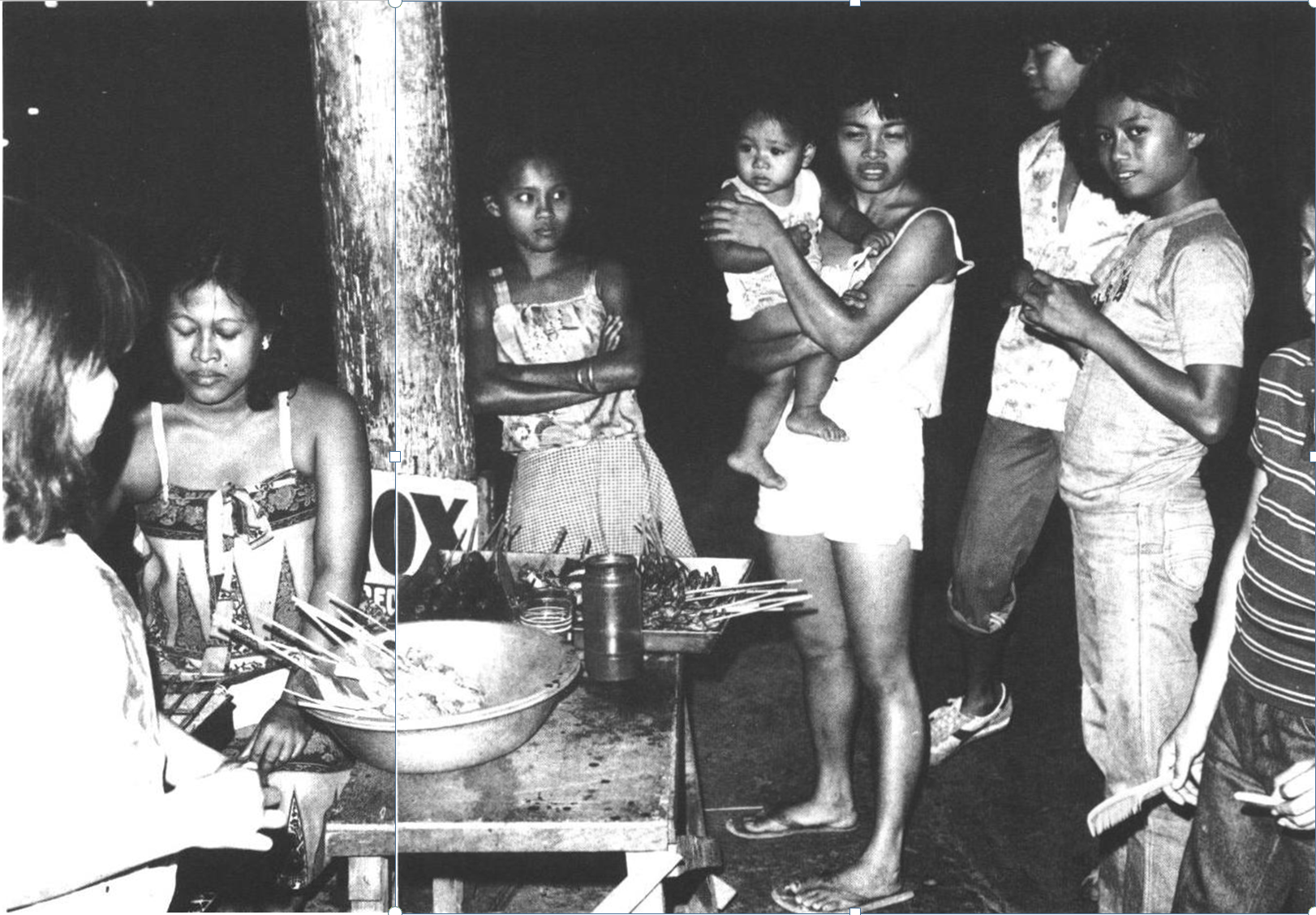
Dana has come to sleep at San Carlos. She coughs all night long and the next day she has to be treated for lice. She comes from Balik-Balik, but lives under the Quiapo bridge with a woman she calls her mother who sells fruit at the market over there.
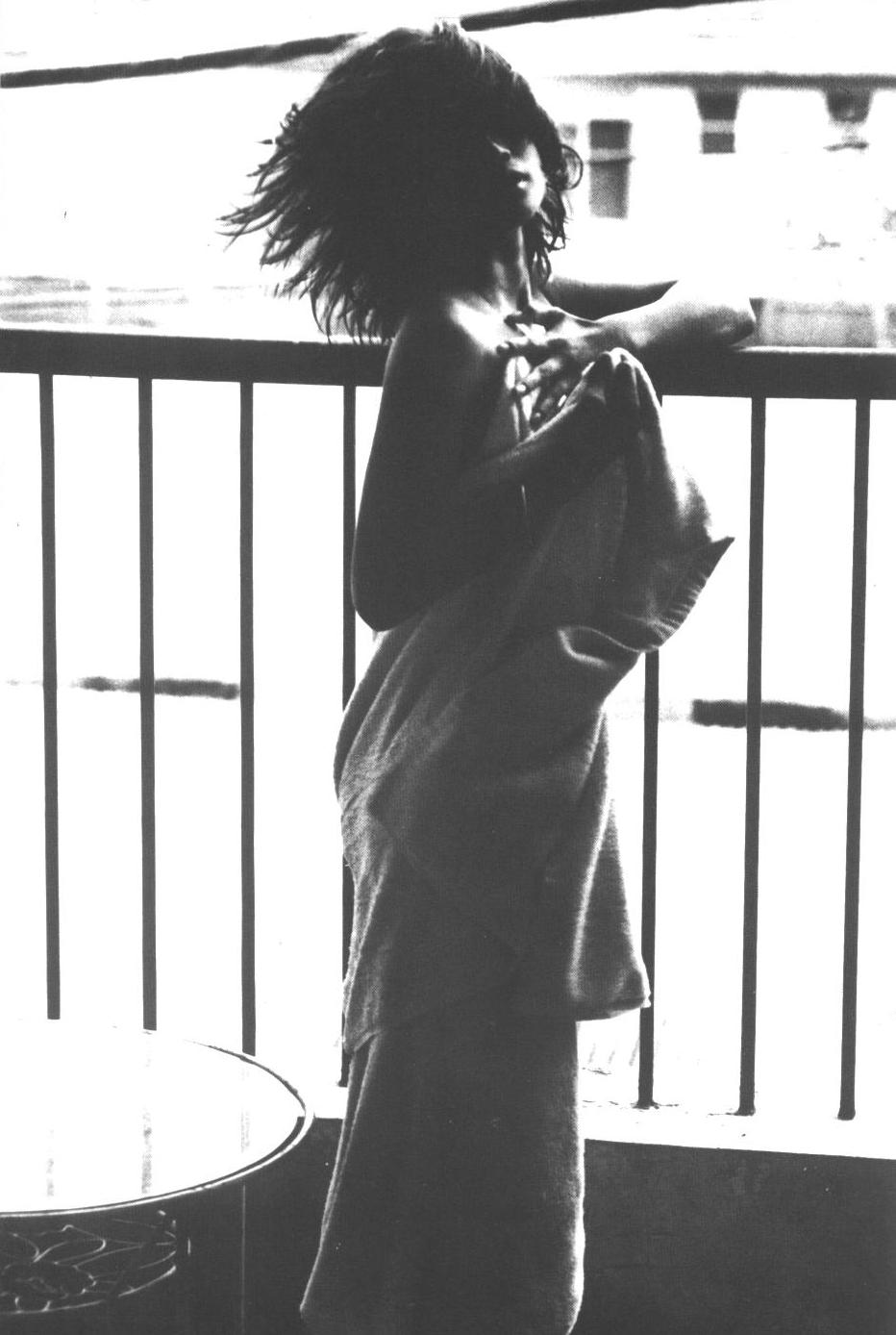
Dana and her friend Mercy are always squabbling, but in fact they are a team and take care of clients from the Fishnet.
“Suck only,” says Dana.
Mercy suddenly appeared among the peanuts and baclas, and in John’s Minox. She is a call-girl at the Fishnet but as far as I am concerned she’s the Venus de Milo. I no longer leave her, I take her into my bed, to the Sheraton pool, to the Bahag, and to Hakata, the Japanese restaurant. Dana waits for her at the exit to see what I have given her. She has already pinched her jeans, her T-shirt with the bulb and “Disco-Flash” on it, and Mercy did not even protest. She purrs tranquilly in the apartment, and sleeps in broad daylight. Dana told her to pinch my camera, but Mercy doesn’t listen to her.
“And what’s that! you’re making love with that character! and what has he given you in payment?”
* * *
I went with Mercy to see her mother, who lives in a shanty town at Pasay, close to Mme. Marcos’s palm trees.
She jumped on the cash that her daughter had in her pocket to buy some beer, and, wearing shorts, she came to the car, with two kids, one of which had half its nose eaten away.
“The rats,” I am told.
I don’t know whether to laugh. I judge it wiser not to laugh. After all, it was perhaps really the rats.
Mercy’s mother finishes a beer.
“A very bad girl, Mercy,” she says. “I no longer know where she goes or what she does. Her father? He killed himself recently. He was one of the Manila mayor’s bodyguards. Didn’t she tell you? In any case she never comes home, perhaps she doesn’t even know. And I, what am I going to become?
Dana and Mercy sleep in the Ford Fiera of the Disaster Brigade which is parked at United Nations, right opposite the Fishnet. Sometimes they try to go into the Bahag, but Dana is regularly kicked out for being too boisterous (!) and creating incidents, says the manager. In fact the Bahag is a bar for slimy queers (you should watch them for an hour wriggling half naked in head-hunter costume, to disco-rock music) and Dana, being a girl, would disturb them in their religion.
* * *
This evening there was, moreover, another scandal. Suddenly there were two camps, taking sides with one person or the other. There was also a great beanpole who slapped a fellow, blows returned, cries, everyone going down the stairs in a state of great excitement, they threw stones at each other, and leaped into jeepneys!
They were arguing about a tourist at San Carlos. The girl had gone to tell him that his boy was a drug addict and a thief. The boy shouted that this was a manœuvre to supplant him! In short, the tourist was obliged to get rid of the lot of them in one go, which was going to make an empty space for him seeing that there had been seven or eight in his room.
[1] Lapu-Lapu was a Manileño boy of 14 who had been Franco’s special friend for a year, and even been to Europe with him. [Website note]
[2] Harrison Plaza was Manila’s first shopping-mall. Opened in 1976, it quickly became a popular place for city kids to hang out and a popular place for foreign boysexuals to meet interested local boys. The tulo is tagalog (Manileño dialect) for gonorrhea. [Website note]
[3] The San Carlos Apartment Hotel, 777 San Carlos Street, was the Manila hotel Franco stayed both in the previous year and the one now described. [Website note]
[4] Reference to the revolt of the Muslims in the South of the Archipelago against the Manila government. [Author’s note]
[5] Imelda Marcos was the wife of the President and herself Governor of Metro Manila [website note].
[6] Pogi: beautiful. [Author’s note]
[7] Bacla: queer. [Author’s note]
[8] Raphael Franco was Guidoo’s son (usually with him), born in Rome in 1967 and thus aged 12 or 13. [Website note]
[9] Eddie was another Manileño of 16 who had been the author’s friend for a year. [Website note]
[10] A bacla in tagalog (the dialect of Luzon) is a transgender male (these being documented for many centuries in much of south-east Asia). [Website note]
Comments powered by CComment