
GOODBYE TO ALL THAT
BY ROBERT GRAVES
Robert von Ranke Graves (24 July 1895 – 7 December 1985) was a prolific English writer, whose best-known works were probably his historical novels, I, Claudius and Claudius the God. His memoir Good-Bye to All That was first published by Jonathan Cape in London in 1929, when he was thirty-four. Presented here is everything in it of Greek love interest in the 1957 edition.
3
A comment following his description of his one term at Penrallt “in the hills behind Llanbedr” in Wales, one of the six preparatory schools he attended:
In English preparatory and public schools romance is necessarily homosexual. The opposite sex is despised and treated as something obscene. Many boys never recover from this perversion. For everyone born homosexual, at least ten permanent pseudo-homosexuals are made by the public school system: nine of these ten as honourably chaste and sentimental as I was. [p. 23]
6
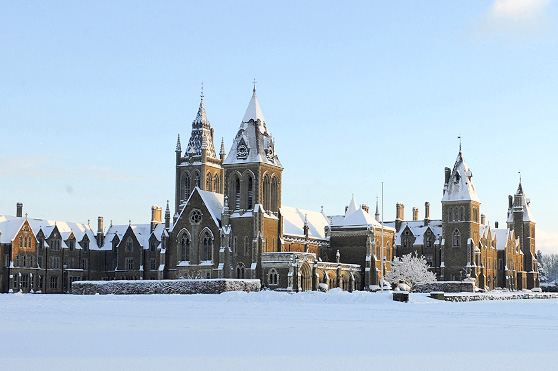
On his time at the public school, Charterhouse in Surrey from 1909 to 1914:
G.H. Rendall, the then Headmaster at Charterhouse, is reported to have innocently said at a Headmasters’ Conference: “My boys are amorous, but seldom erotic.” Few cases of eroticism, indeed, came to his notice; I remember no more than five or six big rows during my time at Charterhouse, and expulsions were rare. The housemasters knew little about what went on in their houses, their living quarters being removed from the boys’. Yet I agree with Rendall’s distinction between “amorousness” (by which he meant a sentimental falling in love with younger boys) and eroticism, or adolescent lust. The intimacy that frequently took place was very seldom between an elder boy and the object of his affection — that would have spoiled the romantic illusion — but almost always between boys of the same age who were not in love, and used each other as convenient sex-instruments. So the atmosphere was always heavy with romance of a conventional early-Victorian type, complicated by cynicism and foulness.
7
On how half-way through his second year at Charterhouse, Graves wrote to his parents saying they should remove him from the school and they responded by reporting what he had told them to his housemaster:
I had withheld any account of sex-irregularities in the house,[1] so all that the housemaster did was to make a speech that night, after prayers, deterrent of bullying in general. […]
At Charterhouse, no friendship might exist between boys of different houses or ages (though related, or next-door neighbours at home), beyond a formal acquaintance at work or organized games like cricket and football. Even if they played a friendly game of tennis or squash-rackets together, they would never hear the last of it. [p. 41]
8
In the “Long Quarter (spring term) of 1913:
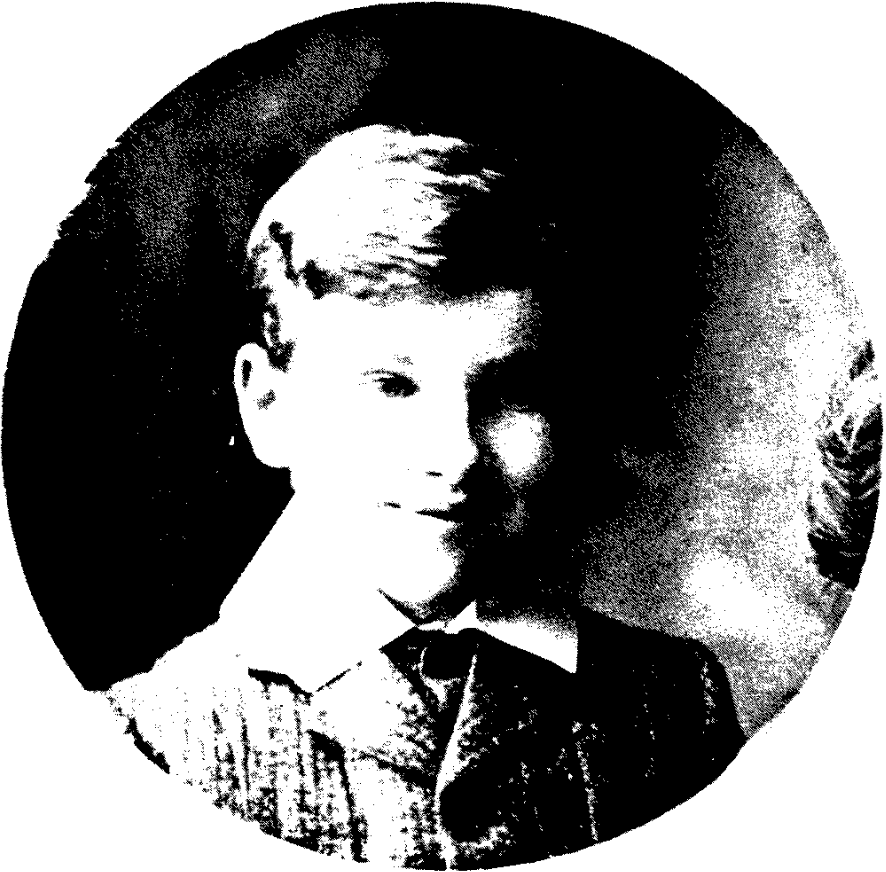
[…] in my fourth year I fell in love with a boy three years younger than myself, who was exceptionally intelligent and fine-spirited. Call him Dick.[2] Dick was not in my house, but I had recently joined the school choir and so had he, which gave me opportunities for speaking to him occasionally after choir practice. I was unconscious of any sexual desire for him,[3] and our conversations were always impersonal. This illicit acquaintance did not escape comment, and one of the masters, who sang in the choir, warned me to end it. I replied that I would not have my friendships in any way limited, pointing out that Dick was interested in the same things as myself, particularly in books; that, though the disparity in our ages might seem unfortunate, a lack of intelligence among the boys of my own age obliged me to find friends where I could. Finally the headmaster[4] took me to task for it. I lectured him loftily on the advantage of friendship between elder and younger boys, citing Plato, the Greek poets, Shakespeare, Michelangelo, and others, who had felt as I did. He let me go without taking any action. [pp. 45-6]
In Graves’s fifth year, 1913-4:
The Poetry Society died about this time — and this is how it died. Two of its sixth-form members came to a meeting, and each read a rather dull and formal poem about love and nature; none of us paid much attention to them. But the following week they came out in The Carthusian, and soon everyone began pointing and giggling; because both poems, signed with pseudonyms, were acrostics, the initial letters spelling out a “case”. “Case” meant “romance”, a formal coupling of two boys’ names, with the name of the elder boy first. — In both poems the first names mentioned were those of bloods.[5] It was a foolish act of aggression in the feud between sixth form and the bloods. But nothing much would have come of it, had not another of the sixth-form members of the Poetry Society been idealistically in love with one of the smaller boys whose name appeared in the acrostics. In rage and jealousy he went to the headmaster (Frank Fletcher, who had superseded G. H. Rendall), and called his attention to the acrostic — which otherwise none of the masters would have noticed. He pretended not to know the authors; but though he had missed the particular Poetry Meeting at which the verses were read, he could easily have guessed them from the style. Meanwhile, I had incautiously told someone the authors’ names; so I got dragged into the row as a witness against them.
The headmaster took a very serious view of the matter. The two poets lost their monitorial privileges; the editor of The Carthusian who, though aware of the acrostics, had accepted the poems, lost his editorship and his position as Head of School. The informer, who happened to be next in school order, succeeded him in both capacities; he had not expected this development, which made him most unpopular. His consolation was a real one: that he had done it all for love, to avenge the public insult done his young friend. The Poetry Society was ignominiously dissolved by the headmaster’s orders. [p. 50]
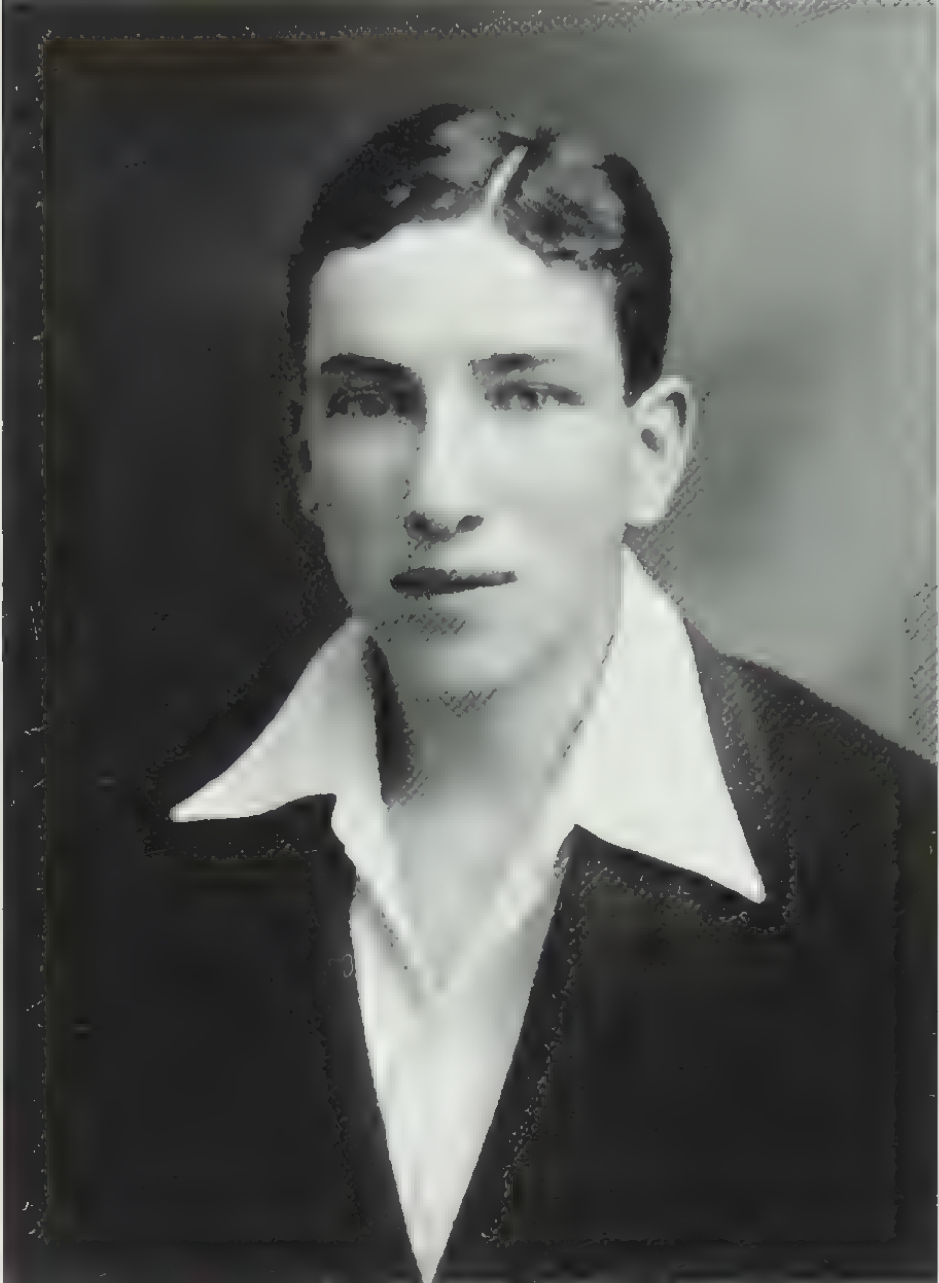
Poetry and Dick were still almost all that really mattered. Life with my fellow house-monitors was one of perpetual discord. I had grudges against every one of them, except Jack Young and the head-monitor. Young, the only blood in the house, spent most of his time with fellow-bloods in other houses. The head-monitor was a scholar who, though well-principled, had been embittered by his first three years in the house, and now stood too much on his dignity. He did more or less what the other monitors wanted him to do, and I hated having to lump him in with the rest. My love for Dick provoked a constant facetiousness, but they never dared go too far. I once caught one of them in the bathroom, scratching up a pair of hearts conjoined, with Dick’s initials and mine above them. I pushed him into the bath and turned the taps on. The next day, he got hold of a manuscript note-book of mine which I had left, with some other books, in the monitors’ room. He and all the others, except Jack Young, annotated it critically in blue chalk, and signed their initials. Jack would have nothing to do with this ungentlemanly behaviour. When I discovered what had been done, I demanded a signed apology, threatening that if it did not arrive within five minutes, I would choose one of them as being solely responsible and punish him. I was now off to take a cold bath, and the first monitor whom I met afterwards would get knocked down.
Whether by accident, or whether he thought that his position protected him, the first I met in the corridor was the head-monitor. I knocked him down. It was the time of evening preparation, from which we were excused. But a fag happened to pass on an errand, and saw the spurt of blood; so the incident could not be hushed up. Presently the housemaster sent for me. He was an excitable, elderly man, with some difficulty in controlling his spittle when angry; a trait that had earned him the name of “Gosh” Parry. I went to his study, where he made me sit down in a chair, then stood over me, clenching his fists and crying in falsetto: “Do you realize that you have committed a very brutal act?” His mouth bubbled with spittle. I jumped up and clenched my fists too, saying that I would do the same thing again to anyone else who, after scribbling impertinent remarks on my private papers, refused to apologize. “Private papers? Filthy poems!” said Gosh Parry.[6]
I had another difficulty with the headmaster as a result. But, this being my last term, he allowed me to finish my five years without ignominy. I puzzled him by the frankness with which I confessed my love for Dick, when he re-opened the question. I refused to be ashamed, and heard afterwards that he had described this as one of the rare friendships between boys of unequal ages which, he felt, was essentially moral. A week or two later I went through one of the worst quarters of an hour of my life on Dick’s account. When the master who sang in the choir warned me about exchanging glances with Dick in chapel I had been infuriated. But when one of the choir-boys told me that he had seen the master surreptitiously kissing Dick once, on a choir-treat, I went quite mad without asking for any details or confirmation. I went to the master and told him that unless he resigned, I would report the matter to the headmaster — he already had a reputation in the school for this sort of thing and kissing boys was a criminal offence. No doubt my sense of moral outrage concealed a murderous jealousy. When he vigorously denied the charge, I could not guess what would happen next. But I said: “Well, come to the headmaster and deny it in his presence.” He asked: “Did the boy tell you this himself?” “No.” “Well, then I’ll send for him, and he’ll tell us the truth.’
Dick was sent for, and arrived looking very scared. The master said menacingly: “Graves tells me that I once kissed you. Is that true?’ Dick answered: “Yes, it is!” So Dick was dismissed, the master collapsed, and I felt thoroughly miserable.[7] He undertook to resign at the end of the term, which was quite close, on grounds of ill-health. He even thanked me for speaking directly to him and not going to the headmaster. This was the summer of 1914; he went into the army and was killed the following year. Dick told me later that he had not been kissed at all, but he saw I was in a jam - it must have been some other member of the choir! [pp. 51-3]
16
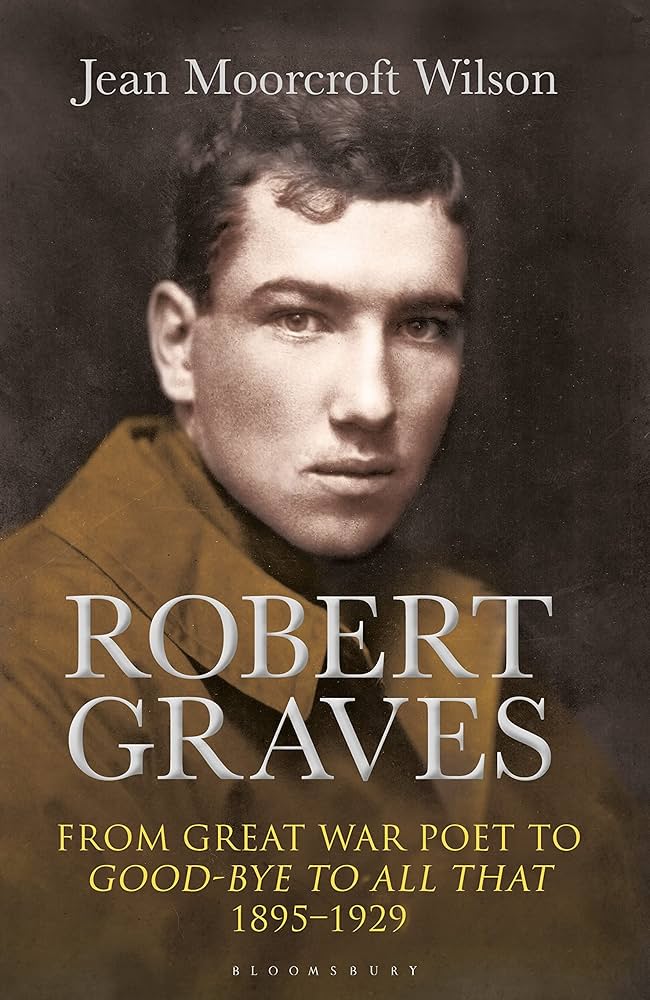
In 1915, while Graves were serving as an officer on the Western Front, in France:
Late this October a press-cutting from John Bull reached me. Horatio Bottomley, the editor, was protesting against the unequal treatment for criminal offences meted out to commoners and aristocrats. A young man, he said, convicted in the police court of sexual delinquency had merely been bound over and placed in the care of a physician — because he happened to be the grandson of an earl! An offender not belonging to the influential classes would have been given three months, without the option of a fine. The article described in some detail how Dick, a sixteen-year-old boy, had made “a certain proposal” to a corporal in a Canadian regiment stationed near “Charterhouse College”, and how the corporal had very properly given him in charge of the police. This news nearly finished me. I decided that Dick had been driven out of his mind by the war. There was madness in the family, I knew; he had once shown me a letter from his grandfather, scrawled in circles all over the page. Well, with so much slaughter about, it would be easy to think of him as dead.[8]
[1] These “sex-irregularities” in their particularly licentious house were “so bad at one point that the top of each boy’s cubicle was wired with an alarm to ward off predators.” (The author’s brother Charles Graves in his The Bad Old Days, Faber, 1951, p. 27)
[2] The boy was really called George Harcourt Vanden-Bampde-Johnstone and his nickname was “Peter”. He was a grandson of Lord Derwent, born on 22 October 1899 and thus aged 13 and more than four years younger than Graves (then 17), not three, as Graves claims here. He had joined the school the previous term, and was (like Graves) the first scholar of his year and an able poet, who went on to win the Newdigate Prize for Poetry at Oxford. [Website note]
He was “strikingly handsome with dark hair and a clear, dead-white complexion” (The incomplete typescript of My Brother Robert by the author’s youngest brother John Graves, as made use of by Richard Perceval Graves in his Robert Graves: The Assault Heroic, 1895-1926, London: Weidenfeld & Nicolson, p. 88).
According to Graves’s next brother Charles, also in the school choir, Johnstone had “the voice of an angel,” a clear, pure treble frequently chosen for solos, and “the combination of pretty boys and pretty voices was unconsciously effective […] most of the school-tarts ... were in the choir”.
[3] Graves may very well always have been firm in his mind that he did not want sex with “Dick” because it would be “beastly” (as he described homosex), but there is clear evidence that he was sexually attracted to him. Towards the end of his time at Charterhouse, when he was at his most rebellious against authority, on 30 May 1914, he wrote to the well-known homosexual pioneer Edward Carpenter saying that the Uranian poet Richard Middleton “‘died without understanding the matter, ashamed of it: when he wants to confess his love for a boy in a poem he puts the words into the mouth of a childless woman or a girl”, confessing that he too had often used these “old evasions” and quoting from Middleton’s pederastic poem Hylas.
[4] This was Frank Fletcher, who became headmaster in September 1911.
Though Graves has already been quoted mentioning the following point himself, it is worth stressing how unusual and severely regarded an openly-conducted friendship in a British boarding-school between boys four years apart then was. Only exceptionally strong characters would contemplate it. As the early love affairs of Lord Byron attest, such friendships were permitted until the early 19th century, the school authorities apparently blind to or uninterested in the resultant love affairs, but from the middle of that century onwards, the authorities stamped down hard on them, with formal bans of friendships between boys more than a year apart in age often in place. For a detailed study of this development, see A Demon Hovering by John Chandos. An age gap of only two years was thus at best regarded with suspicion. [Website note]
[5] Graves earlier (p. 42) defined the “bloods” as the “members of the cricket and football elevens.” They had been the unquestioned “ruling caste at Charterhouse” (by no means all in the top year) until successfully challenged by the intellectuals in the Sixth Form.
[6] This all happened in late July 1914, about a fortnight after the subsequently recounted incident of Graves accusing a master of kissing “Dick”, and only around ten days before Graves finally left Charterhouse on 28 July. (Richard Perceval Graves, Robert Graves: The Assault Heroic, 1895-1926, London: Weidenfeld & Nicolson, p. 106). “Dick” was by this time 14 and Graves only a week short of 19.
[7] This happened on 5 July 1914 (Richard Perceval Graves, Robert Graves: The Assault Heroic, 1895-1926, London: Weidenfeld & Nicolson, p. 106).
[8] Robert Graves’s nephew Richard Perceval Graves in his Robert Graves: The Assault Heroic, 1895-1926, London: Weidenfeld & Nicolson, pp. 351-2) points out that “This section is clearly written from memory, and the break with Johnstone is wrongly placed in October 1915,” and goes on to give copious evidence for concluding that the news about “Dick” (Johnstone) reached Graves on 12 July 1917. “Dick” was in any case seventeen when arrested.
There is confusion here with an earlier ominous happening in the summer of 1915. In June that year, his cousin Gerald told him that Johnstone was as “bad as anyone could be” and “not at all the innocent fellow [Graves] took him for” (1st edition of Goodbye to All That, p. 163). However, Johnstone wrote to him explaining that he had just been “ragging about” and would stop it immediately, and this had mended matters. On 5 August, Graves had replied with a loving letter and they continued to express strong affection in weekly letters, and continued to meet during Graves’s leaves from military duty until 1917, despite Johnstone’s mother having forbidden their friendship after discovering letters she thought sexually suggestive. (Jean Moorcroft Wilson. Robert Graves: From Great War Poet to Good-bye to All That (1895-1929), London: Bloomsbury, 1918, pp. 120, 135, 152, 177.)
The events that transpired to end their friendship in 1917 were more precisely as follows according to this more recent biography of Graves drawing on newly unearthed sources:
On 22 April 1917, […] Johnstone had been arrested on Godalming Station late at night for soliciting a corporal in the Military Police, who brought charges against him. After an initial hearing the next day, Johnstone was tried in Godalming Magistrates Court on 26 April. With the help of a leading barrister, Sir Richard Muir, and the eminent psychiatrist Dr. Henry Head, the charge was dismissed. But the local newspaper had already reported it and it was eventually picked up by the well-known journalist, Horatio Bottomley, who on 2 June 1917 fulminated self-righteously in the John Bull magazine against the unequal treatment meted out to commoners and aristocrats, naming Johnstone and the dismissal of his charge as a case in point. (Jean Moorcroft Wilson. Robert Graves: From Great War Poet to Good-bye to All That (1895-1929), London: Bloomsbury, 1918, p. 193)
Richard Perceval Graves also gives interesting and important further perspective on what concluded the friendship of Graves and Johnstone:
It was a conviction [of Johnstone for a homosexual proposition] from which Robert was determined to distance himself as far and as fast as possible, and in doing so he played the part of a stem Victorian moralist not only with “Peter” [Johnstone’s real nickname], but with himself. If high-minded feelings of the kind which he had entertained for Johnstone could lead to bad behaviour followed by a humiliating public disgrace, then such feelings must be immediately renounced, as must the company of anyone likely to inspire them.
To think of Johnstone “as dead” was a very harsh judgment on a close friend, but Robert was so shocked that he appears to have made no effort to hear the other side of the story. And there may be one. My father heard years later, from someone whom he regarded as “a reliable source”, that “Peter had, it seems, been staying with the Headmaster . . . and one evening went for a walk in the woods. Here he came upon the Canadian Corporal having intercourse with a girl. Being naturally curious, he stopped to watch. But when the Corporal noticed him and invited him to have a turn, he refused. The Corporal became angry and in revenge handed him over to the police and secured his conviction on a trumped-up charge.”
Whatever the truth of this story, Johnstone was placed for some months in the care of a doctor; he was then pronounced cured; and in November 1917 he joined the army as a signaller in the 14th London Regiment. (p. 178)
To sum up the rest of Johnstone’s story, after graduating from Oxford, he became a diplomat, then succeeded his uncle as 3rd Baron Derwent in 1929, married a few months afterwards and died without children on 12 January 1949. (Burke’s Peerage and Baronetage, 1970, p. 782).
Comments powered by CComment