
THE DIALOGUE ON LOVE IV
BY PLUTARCH
This is the fourth and last part of the Greek writer Plutarch’s Dialogue on Love Ἐρωτικός, written early in the 2nd century AD as part of his Moralia, and introduced here.
Fourth and last part: 766d-771e
|
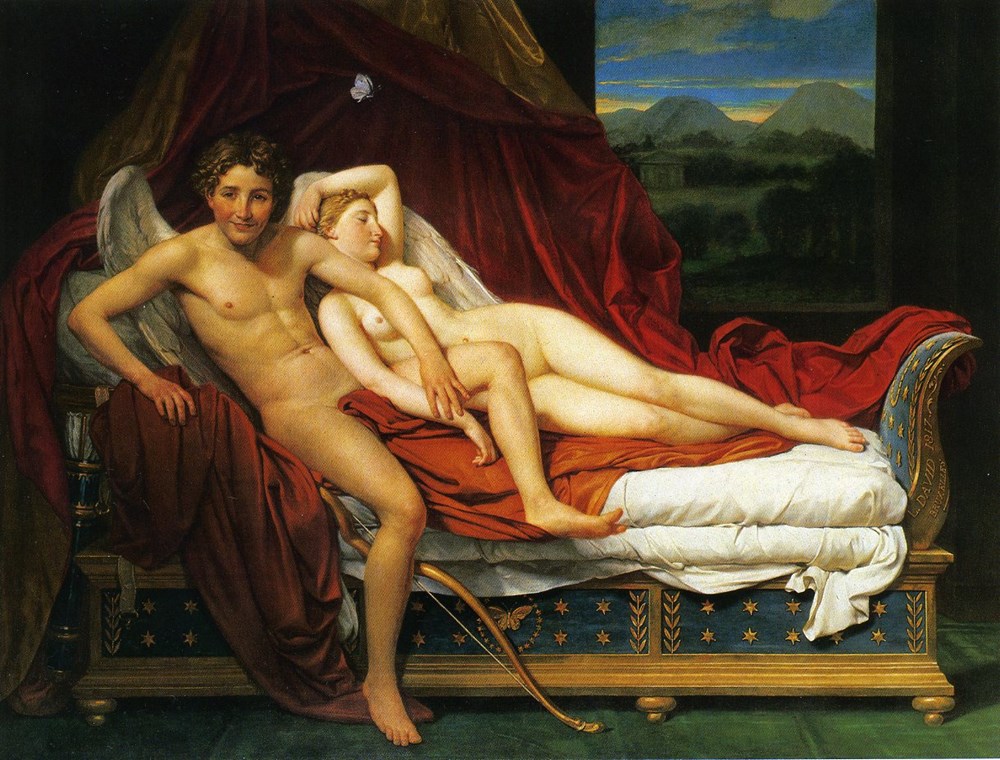
“Furthermore, the causes that they give for the generation of love are peculiar to neither sex and common to both. For is it really the case that visual shapes emanating from boys can, but the same from women cannot, enter into the body of the lover where, coursing through him, they stimulate and tickle the whole mass and, by gliding along with the other configurations of atoms, produce seed? And those beautiful and sacred passions which we call recollections of the divine, the true, the Olympian beauty of the other world, by which the soul is made winged—why should they not spring from maidens and women, as well as from boys and striplings, whenever a pure and disciplined character shines through from within a beautiful and charming outward shape (just as a well-made shoe, as Ariston remarked, reveals a shapely foot)—or whenever the clearcut traces of a shining soul stored up in beautiful forms and pure bodies are perceived undistorted, without a flaw, by those capable of such perceptions. “In the play, the pleasure-lover is asked whether And he answers Where there is beauty, he is ambidexterous. If he is to be given credit for an answer well suited to lust, it is no less true that the noble lover of beauty engages in love wherever he sees excellence and splendid natural endowment without regard for any difference in physiological detail. “A lover of horses takes pleasure in the excellent qualities of ‘Aithê, Agamemnon’s mare’ no less than in those of the horse Podargos. The hunter has no special preference for male dogs, but also keeps Cretan and Lakonian bitches. So too will not the lover of human beauty be fairly and equably disposed toward both sexes, instead of supposing that males and females are as different in the matter of love as they are in their clothes?... |
[21] “Ἔτι τοίνυν ἃς λέγουσιν αἰτίας καὶ γενέσεις [e] Ἔρωτος, ἴδιαι μὲν οὐδετέρου γένους εἰσὶ κοιναὶ δ᾿ ἀμφοτέρων. καὶ γὰρ εἴδωλα δήπουθεν ἐνδυόμενα τοῖς ἐρωτικοῖς καὶ διατρέχοντα κινεῖν καὶ γαργαλίζειν τὸν ὄγκον εἰς σπέρμα συνολισθαίνοντα τοῖς ἄλλοις σχηματισμοῖς οὐ δυνατὸν μὲν ἀπὸ παίδων, ἀδύνατον δ᾿ ἀπὸ γυναικῶν; καὶ τὰς καλὰς ταύτας καὶ ἱερὰς ἃς ἀναμνήσεις καλοῦμεν ἡμεῖς ἐπὶ τὸ θεῖον καὶ ἀληθινὸν καὶ ὀλύμπιον ἐκεῖνο κάλλος, αἷς ψυχὴ πτεροῦται, τί ἂν κωλύοι γίνεσθαι μὲν ἀπὸ παίδων καὶ ἀπὸ νεανίσκων, γίνεσθαι δ᾿ ἀπὸ παρθένων καὶ γυναικῶν, ὅταν ἦθος ἁγνὸν καὶ κόσμιον [f] ἐν ὥρᾳ καὶ χάριτι μορφῆς διαφανὲς γένηται, καθάπερ ὄρθιον ὑπόδημα δείκνυσι ποδὸς εὐφυΐαν, ὡς Ἀρίστων ἔλεγεν· ἢ ὅταν ἐν εἴδεσι καλοῖς καὶ καθαροῖς σώμασιν ἴχνη λαμπρὰ κείμενα ψυχῆς ὀρθὰ καὶ ἄθρυπτα κατίδωσιν οἱ δεινοὶ τῶν τοιούτων αἰσθάνεσθαι; “Οὐ γὰρ ὁ μὲν φιλήδονος ἐρωτηθεὶς εἰ [767a] καὶ ἀποκρινάμενος, ὅπου προσῇ τὸ κάλλος, ἀμφιδέξιος, ἔδοξεν οἰκείως ἀποκρίνασθαι τῆς ἐπιθυμίας· ὁ δὲ φιλόκαλος καὶ γενναῖος οὐ πρὸς τὸ καλὸν οὐδὲ τὴν εὐφυΐαν ἀλλὰ μορίων διαφορὰς ποιεῖται τοὺς ἔρωτας. “Καὶ φίλιππος μὲν ἀνὴρ οὐδὲν ἧττον ἀσπάζεται τοῦ Ποδάργου τὴν εὐφυΐαν ‘Αἴθης τῆς Ἀγαμεμνονέης’· καὶ θηρατικὸς οὐ τοῖς ἄρρεσι χαίρει μόνον, ἀλλὰ καὶ Κρήσσας τρέφει καὶ Λακαίνας σκύλακας· ὁ δὲ φιλόκαλος καὶ φιλάνθρωπος οὐχ ὁμαλός ἐστιν οὐδ᾿ ὅμοιος ἀμφοτέροις τοῖς γένεσιν, ἀλλ᾿ ὥσπερ ἱματίων οἰόμενος εἶναι διαφορὰς ἐρώτων [b] γυναικῶν καὶ ἀνδρῶν; |
|
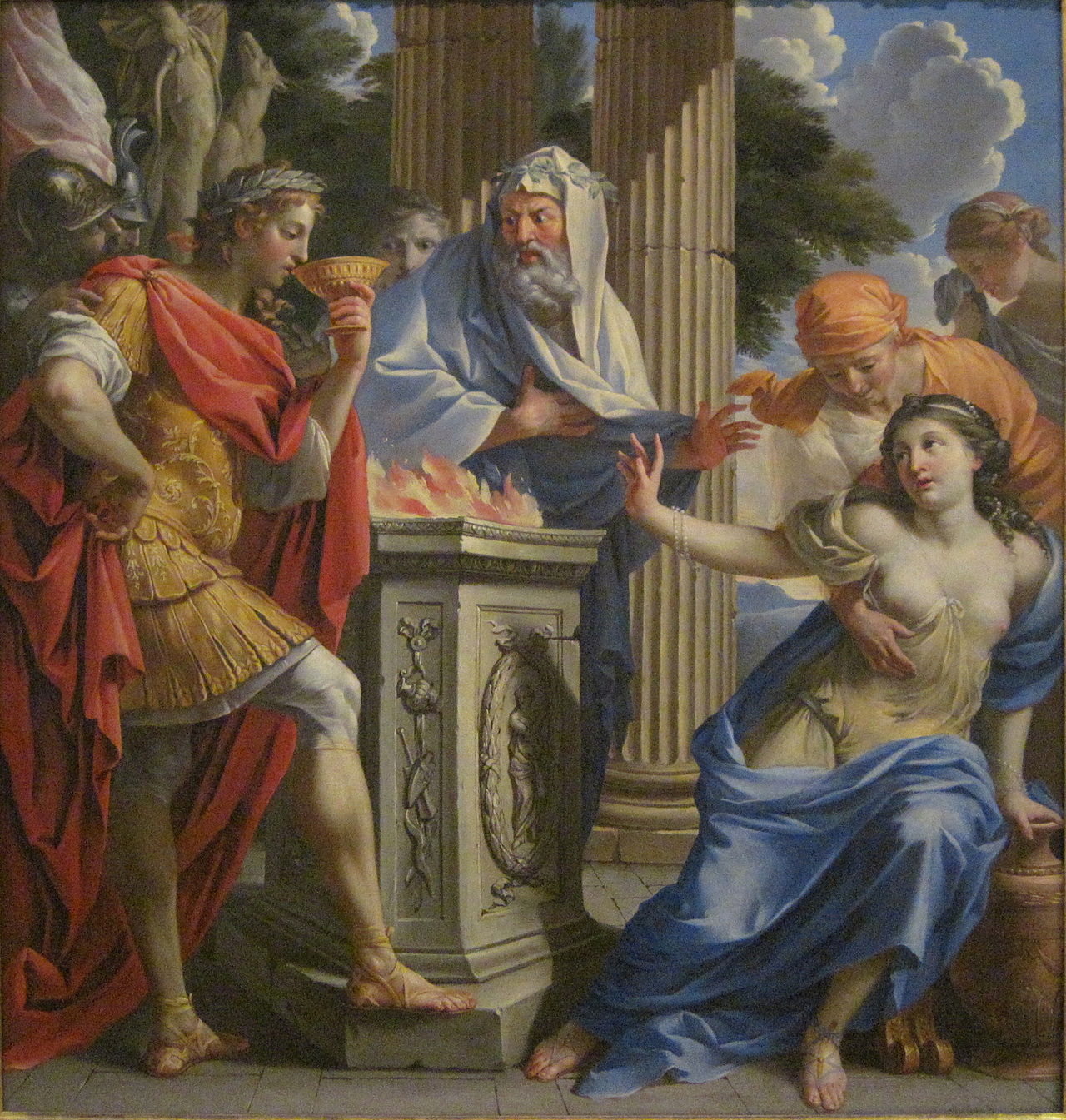
“To be sure they say that beauty is the ‘flower of virtue’; yet it would be absurd to deny that the female produces that flower or gives a ‘presentation’ of a ‘natural bent for virtue.’ Aischylos is surely right in saying, An ardent eye betrays the tender girl Do the ‘signs’ betokening a flighty, unchaste, and corrupt character overrun women’s faces, while no lustre is added to a female’s beauty by a chaste and modest character? Or are there many ‘signs’ of the latter which ‘present themselves in combination,’ yet nevertheless do not move or evoke our love? Neither position is well taken or true. “But now, Daphnaios, since we have shown that all these characteristics belong to both sexes alike, let us too join in the struggle and make common cause against those arguments which Zeuxippos recently developed. He identified Love with an uncontrolled desire which forced the soul into debauchery, not that he was himself convinced of this, but because he had often heard it from ill-tempered fellows, who had never fallen in love. Some of these creatures attach to themselves a wretched female for her bit of dowry, then thrust her into the keeping of strict and slavish accounts, quarrel with her day after day, and keep her under their thumbs. Others want children more than a wife: like cicadas who eject their seed into a squill or something of the sort, they are quick to fecundate the first body they come upon. When they have reaped the fruit, they are ready for divorce; or, if the marriage stands, they pay no attention to it, so little do they care for giving or receiving love. “But between ‘attachment to wife’ and ‘attachment to life’[2] the difference is only that of a single letter, and this immediately gives us a hint of the mutual loyalty that time and companionship are bound to create. The man whom Love strikes and inspires will first of all come to understand ‘mine’ and ‘not mine’ as these terms are used in Plato’s city.[3] The phrase, ‘all is held in common among friends’ and lovers is not one of absolute validity: it applies only to those who, though separated in body, forcibly join their souls and fuse them together, no longer wishing to be separate entities, or believing that they are so. “In the next place, there is temperance, a mutual self-restraint which is a principal requirement of marriage. The temperance that comes from without and in deference to usage is imposed by shame or fear, rather than voluntary; The task of many a bit and many a rudder, it is always in the power of those who live together. Love, however, has in himself enough self-control, decorum, and mutual trust, so that if he ever but touches the heart even of a profligate, he turns him from his other lovers, drives out insolence, humbles pride and intractability, and brings in modesty, silence, calm. He clothes him with the robes of decorum and makes him deaf to all appeals but one. “You have, of course, heard of Laïs, the theme of song, the essence of loveliness—how she threw all Greece into a fever of longing or was, rather, the object of contention from sea to sea.[4] But when she fell in love with Hippolochos the Thessalian, Forsaking Acrocorinth bathed in grey-green water, and escaping secretly from the vast throngs of her other lovers and from the great army of harlots, she beat an orderly retreat. But when she came to Thessaly, the women there were envious and jealous of her beauty, decoyed her into a temple of Aphroditê, and stoned her to death; and this seems to be why to this very day they call it the temple of Murderous Aphroditê. “We also know quite well that slave girls will fly from the embrace of their masters, and subjects reject their own queen, when Love becomes the lord of their souls. At Rome, they say, when the so-called dictator is proclaimed, all the other magistrates resign their offices; just so when Love enters as sovereign, men are ever after free and released from all other lords and masters and continue throughout their days to be, as it were, slaves of the god. A noble woman united by love to her lawful husband could endure the embrace of bears and snakes more readily than the touch and couch of another man. “Although there is an abundance of examples of this—at least to you who are fellow countrymen and initiates of the god—yet I hardly think it right to pass over the story of Kamma of Galatia.[5] She was a very beautiful woman married to Sinatos the tetrarch. Sinorix, the most powerful of the Galatians, fell in love with her and killed Sinatus, since he was unable to obtain the lady’s consent either by force or persuasion while her husband was alive. Now Kamma had a refuge and a consolation for her tragedy in serving as hereditary priestess of Artemis. She spent the greater part of her time in the goddess’ temple and received no one, though many kings and potentates came to woo her. Yet when Sinorix dared to propose marriage, she did not shun his overtures or reproach him for past deeds, as if an act inspired by his kind regards and love for her could have nothing wicked about it. So he trusted in this and came to the temple and asked her to marry him. She met him, gave him her hand, led him to the altar of the goddess, and poured as a libation[6] a phial of hydromel which was, it seems, mixed with poison. Thereupon she drank off half of it herself as though it were a toast and gave the rest to the Galatian. When she saw that he had swallowed it, she shouted loud and clear in triumph and uttered the dead man’s name. ‘It was,’ she cried, ‘dearest husband, because I was awaiting this day that I have endured my tortured life without you. Now rejoice and take me. I have avenged you on the vilest of creatures, sharing death with him as gladly as I did my life with you.’ So Sinorix[7] was carried out in a litter and died shortly after. Kamma lived through that day and the following night and is said to have expired with the greatest courage and good cheer. |
“Καίτοι τήν γ᾿ ὥραν ‘ἄνθος ἀρετῆς’ εἶναι λέγουσι, μὴ φάναι δ᾿ ἀνθεῖν τὸ θῆλυ μηδὲ ποιεῖν ἔμφασιν εὐφυΐας πρὸς ἀρετὴν ἄτοπόν ἐστι· καὶ γὰρ Αἰσχύλος ὀρθῶς ἐποίησε νέας γυναικὸς οὔ με μὴ λάθῃ φλέγων πότερον οὖν ἰταμοῦ μὲν ἤθους καὶ ἀκολάστου καὶ διεφθορότος σημεῖα τοῖς εἴδεσι τῶν γυναικῶν ἐπιτρέχει, κοσμίου δὲ καὶ σώφρονος οὐδὲν ἔπεστι τῇ μορφῇ φέγγος; ἢ πολλὰ μὲν ἔπεστι καὶ συνεπιφαίνεται, κινεῖ δ᾿ οὐθὲν οὐδὲ προσκαλεῖται τὸν ἔρωτα; οὐδέτερον γὰρ εὔλογον οὐδ᾿ ἀληθές. [c] “Ἀλλὰ κοινῶς ὥσπερ δέδεικται τοῖς γένεσι πάντων ὑπαρχόντων, ὥσπερ κοινοῦ συστάντος τοῦ ἀγῶνος, ὦ Δαφναῖε, πρὸς ἐκείνους μαχώμεθα τοὺς λόγους, οὓς ὁ Ζεύξιππος ἀρτίως διῆλθεν, ἐπιθυμίᾳ τὸν Ἔρωτα ταὐτὸ ποιῶν ἀκαταστάτῳ καὶ πρὸς τὸ ἀκόλαστον ἐκφερούσῃ τὴν ψυχήν, οὐκ αὐτὸς οὕτω πεπεισμένος, ἀκηκοὼς δὲ πολλάκις ἀνδρῶν δυσκόλων καὶ ἀνεράστων· ὧν οἱ μὲν ἄθλια γύναια προικιδίοις ἐφελκόμενοι, εἶτα χρημάτων εἰς οἰκονομίαν καὶ λογισμοὺς ἐμβάλλοντες ἀνελευθέρους, [d] ζυγομαχοῦντες ὁσημέραι διὰ χειρὸς ἔχουσιν· οἱ δὲ παίδων δεόμενοι μᾶλλον ἢ γυναικῶν, ὥσπερ οἱ τέττιγες εἰς σκίλλαν ἤ τι τοιοῦτο τὴν γονὴν ἀφιᾶσιν, οὕτω διὰ τάχους οἷς ἔτυχε σώμασιν ἐναπογεννήσαντες καὶ καρπὸν ἀράμενοι χαίρειν ἐῶσιν ἤδη τὸν γάμον, ἢ μένοντος οὐ φροντίζουσιν οὐδ᾿ ἀξιοῦσιν ἐρᾶν οὐδ᾿ ἐρᾶσθαι. “Στέργεσθαι δὲ καὶ στέργειν ἑνί μοι δοκεῖ γράμματι τοῦ στέγειν παραλλάττον εὐθὺς ἐμφαίνειν τὴν ὑπὸ χρόνου καὶ συνηθείας ἀνάγκῃ μεμιγμένην εὔνοιαν. ᾧ δ᾿ ἂν Ἔρως ἐπισκήψῃ τε καὶ ἐπιπνεύσῃ, πρῶτον μὲν ἐκ τῆς Πλατωνικῆς πόλεως ‘τὸ ἐμὸν’ ἕξει καὶ ‘τὸ οὐκ ἐμόν’· οὐ γὰρ ἁπλῶς [e] ‘κοινὰ τὰ φίλων’ καὶ ἐρώντων ἀλλ᾿ οἳ τοῖς σώμασιν ὁριζόμενοι τὰς ψυχὰς βίᾳ συνάγουσι καὶ συντήκουσι, μήτε βουλόμενοι δύ᾿ εἶναι μήτε νομίζοντες. “Ἔπειτα σωφροσύνη πρὸς ἀλλήλους, ἧς μάλιστα δεῖται γάμος, ἡ μὲν ἔξωθεν καὶ νόμων ἕνεκα πλέον ἔχουσα τοῦ ἑκουσίου τὸ βεβιασμένον ὑπ᾿ αἰσχύνης καὶ φόβων, πολλῶν χαλινῶν ἔργον οἰάκων θ᾿ ἅμα, διὰ χειρός ἐστιν ἀεὶ τοῖς συνοῦσιν· Ἔρωτι δ᾿ ἐγκρατείας τοσοῦτον καὶ κόσμου καὶ πίστεως μέτεστιν, ὥστε, κἂν ἀκολάστου ποτὲ θίγῃ ψυχῆς, ἀπέστρεψε τῶν ἄλλων ἐραστῶν, ἐκκόψας δὲ τὸ θράσος καὶ κατακλάσας τὸ σοβαρὸν καὶ ἀνάγωγον, ἐμβαλὼν αἰδῶ καὶ σιωπὴν καὶ ἡσυχίαν καὶ σχῆμα περιθεὶς κόσμιον, ἑνὸς ἐπήκοον ἐποίησεν. [f] “Ἴστε δήπουθεν ἀκοῇ Λαΐδα τὴν ἀοίδιμον ἐκείνην καὶ πολυήρατον, ὡς ἐπέφλεγε πόθῳ τὴν Ἑλλάδα, μᾶλλον δὲ ταῖς δυσὶν ἦν περιμάχητος θαλάσσαις· ἐπεὶ δ᾿ ἔρως ἔθιγεν αὐτῆς Ἱππολόχου τοῦ Θεσσαλοῦ, τὸν ὕδατι χλωρῷ κατακλυζόμενον προλιποῦσ᾿ Ἀκροκόρινθον καὶ ἀποδρᾶσα τῶν ἄλλων ἐραστῶν κρύφα πολὺν ὅμιλον [768a] καὶ τῶν ἑταιρῶν μέγαν στρατὸν ᾤχετο κοσμίως· ἐκεῖ δ᾿ αὐτὴν αἱ γυναῖκες ὑπὸ φθόνου καὶ ζήλου διὰ τὸ κάλλος εἰς ἱερὸν Ἀφροδίτης προαγαγοῦσαι κατέλευσαν καὶ διέφθειραν· ὅθεν ὡς ἔοικεν ἔτι νῦν τὸ ἱερὸν ‘Ἀφροδίτης ἀνδροφόνου’ καλοῦσιν. “Ἴσμεν δὴ καὶ θεραπαινίδια δεσποτῶν φεύγοντα συνουσίας καὶ βασιλίδων ὑπερορῶντας ἰδιώτας, ὅταν Ἔρωτα δεσπότην ἐν ψυχῇ κτήσωνται. καθάπερ γὰρ ἐν Ῥώμῃ φασὶ τοῦ καλουμένου δικτάτωρος ἀναγορευθέντος ἀποτίθεσθαι τὰς ἄλλας ἀρχὰς τοὺς ἔχοντας, οὕτως, οἷς ἂν Ἔρως κύριος ἐγγένηται, τῶν ἄλλων δεσποτῶν καὶ ἀρχόντων ἐλεύθεροι [b] καὶ ἄφετοι καθάπερ ἱερόδουλοι διατελοῦσιν. ἡ δὲ γενναία γυνὴ πρὸς ἄνδρα νόμιμον συγκραθεῖσα δι᾿ Ἔρωτος ἄρκτων ἂν ὑπομείνειε καὶ δρακόντων περιβολὰς μᾶλλον ἢ ψαῦσιν ἀνδρὸς ἀλλοτρίου καὶ συγκατάκλισιν. [22] “Ἀφθονίας δὲ παραδειγμάτων οὔσης πρός γ᾿ ὑμᾶς τοὺς ὁμοχώρους τοῦ θεοῦ καὶ θιασώτας, ὅμως τὸ περὶ Κάμμαν οὐκ ἄξιόν ἐστι τὴν Γαλατικὴν παρελθεῖν. ταύτης γὰρ ἐκπρεπεστάτης τὴν ὄψιν γενομένης, Σινάτῳ δὲ τῷ τετράρχῃ γαμηθείσης, Σινόριξ ἐρασθεὶς δυνατώτατος Γαλατῶν ἀπέκτεινε τὸν Σινᾶτον, ὡς οὔτε βιάσασθαι δυνάμενος οὔτε πεῖσαι τὴν ἄνθρωπον ἐκείνου ζῶντος. ἦν δὲ [c] τῇ Κάμμῃ καταφυγὴ καὶ παραμυθία τοῦ πάθους ἱερωσύνη πατρῷος Ἀρτέμιδος· καὶ τὰ πολλὰ παρὰ τῇ θεῷ διέτριβεν, οὐδένα προσιεμένη, μνωμένων πολλῶν βασιλέων καὶ δυναστῶν αὐτήν. τοῦ μέντοι Σινόριγος τολμήσαντος ἐντυχεῖν περὶ γάμου, τὴν πεῖραν οὐκ ἔφυγεν οὐδ᾿ ἐμέμψατο περὶ τῶν γεγονότων, ὡς δι᾿ εὔνοιαν αὐτῆς καὶ πόθον οὐκ ἄλλῃ τινὶ μοχθηρίᾳ προαχθέντος τοῦ Σινόριγος. ἧκεν οὖν πιστεύσας ἐκεῖνος καὶ ᾔτει τὸν γάμον· ἡ δ᾿ ἀπήντησε καὶ δεξιωσαμένη καὶ προσαγαγοῦσα τῷ βωμῷ τῆς θεᾶς ἔσπεισεν ἐκ φιάλης μελίκρατον, ὡς ἔοικε, πεφαρμακωμένον· εἶθ᾿ ὅσον ἥμισυ μέρος [d] αὐτὴ προεκπιοῦσα παρέδωκε τῷ Γαλάτῃ τὸ λοιπόν· ὡς δ᾿ εἶδεν ἐκπεπωκότα, λαμπρὸν ἀνωλόλυξε καὶ φθεγξαμένη τοὔνομα τοῦ τεθνεῶτος, ‘ταύτην,’ εἶπεν, ‘ἐγὼ τὴν ἡμέραν, ὦ φίλτατ᾿ ἄνερ, προσμένουσα σοῦ χωρὶς ἔζων ἀνιαρῶς· νῦν δὲ κόμισαί με χαίρων· ἠμυνάμην γὰρ ὑπὲρ σοῦ τὸν κάκιστον ἀνθρώπων, σοὶ μὲν βίου τούτῳ δὲ θανάτου κοινωνὸς ἡδέως γενομένη.” ὁ μὲν οὖν Σινόριξ ἐν φορείῳ κομιζόμενος μετὰ μικρὸν ἐτελεύτησεν, ἡ δὲ Κάμμα τὴν ἡμέραν ἐπιβιώσασα καὶ τὴν νύκτα λέγεται μάλ᾿ εὐθαρσῶς καὶ ἱλαρῶς ἀποθανεῖν. |
|
“Since many such things have happened both here in Greece and in foreign parts, who could be patient when men revile Aphroditê, claiming that when she joins and accompanies Eros, it is impossible for friendship to exist? Now of the union of male with male (it is, rather, not a union, but a lascivious assault), one would be right to say, This is the work of Hybris, not of Kypris. That is why we class those who enjoy the passive part as belonging to the lowest depth of vice and allow them not the least degree of confidence or respect or friendship. Of such creatures the words of Sophokles are true: Of friends like them it’s joy to be bereft, Those[8] not naturally vicious, who have been lured or forced into yielding and letting themselves be abused, forever after mistrust and hate no one on earth more than the men who so served them and, if opportunity offers, they take a terrible vengeance. Krateas slew Archelaos who had been his lover[9] and Pytholaos killed Alexander of Pherai.[10] Periandros, tyrant of Ambrakia, asked his minion whether he was not yet pregnant; the boy fell into a rage and slew him.[11] “On the other hand, in the case of lawful wives, physical union is the beginning of friendship, a sharing, as it were, in great mysteries. Pleasure is short; but the respect and kindness and mutual affection and loyalty that daily spring from it convicts neither the Delphians of raving when they call Aphroditê ‘Harmony’ nor Homer when he designates such a union as ‘friendship.’ It also proves that Solon was a very experienced legislator of marriage laws. He prescribed that a man should consort with his wife not less than three times a month—not for pleasure surely, but as cities renew their mutual agreements from time to time, just so he must have wished this to be a renewal of marriage and with such an act of tenderness to wipe out the complaints that accumulate from everyday living. “‘But,’ you may say, ‘there is much that is bad and mad in the love of women.’ And doesn’t that of boys have even more? Seeing a kindred shape I swooned away.[12] But just as this is boy-madness, so that other affliction is to be woman-crazy: neither is love. “So it is ridiculous to maintain that women have no participation in virtue. What need is there to discuss their prudence and intelligence, or their loyalty and justice, when many women have exhibited a daring and great-hearted courage which is truly masculine? And to declare that their nature is noble in all other relationships and then to censure it as being unsuitable for friendship alone—that is surely a strange procedure. They are, in fact, fond of their children and their husbands; their affections are like a rich soil ready to receive the germ of friendship; and beneath it all is a layer of seductive grace. Just as poetry adds to the prose meaning the delights of song and metre and rhythm, making its educational power more forceful and its capacity for doing harm more irresistible; just so nature has endowed women with a charming face, a persuasive voice, a seductive physical beauty and has thus given the dissolute woman great advantages for the beguilement of pleasure, but to the chaste, great resources also to gain the goodwill and friendship of her husband. |
[23] “Πολλῶν δὲ τοιούτων γεγονότων καὶ παρ᾿ [e] ἡμῖν καὶ παρὰ τοῖς βαρβάροις, τίς ἂν ἀνάσχοιτο τῶν τὴν Ἀφροδίτην λοιδορούντων, ὡς Ἔρωτι προσθεμένη καὶ παροῦσα κωλύει φιλίαν γενέσθαι; τὴν μέντοι πρὸς ἄρρεν᾿ ἄρρενος ὁμιλίαν, μᾶλλον δ᾿ ἀκρασίαν καὶ ἐπιπήδησιν, εἴποι τις ἂν ἐννοήσας ὕβρις τάδ᾿ οὐχὶ Κύπρις ἐξεργάζεται. διὸ τοὺς μὲν ἡδομένους τῷ πάσχειν εἰς τὸ χείριστον τιθέμενοι γένος κακίας οὔτε πίστεως μοῖραν οὔτ᾿ αἰδοῦς οὔτε φιλίας νέμομεν, ἀλλ᾿ ὡς ἀληθῶς κατὰ τὸν Σοφοκλέα φίλων τοιούτων οἱ μὲν ἐστερημένοι ὅσοι δὲ μὴ κακοὶ πεφυκότες ἐξηπατήθησαν ἢ κατεβιάσθησαν [f] ἐνδοῦναι καὶ παρασχεῖν ἑαυτούς, οὐδένα μᾶλλον ἀνθρώπων ἢ τοὺς διαθέντας ὑφορώμενοι καὶ μισοῦντες διατελοῦσι καὶ πικρῶς ἀμύνονται καιροῦ παραδόντος· Ἀρχέλαόν τε γὰρ ἀπέκτεινε Κρατέας ἐρώμενος γεγονώς, καὶ τὸν Φεραῖον Ἀλέξανδρον Πυθόλαος· Περίανδρος δ᾿ ὁ Ἀμβρακιωτῶν τύραννος ἠρώτα τὸν ἐρώμενον εἰ μήπω κύει, κἀκεῖνος παροξυνθεὶς ἀπέκτεινεν αὐτόν. τύραννος ἠρώτα τὸν ἐρώμενον εἰ μήπω κύει, κἀκεῖνος παροξυνθεὶς ἀπέκτεινεν αὐτόν. [769a] “Ἀλλὰ γυναιξί γε γαμεταῖς ἀρχαὶ ταῦτα φιλίας, ὥσπερ ἱερῶν μεγάλων κοινωνήματα. καὶ τὸ τῆς ἡδονῆς μικρόν, ἡ δ᾿ ἀπὸ ταύτης ἀναβλαστάνουσα καθ᾿ ἡμέραν τιμὴ καὶ χάρις καὶ ἀγάπησις ἀλλήλων καὶ πίστις οὔτε Δελφοὺς ἐλέγχει ληροῦντας, ὅτι τὴν Ἀφροδίτην ‘Ἄρμα’ καλοῦσιν, οὔθ᾿ Ὅμηρον ‘φιλότητα’ τὴν τοιαύτην προσαγορεύοντα συνουσίαν· τόν τε Σόλωνα μαρτυρεῖ γεγονέναι τῶν γαμικῶν ἐμπειρότατον νομοθέτην, κελεύσαντα μὴ ἔλαττον ἢ τρὶς κατὰ μῆνα τῇ γαμετῇ πλησιάζειν, οὐχ ἡδονῆς ἕνεκα δήπουθεν, ἀλλ᾿ ὥσπερ αἱ πόλεις Bδιὰ χρόνου σπονδὰς ἀνανεοῦνται πρὸς ἀλλήλας, οὕτως ἄρα βουλόμενον ἀνανεοῦσθαι τὸν γάμον ἐκ τῶν ἑκάστοτε συλλεγομένων ἐγκλημάτων ἐν τῇ τοιαύτῃ φιλοφροσύνῃ. “Ἀλλὰ πολλὰ φαῦλα καὶ μανικὰ τῶν γυναικείων ἐρώτων. τί δ᾿; οὐχὶ πλείονα τῶν παιδικῶν; οἰκεῖον εἶδος ἐμβλέπων ὠλίσθανον· ἀλλ᾿ ὥσπερ τοῦτο παιδομανία, οὕτως ἐκεῖνο γυναικομανία τὸ πάθος, οὐδέτερον δ᾿ ἔρως ἐστίν. “Ἄτοπον οὖν τὸ γυναιξὶν ἀρετῆς φάναι μηδαμῇ μετεῖναι· τί δὲ δεῖ λέγειν περὶ σωφροσύνης καὶ συνέσεως αὐτῶν, ἔτι δὲ πίστεως καὶ δικαιοσύνης, ὅπου καὶ τὸ ἀνδρεῖον καὶ τὸ θαρραλέον καὶ τὸ μεγαλόψυχον [c] ἐν πολλαῖς ἐπιφανὲς γέγονε; τὸ δὲ πρὸς τἄλλα καλὴν τὴν φύσιν αὐτῶν, ἀλλὰ ψέγοντας εἰς μόνην φιλίαν ἀνάρμοστον ἀποφαίνειν, παντάπασι δεινόν. καὶ γὰρ φιλότεκνοι καὶ φίλανδροι καὶ τὸ στερκτικὸν ὅλως ἐν αὐταῖς, ὥσπερ εὐφυὴς χώρα καὶ δεκτικὴν φιλίας, οὔτε πειθοῦς οὔτε χαρίτων ἄμοιρον ὑπόκειται. καθάπερ δὲ λόγῳ ποίησις ἡδύσματα μέλη καὶ μέτρα καὶ ῥυθμοὺς ἐφαρμόσασα καὶ τὸ παιδεῦον αὐτοῦ κινητικώτερον ἐποίησε καὶ τὸ βλάπτον ἀφυλακτότερον, οὕτως ἡ φύσις γυναικὶ περιθεῖσα χάριν ὄψεως καὶ φωνῆς πιθανότητα καὶ μορφῆς ἐπαγωγὸν εἶδος, τῇ μὲν ἀκολάστῳ πρὸς [d] ἡδονὴν καὶ ἀπάτην τῇ δὲ σώφρονι πρὸς εὔνοιαν ἀνδρὸς καὶ φιλίαν μεγάλα συνήργησεν. |
|
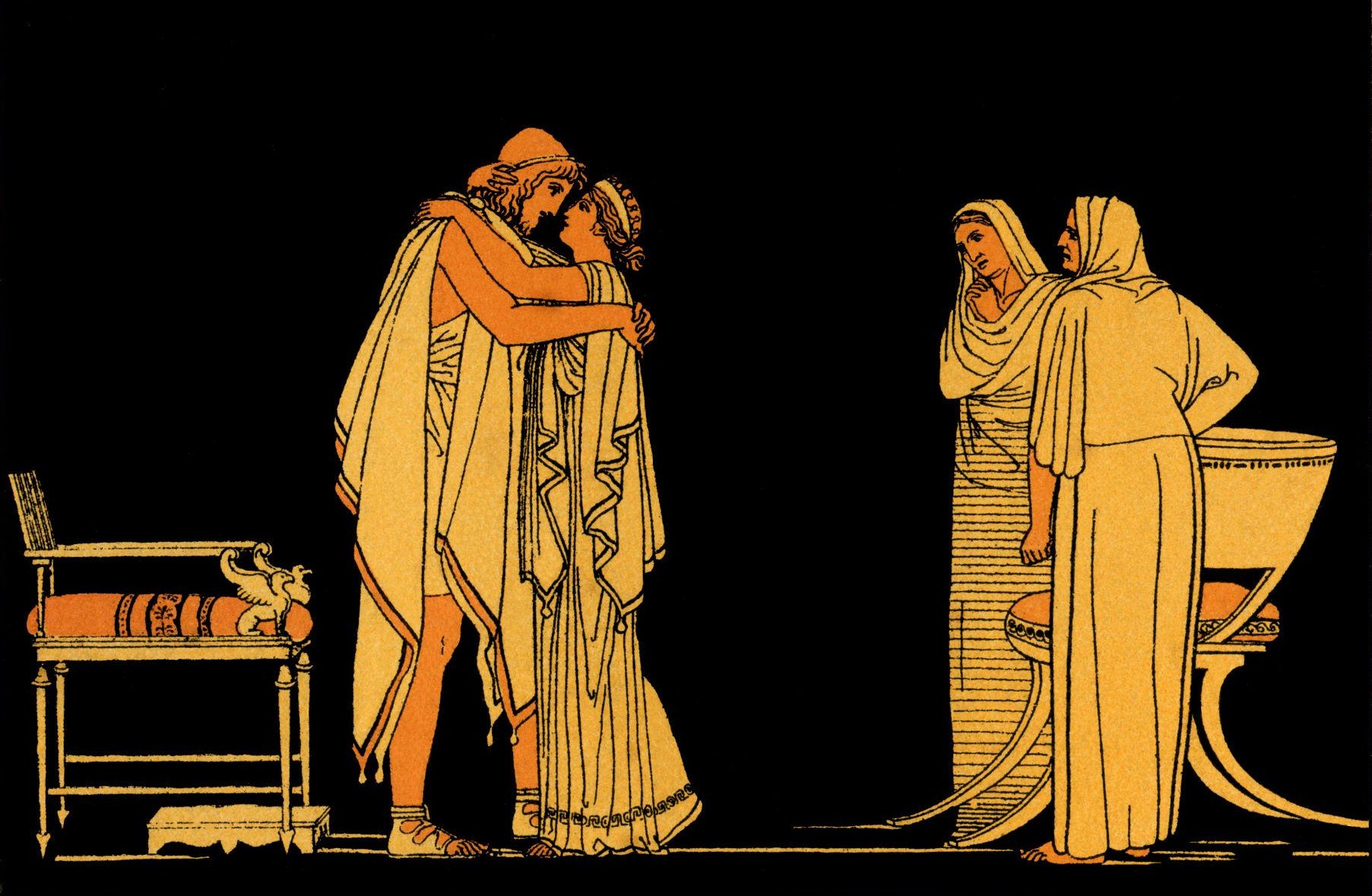
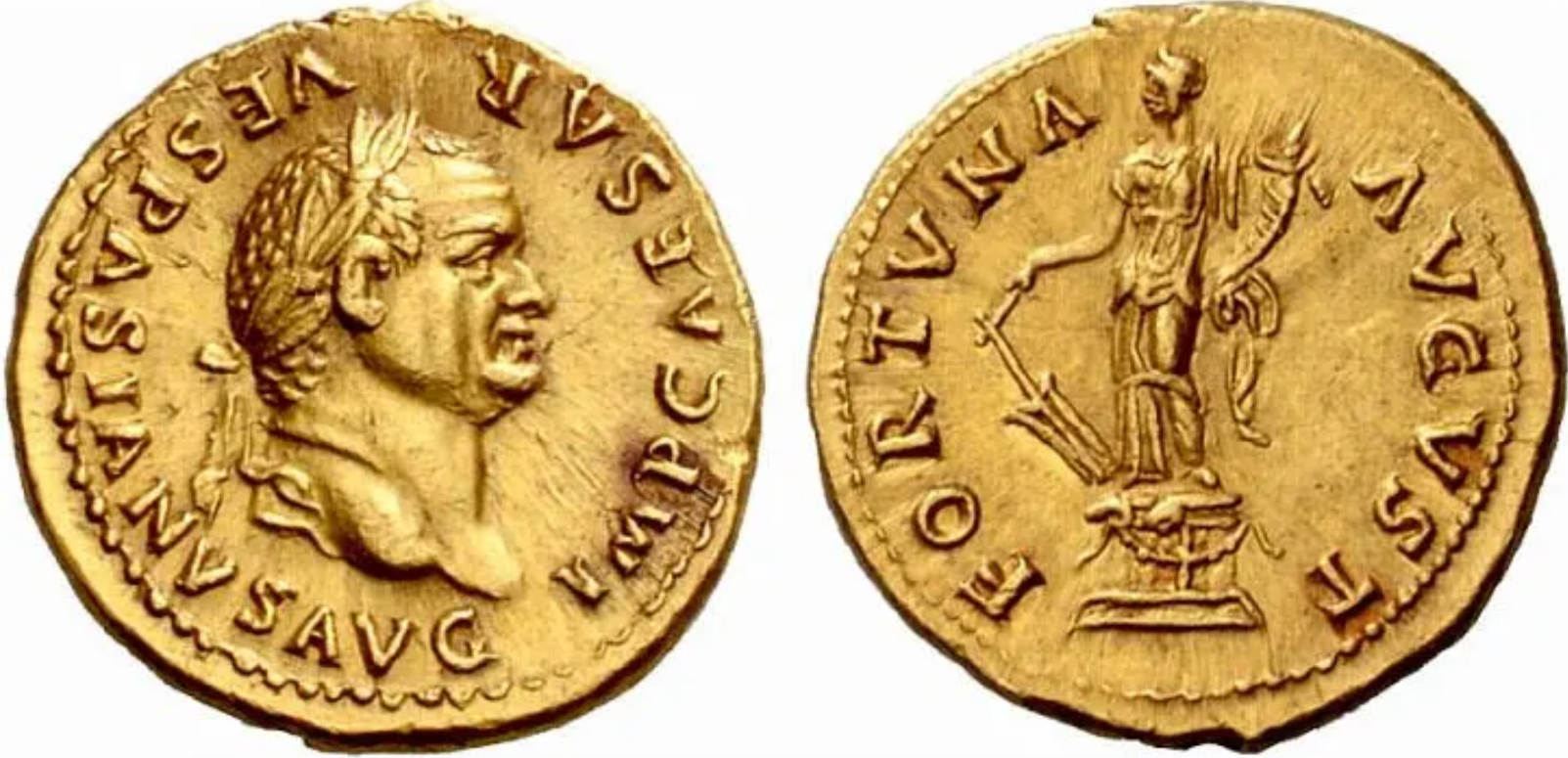
“Now Plato urged Xenocrates, a noble and great-hearted youth, but of a very morose character, to sacrifice to the Graces. Just so one would advise a virtuous, chaste woman to sacrifice to Love that he may smile on her marriage and be guardian of her home, adorning her with such allurements as become a woman, and that her husband may not be diverted to a rival and be forced to repeat the cry of the man in the comedy: Wretch that I am to injure such a wife! For in marriage, to love is a greater boon than to be loved: it rescues us from many errors—or rather from all errors that wreck or impair wedlock. “Do not, my Zeuxippos, be afraid of that sharp pain which comes at the beginning of marriage—don’t fear it as though it were a wound or a bite. And even if there were a wound, there is nothing very alarming in that when the union is with a good woman: it is like grafting a tree. Another wounding is a preliminary to pregnancy, for there is no impregnation without reciprocal hurt. “Studies are disturbing to boys at the very beginning and philosophy upsets youths;[13] yet this stinging smart does not remain the same for them forever. The same is true of lovers; just as with the mixing of two liquids, love seems at first to cause some effervescence and agitation, but as time goes on it settles down and is reduced and produces the best sort of stability. For this truly is what is called ‘integral amalgamation,’[14] that of a married couple who love each other; but the union of those who merely live together is like the contacts and interlacing of Epikouros’ atoms, which collide and rebound, but never achieve the unity that Love creates when he takes in hand a partnership in marriage. “There can be no greater pleasures derived from others nor more continuous services conferred on others than those found in marriage, nor can the beauty of another friendship be so highly esteemed or so enviable as When a man and wife keep house in perfect harmony. The law, in fact, assists Eros in bringing about procreation in all societies; and nature brings it about that even the gods have need of him. It is in this sense, then, that the poets say that The earth loves rain, and that Heaven loves Earth; and in this sense, too, natural philosophers assert that the sun loves the moon and that they unite and propagate. And since earth is the mother of all men and a source of generation for all beasts and plants, will she not be destined to perish at some time or other and be completely extinguished if ever the mighty love and desire of the god abandons her matter and if ever she stops longing for and pursuing the principle of her motion which derives from that source? “But I don’t want you to think that I am wandering far from my subject and merely raving on. You are well aware, I take it, how often men condemn and make jests about the inconstancy of boy-lovers. They say that such friendships are parted by a hair as eggs are; that these lovers are like nomads who pass the spring of the year in regions that are lush and blooming and then decamp as though from a hostile country. Even more vulgarly the sophist Bion used to call the beards of beautiful boys Harmodios and Aristogeiton because, as the hair grows, it frees their lovers from a beautiful tyranny! It is, however, unjust to bring these charges against true and genuine lovers. Euripides’ remark is clever: he observed upon embracing and kissing Agathon, though the latter’s beard had already grown, that even the autumn of the fair is fair.[15] … and even among wrinkles remains flourishing, indeed right up to the tomb. There are very few examples of a durable relationship among boy lovers, but countless numbers of successful unions with women may be enumerated, distinguished from beginning to end by every sort of fidelity and zealous loyalty. I should like to tell you of one such event that occurred in our time during the reign of Vespasian. “Civilis,[16] who stirred up the revolt in Gaul, had naturally many associates. Among them was Sabinus, a young man of good family, whose wealth and reputation were second to none of the Gauls. When their great enterprise collapsed, in the expectation of reprisal some killed themselves and some tried to escape, but were caught. Sabinus’ affairs were not such as to prevent him from getting away and making good his escape to a foreign country, except that he had married a most remarkable wife. Her Gaulish name was Empona, which may be translated into Greek as ‘Heroine.’ He could not abandon her nor take her with him. Now he had in the country underground caves for the storing of his treasures and these caves were known only to two of his freedmen. He dismissed all the other slaves, saying that he was going to poison himself, and took his two trusted servants down into the caves with him. To his wife he sent one of the freedmen, Martial, to tell her that he had poisoned himself and that his body had been consumed in the burning of his country house, for he wished to make use of his wife’s genuine grief to gain credit for the report of his death. “And so it turned out. Empona threw herself, just as she was, on the ground and remained there without any nourishment for three days and three nights, in lamentation and tears. When Sabinus heard this, being afraid that she would make away with herself completely, he ordered Martial to report to her secretly that he was alive and in hiding, and begged her to continue in her mourning a little while longer and to neglect nothing that would make her simulation convincing. She, then, played the role of grief to tragic perfection in outward show; but she so longed to see him that she visited him at night and returned again by night. Hereafter for more than seven continuous months, unknown to anyone, she all but lived in the underworld with her husband. “Meanwhile she disguised Sabinus completely by refashioning his clothes, by clipping and binding up his hair and took him with her to Rome, since there was some hope of a pardon. But she accomplished nothing and returned home again, now spending the greater part of her life with him underground, yet from time to time going to town to show herself to her friends and relatives. And what is most incredible of all, she succeeded in keeping the knowledge of her pregnancy from these ladies, even though she bathed with them. There is an ointment which women rub on their hair to make it gold or red; it contains grease which fills or puffs out the flesh and produces a sort of dilation or swelling. She spread this ointment in profusion on all other parts of her body except the abdomen and thus concealed its size as it swelled and filled out. She endured her birth pangs completely alone, like a lioness in a den, descending into the earth to rejoin her husband; she brought up secretly the male cubs that were born. There were two of them: one son was killed in Egypt,[17] but the other visited us recently in Delphi. His name was Sabinus ...[18] |
“Ὁ μὲν οὖν Πλάτων τὸν Ξενοκράτη, τἄλλα γενναῖον ὄντα καὶ μέγαν, αὐστηρότατον δὲ τῷ ἤθει, παρεκάλει θύειν ταῖς Χάρισι. χρηστῇ δ᾿ ἄν τις γυναικὶ καὶ σώφρονι παραινέσειε τῷ Ἔρωτι θύειν, ὅπως εὐμενὴς συνοικουρῇ τῷ γάμῳ καὶ ἡδύσμασιν αὐτὴν ἐπικοσμήσῃ πᾶσι τοῖς γυναικείοις, καὶ μὴ πρὸς ἑτέραν ἀπορρυεὶς ὁ ἀνὴρ ἀναγκάζηται τὰς ἐκ τῆς κωμῳδίας λέγειν φωνὰς οἵαν ἀδικῶ γυναῖχ᾿ ὁ δυσδαίμων ἐγώ. τὸ γὰρ ἐρᾶν ἐν γάμῳ τοῦ ἐρᾶσθαι μεῖζον ἀγαθόν [e] ἐστι· πολλῶν γὰρ ἁμαρτημάτων ἀπαλλάττει, μᾶλλον δὲ πάντων ὅσα διαφθείρει καὶ λυμαίνεται τὸν γάμον. [24] “Τὸ δ᾿ ἐμπαθὲς ἐν ἀρχῇ καὶ δάκνον, ὦ μακάριε Ζεύξιππε, μὴ φοβηθῇς ὡς ἕλκος ἢ ὀδαξησμόν· καίτοι καὶ μεθ᾿ ἕλκους ἴσως οὐδὲν δεινὸν ὥσπερ τὰ δένδρα συμφυῆ γενέσθαι πρὸς γυναῖκα χρηστήν. ἕλκωσις δὲ καὶ κυήσεως ἀρχή· μῖξις γὰρ οὐκ ἔστι τῶν μὴ πρὸς ἄλληλα πεπονθότων. “Ταράττει δὲ καὶ μαθήματα παῖδας ἀρχομένους καὶ φιλοσοφία νέους· ἀλλ᾿ οὔτε τούτοις ἀεὶ παραμένει τὸ δηκτικὸν οὔτε τοῖς ἐρῶσιν, ἀλλ᾿ ὥσπερ [f] ὑγρῶν πρὸς ἄλληλα συμπεσόντων ποιεῖν τινα δοκεῖ ζέσιν ἐν ἀρχῇ καὶ τάραξιν ὁ Ἔρως, εἶτα χρόνῳ καταστὰς καὶ καθαιρεθεὶς τὴν βεβαιοτάτην διάθεσιν παρέσχεν. αὕτη γάρ ἐστιν ὡς ἀληθῶς ἡ δι᾿ ὅλων λεγομένη κρᾶσις, ἡ τῶν ἐρώντων· ἡ δὲ τῶν ἄλλως συμβιούντων ταῖς κατ᾿ Ἐπίκουρον ἁφαῖς καὶ περιπλοκαῖς ἔοικε, συγκρούσεις λαμβάνουσα καὶ ἀποπηδήσεις, ἑνότητα δ᾿ οὐ ποιοῦσα τοιαύτην, οἵαν Ἔρως ποιεῖ γαμικῆς κοινωνίας ἐπιλαβόμενος. [770a] “Οὔτε γὰρ ἡδοναὶ μείζονες ἀπ᾿ ἄλλων οὔτε χρεῖαι συνεχέστεραι πρὸς ἄλλους οὔτε φιλίας τὸ καλὸν ἑτέρας ἔνδοξον οὕτω καὶ ζηλωτόν, ὡς ὅθ᾿ ὁμοφρονέοντε νοήμασιν οἶκον ἔχητον ἀνὴρ ἠδὲ γυνή· καὶ γὰρ ὁ νόμος βοηθεῖ καὶ γεννήσεως κοινῆς ἕνεκα καὶ τοὺς θεοὺς Ἔρωτος ἡ φύσις ἀποδείκνυσι δεομένους. οὕτω γὰρ ἐρᾶν μὲν ὄμβρου γαῖαν οἱ ποιηταὶ λέγουσι καὶ γῆς οὐρανόν, ἐρᾶν δ᾿ ἥλιον σελήνης οἱ φυσικοὶ καὶ συγγίνεσθαι καὶ κυεῖσθαι· καὶ γῆν δ᾿ ἀνθρώπων μητέρα καὶ ζῴων καὶ φυτῶν ἁπάντων γένεσιν οὐκ ἀναγκαῖον ἀπολέσθαι ποτὲ [b] καὶ σβεσθῆναι παντάπασιν, ὅταν ὁ δεινὸς Ἔρως ἢ ἵμερος τοῦ θεοῦ τὴν ὕλην ἀπολίπῃ καὶ παύσηται ποθοῦσα καὶ διώκουσα τὴν ἐκεῖθεν ἀρχὴν καὶ κίνησιν; “Ἀλλ᾿ ἵνα μὴ μακρὰν ἀποπλανᾶσθαι δοκῶμεν ἢ κομιδῇ φλυαρεῖν, οἶσθα τοὺς παιδικοὺς ἔρωτας ὡς εἰς ἀβεβαιότητα πολλὰ ψέγουσι καὶ σκώπτουσι λέγοντες ὥσπερ ᾠὸν αὐτῶν τριχὶ διαιρεῖσθαι τὴν φιλίαν, αὐτοὺς δὲ νομάδων δίκην ἐνεαρίζοντας τοῖς τεθηλόσι καὶ ἀνθηροῖς εἶθ᾿ ὡς ἐκ γῆς πολεμίας ἀναστρατοπεδεύειν· ἔτι δὲ φορτικώτερον ὁ σοφιστὴς Βίων τὰς τῶν καλῶν τρίχας Ἁρμοδίους ἐκάλει [c] καὶ Ἀριστογείτονας, ὡς ἅμα καλῆς τυραννίδος ἀπαλλαττομένους ὑπ᾿ αὐτῶν τοὺς ἐραστάς. ταῦτα μὲν οὐ δικαίως κατηγορεῖται τῶν γνησίων ἐραστῶν· τὰ δ᾿ ὑπ᾿ Εὐριπίδου ῥηθέντ᾿ ἐστὶ κομψά· ἔφη γὰρ Ἀγάθωνα τὸν καλὸν ἤδη γενειῶντα περιβάλλων καὶ κατασπαζόμενος, ὅτι τῶν καλῶν καλὸν καὶ τὸ μετόπωρον . . . ἐκδέχεται μόνον . . . οὐδ᾿ ἐν πολιαῖς ἀπακμάζων καὶ ῥυτίσιν, ἀλλ᾿ ἄχρι τάφων καὶ μνημάτων παραμένει. καὶ συζυγίας ὀλίγας ἔστι παιδικῶν, μυρίας δὲ γυναικείων ἐρώτων καταριθμήσασθαι, πάσης πίστεως κοινωνίαν πιστῶς ἅμα καὶ προθύμως συνδιαφερούσας· βούλομαι δ᾿ ἕν τι τῶν καθ᾿ ἡμᾶς ἐπὶ Καίσαρος Οὐεσπασιανοῦ γεγονότων διελθεῖν. [25] “Κιουίλιος γάρ, ὁ τὴν ἐν Γαλατίᾳ κινήσας [d] ἀπόστασιν, ἄλλους τε πολλοὺς ὡς εἰκὸς ἔσχε κοινωνοὺς καὶ Σαβῖνον ἄνδρα νέον οὐκ ἀγεννῆ, πλούτῳ δὲ καὶ δόξῃ Γαλατῶν πάντων ἐπιφανέστατον. ἁψάμενοι δὲ πραγμάτων μεγάλων ἐσφάλησαν καὶ δίκην δώσειν προσδοκῶντες οἱ μὲν αὑτοὺς ἀνῄρουν, οἱ δὲ φεύγοντες ἡλίσκοντο. τῷ δὲ Σαβίνῳ τὰ μὲν ἄλλα πράγματα ῥᾳδίως παρεῖχεν ἐκποδὼν γενέσθαι καὶ καταφυγεῖν εἰς τοὺς βαρβάρους· ἦν δὲ γυναῖκα πασῶν ἀρίστην ἠγμένος, ἣν ἐκεῖ μὲν Ἐμπονὴν ἐκάλουν, Ἑλληνιστὶ δ᾿ ἄν τις Ἡρωίδα προσαγορεύσειεν, [e] οὔτ᾿ ἀπολιπεῖν δυνατὸς ἦν οὔτε μεθ᾿ ἑαυτοῦ κομίζειν. ἔχων οὖν κατ᾿ ἀγρὸν ἀποθήκας χρημάτων ὀρυκτὰς ὑπογείους, ἃς δύο μόνοι τῶν ἀπελευθέρων συνῄδεισαν, τοὺς μὲν ἄλλους ἀπήλλαξεν οἰκέτας, ὡς μέλλων φαρμάκοις ἀναιρεῖν ἑαυτόν, δύο δὲ πιστοὺς παραλαβὼν εἰς τὰ ὑπόγεια κατέβη· πρὸς δὲ τὴν γυναῖκα Μαρτιάλιον ἔπεμψεν ἀπελεύθερον ἀπαγγελοῦντα τεθνάναι μὲν ὑπὸ φαρμάκων, συμπεφλέχθαι δὲ μετὰ τοῦ σώματος τὴν ἔπαυλιν· ἐβούλετο γὰρ τῷ πένθει χρῆσθαι τῆς γυναικὸς ἀληθινῷ πρὸς πίστιν τῆς λεγομένης τελευτῆς. “Ὃ καὶ συνέβη· ῥίψασα γάρ, ὅπως ἔτυχε, τὸ [f] σῶμα μετ᾿ οἴκτων καὶ ὀλοφυρμῶν ἡμέρας τρεῖς καὶ νύκτας ἄσιτος διεκαρτέρησε. ταῦτα δ᾿ ὁ Σαβῖνος πυνθανόμενος καὶ φοβηθείς, μὴ διαφθείρῃ παντάπασιν ἑαυτήν, ἐκέλευσε φράσαι κρύφα τὸν Μαρτιάλιον πρὸς αὐτήν, ὅτι ζῇ καὶ κρύπτεται, [771a] δεῖται δ᾿ αὐτῆς ὀλίγον ἐμμεῖναι τῷ πένθει, καὶ μηδὲν παραλείπειν ὥστε πιθανὴν ἐν τῇ προσποιήσει γενέσθαι. τὰ μὲν οὖν ἄλλα παρὰ τῆς γυναικὸς ἐναγωνίως συνετραγῳδεῖτο τῇ δόξῃ τοῦ πάθους· ἐκεῖνον δ᾿ ἰδεῖν ποθοῦσα νυκτὸς ᾤχετο, καὶ πάλιν ἐπανῆλθεν. ἐκ δὲ τούτου λανθάνουσα τοὺς ἄλλους ὀλίγον ἀπέδει συζῆν ἐν Ἅιδου τἀνδρὶ πλέον ἑξῆς ἑπτὰ μηνῶν. “Ἐν οἷς κατασκευάσασα τὸν Σαβῖνον ἐσθῆτι καὶ κουρᾷ καὶ καταδέσει τῆς κεφαλῆς ἄγνωστον εἰς Ῥώμην ἐκόμισε μεθ᾿ ἑαυτῆς ἐλπίδων τινῶν ἐνδεδομένων. πράξασα δ᾿ οὐδὲν αὖθις ἐπανῆλθε, καὶ τὰ μὲν πολλὰ ἐκείνῳ συνῆν ὑπὸ γῆς, διὰ χρόνου δ᾿ εἰς πόλιν ἐφοίτα ταῖς φίλαις ὁρωμένη καὶ [b] οἰκείαις γυναιξί. τὸ δὲ πάντων ἀπιστότατον, ἔλαθε κύουσα λουομένη μετὰ τῶν γυναικῶν· τὸ γὰρ φάρμακον, ᾧ τὴν κόμην αἱ γυναῖκες ἐναλειφόμεναι ποιοῦσι χρυσοειδῆ καὶ πυρράν, ἔχει λίπασμα σαρκοποιὸν ἢ χαυνωτικὸν σαρκός, ὥσθ᾿ οἷον διάχυσίν τιν᾿ ἢ διόγκωσιν ἐμποιεῖν· ἀφθόνῳ δὴ χρωμένη τούτῳ πρὸς τὰ λοιπὰ μέρη τοῦ σώματος, αἰρόμενον καὶ ἀναπιμπλάμενον ἀπέκρυπτε τὸν τῆς γαστρὸς ὄγκον. τὰς δ᾿ ὠδῖνας αὐτὴ καθ᾿ ἑαυτὴν διήνεγκεν, ὥσπερ ἐν φωλεῷ λέαινα καταδῦσα πρὸς τὸν ἄνδρα, καὶ τοὺς γενομένους ὑπεθρέψατο σκύμνους ἄρρενας· δύο γὰρ ἔτεκε. τῶν δ᾿ υἱῶν ὁ μὲν [c] ἐν Αἰγύπτῳ πεσὼν ἐτελεύτησεν, ὁ δ᾿ ἕτερος ἄρτι καὶ πρῴην γέγονεν ἐν Δελφοῖς παρ᾿ ἡμῖν ὄνομα Σαβῖνος. |
|
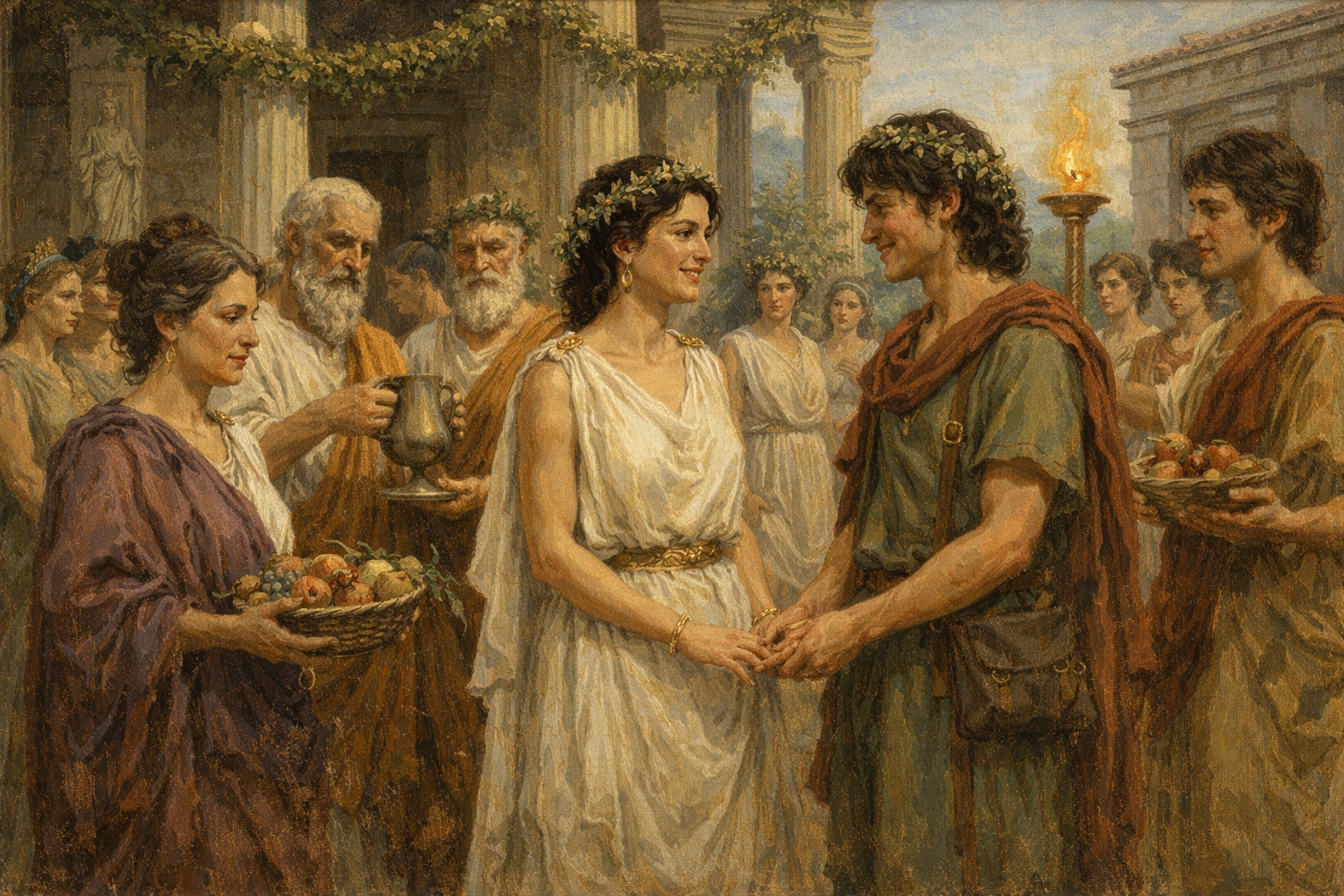
“Though Caesar put her to death, yet he paid the penalty for this murder when his family was totally extinguished in a short time.[19] No act of his principate was more grim and no other gave the gods and the spirits such good reason to avert their faces. Yet the audacity and pride of her words abolished pity in the spectators and roused Vespasian to a high pitch of fury: she renounced all hope of survival and challenged him to exchange his life with hers, declaring that she had lived more happily in the underground darkness than he had on his throne.” And it was at this point, my father said, that the conversation about love came to an end, for they were now near Thespiai and one of Peisias’ friends, Diogenes, was observed to be approaching them on the run. While he was still at some distance, Soklaros called to him, “It’s not a war you’re going to tell us of, Diogenes?” “Hush!” cried the latter. “A marriage is on foot. Please hurry up, for the sacrifice only awaits your presence.” They were all pleased and Zeuxippos inquired whether Diogenes’ friend was still angry. “On the contrary,” said Diogenes, “he was the first to agree to Ismenodora’s proposal. And now he has eagerly put on a chaplet and a white cloak to lead the procession through the market-place to the temple of the god.” “Forward then, by all means forward,” said my father, “so that we may have a laugh at the man and salute the god. For it’s plain to see that he approves and is graciously present at this affair.” |
“Ἀποκτείνει μὲν οὖν αὐτὴν ὁ Καῖσαρ· ἀποκτείνας δὲ δίδωσι δίκην, ἐν ὀλίγῳ χρόνῳ χρόνῳ τοῦ γένους παντὸς ἄρδην ἀναιρεθέντος. οὐδὲν γὰρ ἤνεγκεν ἡ τόθ᾿ ἡγεμονία σκυθρωπότερον οὐδὲ μᾶλλον ἑτέραν εἰκὸς ἦν καὶ θεοὺς καὶ δαίμονας ὄψιν ἀποστραφῆναι· καίτοι τὸν οἶκτον ἐξῄρει τῶν θεωμένων τὸ θαρραλέον αὐτῆς καὶ μεγαλήγορον, ᾧ καὶ μάλιστα παρώξυνε τὸν Οὐεσπασιανόν, ὡς ἀπέγνω τῆς σωτηρίας πρὸς αὐτὸν ἀλλαγὴν κελεύουσα τοῦ βίου· βεβιωκέναι γὰρ ὑπὸ σκότῳ καὶ κατὰ γῆς ἥδιον ἢ βασιλεύειν ἐκεῖνον.” [d 26] Ἐνταῦθα μὲν ὁ πατὴρ ἔφη τὸν περὶ Ἔρωτος αὐτοῖς τελευτῆσαι λόγον, τῶν Θεσπιῶν ἐγγὺς οὖσιν· ὀφθῆναι δὲ προσιόντα θᾶττον ἢ βάδην πρὸς αὐτοὺς ἕνα τῶν Πεισίου ἑταίρων Διογένη· τοῦ δὲ Σωκλάρου πρὸς αὐτὸν ἔτι πόρρωθεν εἰπόντος, “οὐ πόλεμόν γ᾿, ὦ Διόγενες, ἀπαγγέλλων,” ἐκεῖνον, “οὐκ εὐφημήσετε,” φάναι, “γάμων ὄντων καὶ προάξετε θᾶσσον, ὡς ὑμᾶς τῆς θυσίας περιμενούσης;” Πάντας μὲν οὖν ἡσθῆναι, τὸν δὲ Ζεύξιππον ἐρέσθαι εἰ ἔτι χαλεπός ἐστι. “Πρῶτος μὲν οὖν,” φάναι, “συνεχώρησε τῇ Ἰσμηνοδώρᾳ· καὶ νῦν ἑκὼν στέφανον καὶ λευκὸν ἱμάτιον λαβὼν οἷός ἐστιν ἡγεῖσθαι δι᾿ ἀγορᾶς πρὸς τὸν θεόν.” [e] “Ἀλλ᾿ ἴωμεν, ναὶ μὰ Δία,” τὸν πατέρα εἰπεῖν, “ἴωμεν, ὅπως ἐπεγγελάσωμεν τἀνδρὶ καὶ τὸν θεὸν προσκυνήσωμεν· δῆλος γάρ ἐστι χαίρων καὶ παρὼν εὐμενὴς τοῖς πραττομένοις.” |
THE END
Comparison with other dialogues on love
by Edmund Marlowe
“The Erotikos may be read as a deliberate counter-statement to the sophistic praise of pederasty found in authors such as Lucian and Achilles Tatius.”
— Judith Mossman, commentary on Plutarch’s Erotikos.[20]
The two other dialogues alluded to by Mossman are Lucian’s Two Kinds of Love and the debate between Menelaos and Kleitophon in Achilleus Tatios’s novel Leukippe and Kleitophon. All three were written in the 2nd century AD and set in the culturally Hellenic eastern Mediterranean, which would suit them well for comparison if only they were debating the same question. This, however, they were not, despite all three drawing comparisons between mulierasty and pederasty. Contra Mossman, they sought answers to different questions and do not contradict each other. Moreover, the “right” answer (only formally laid down in Two Kinds of Love, where those called upon to arbitrate chose in favour of pederasty) is so obvious in each case as to be of little interest; rather it is the arguments made that are enlightening.
Two Kinds of Love and the protagonists in Leukippe and Kleitophon ask whether it is worthier and more satisfying for a bachelor to have liaisons with women or boys. As explained there and elsewhere in Greek literature, an (implicitly non-permanent) love affair with a boy could do him enormous good and bring great satisfaction and happiness to his lover. It is an unspoken assumption of Greek (and almost all post-primaeval but pre-effective-contraceptive-era societies) that non-permanent affairs with women, with the accompanying dangers of unwanted pregnancy and wrecked marriage prospects, would likely ruin their lives and serve no useful function. The women chased by Charikles, Lucian’s advocate for mulierasty, are implicitly just courtesans or slaves, a shabby pursuit compared to free boys. It should be pointed out though that women as a whole are at a tremendous disadvantage with comparison between them and boys as love-objects posed in this way. Completely by-passed are all the attractions of marriage and life-long love which surely in the end won over most Greek men for good reasons.
Dialogue on Love asks a very different question: whether marriage to a beautiful, virtuous and rich woman in love with him is an attractive option for a youth of around seventeen who has a man lover who is selfishly trying to prolong their affair past its season. Again, if he can love her, and clearly he finds he can, why would he refuse her?
It should go without saying that we are dealing here with a society free of the very modern dogma of fixed and innate sexual orientation. There would be no point to the debates at all if the listeners were prohibited by their own natures from making choices. Implicitly, they are invited to choose on the sole basis of their good sense or good taste.
What Plutarch does in Dialogue on Love was better and more precisely put by Robert Flacelière: he “defends conjugal love and seeks to demonstrate that the passion for women, sanctified by marriage, is more natural and more beneficial than the traditional Greek passion for boys.”[21] The critical phrase here is “sanctified by marriage”, without which his argument would fall helplessly apart.
[1] “Women” and “men” have been replaced by “females” and “males” as a much more accurate translation of θῆλυ and τἄρρενα. [Website note]
[2] The Greek words that differ by a letter are stergein, “cherish,” and stegein, “not to leak” (of a roof, for instance). So affection is like a tight roof that keeps the home cosy. [Translator’s note]
[3] Republic, 462 c; cf. Mor. 140 d; 484 d. The citizens of Plato’s State used the terms “mine,” “not mine” in concert about the same things, not individually or selfishly. [Translator’s note]
[4] That is, the two seas of Corinth, the Saronic Gulf and the Gulf of Corinth. [Translator’s note]
[5] See Mor. 257 e ff. where the story is told at greater length; Polyainos, viii. 39. [Translator’s note]
[6] To solemnize the betrothal. [Translator’s note]
[7] Mor. 258 c is rather more colourful about the gentleman’s death: “he mounted a chariot as if to try shaking and jolting as a relief, but almost immediately he had to climb down, was changed over to a litter, and expired when night fell.” [Translator’s note]
[8] “Young men” has been replaced by “Those” as a translation of the pronoun ὅσο. There is no excuse for making presumptions as to their age, less still culturally improbable presumptions. [Website note]
[9] For the various ancient accounts and explanations of this regicide, see the article The Death of Archelaos of Macedon, 399 BC. [Website note]
[10] Plutarch, Life of Pelopidas XXXV tells in some detail the story of how Thebe wife of Alexander tyrant of Pherai in Thessaly instigated her three brothers, of whom the second named was Pytholaos, to murder her husband in 357/6 BC. Earlier (XXVIII), he also said one of the causes of her anger was that he “had made her youngest brother his paramour.” However, it is only in The Dialogue on Love that this brother is identified as Pytholaos and his motive said to be vengeance for himself. [Website note]
[11] This, also recounted by Aristotle, Politics 1311a, happened in the 6th century BC. [Website note]
[12] Like Narkissos, falling in love with himself. [Translator’s note]
[13] “Young men” has been replaced by “youths” as a translation of νέους, which simply means “young males”. [Website note]
[14] See Mor. 142 f f. (trans. Babbitt): “As the mixing of liquids, according to what men of science say, extends through their entire content, so also in the case of married people there ought to be a mutual amalgamation of their bodies, property, friends, and relations.” [Translator’s note]
[15] Here follow several lacunae, partially indicated in one ms. The sense to be supplied is doubtless: “At any rate the love of chaste women admits no autumn, but even amid grey hairs . . .” [Translator’s note]
[16] The Batavian rebellion against Rome led by C. Julius Civilis in AD 69 was described by Tacitus in his Histories IV 67. [Website note]
[17] This may mean that the dialogue was written after A.D. 116–117, during which year the only war in Egypt between the death of Domitian and that of Plutarch was briefly fought (Cichorius, Römische Studien, pp. 406 ff.). [Translator’s note]
[18] There is probably a lacuna here, stating the circumstances of Sabinus’ eventual discovery. According to Tacitus he eluded his pursuers for nine years. Dio Cassius (lxv. 16) says that the whole family was brought to Rome and implies that they were executed by Vespasian. But Plutarch’s personal evidence about the survival of the sons casts doubt on this. The wife, at any rate, must have been taken to Rome. [Translator’s note]
[19] Actually Vespasian died (peacefully: “vae, puto deus fio”) in a.d. 79 and Domitian was not murdered until 96. [Translator’s note]
[20] In her Plutarch and His Intellectual World, Swansea: Classical Press of Wales, 1997.
[21] Love in Ancient Greece, New York: Crown, 1962.
Comments powered by CComment