
THE DIALOGUE ON LOVE II
BY PLUTARCH
This is the second part of the Greek writer Plutarch’s Dialogue on Love Ἐρωτικός, written early in the 2nd century AD as part of his Moralia, and introduced here.
Second part: 754e-760d
|
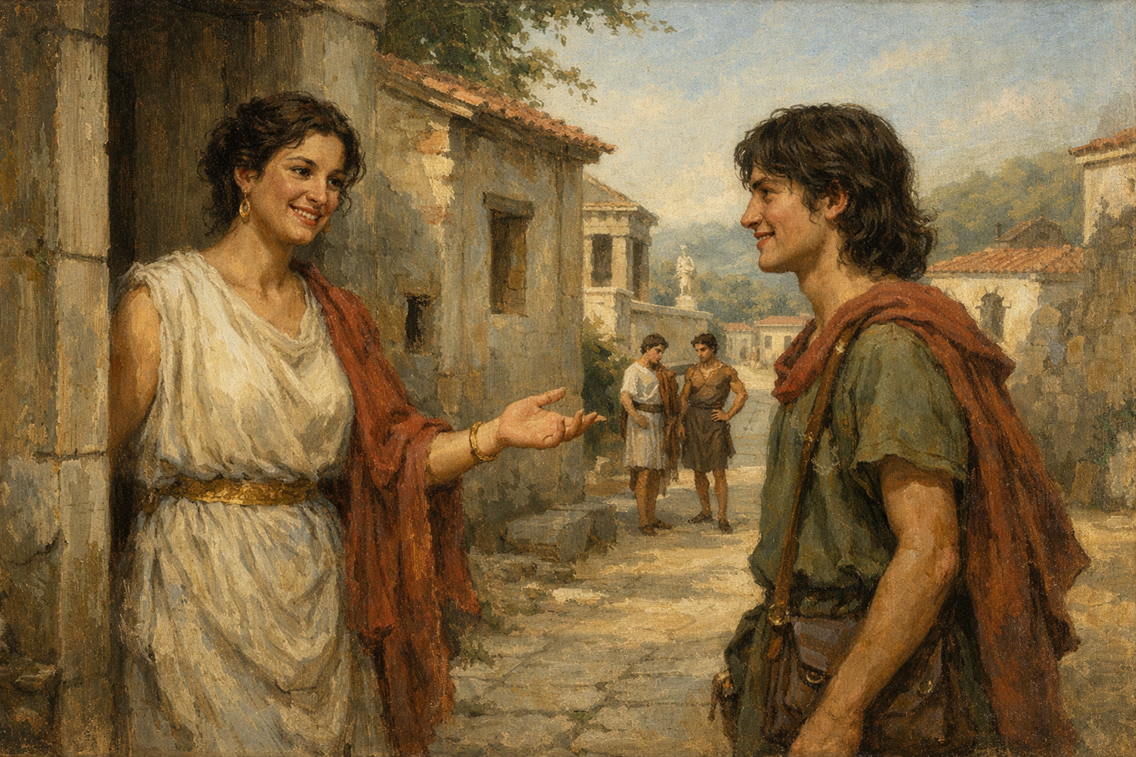
It was at this point in the conversation, said my father, that a friend rode up from the city with his horse at a gallop bringing a report to Peisias of a surprisingly audacious occurrence. It seems that Ismenodora was convinced that, though Bakchon had no personal antipathy to the marriage, he was embarrassed by its detractors; accordingly, she resolved not to let the young man escape. She summoned those male friends who were the most vigorous and most sympathetic to her passion, together with the most intimate of her women friends, organized them in a disciplined group, and waited intently for the hour when Bakchon habitually left the palaestra and walked decorously by her house. On this occasion, freshly anointed, he approached with two or three companions. Ismenodora met him at the door and had only to touch his garment when her friends handsomely snatched up the handsome youth in his cloak and mantle, carried him in a body into the house, and immediately locked the doors. |
[10] Τοιούτων λόγων, ὁ πατὴρ ἔφη, παρόντων αὐτοῖς, ἐλθεῖν τῷ Πεισίᾳ ἑταῖρον ἐκ πόλεως ἵππῳ θέοντα, πρᾶγμα θαυμαστὸν ἀπαγγέλλοντα τετολμημένον. Ἡ γὰρ Ἰσμηνοδώρα, ὡς ἔοικεν, αὐτὸν μὲν οὐκ ἀηδῶς ἔχειν οἰομένη τὸν Βάκχωνα πρὸς τὸν γάμον, αἰσχύνεσθαι δὲ τοὺς ἀποτρέποντας, ἔγνω μὴ προέσθαι τὸ μειράκιον. τῶν οὖν φίλων τοὺς μάλιστα τοῖς βίοις νεαροὺς καὶ συνερῶντας αὐτῇ καὶ τῶν γυναικῶν τὰς συνήθεις μεταπεμψαμένη καὶ συγκροτήσασα παρεφύλαττε τὴν ὥραν, ἣν ὁ Βάκχων [f] ἔθος εἶχεν ἀπιὼν ἐκ παλαίστρας παρὰ τὴν οἰκίαν αὐτῆς παρεξιέναι κοσμίως. ὡς οὖν τότε προσῄει μετὰ δυοῖν ἢ τριῶν ἑταίρων ἀληλιμμένος, αὐτὴ μὲν ἐπὶ τὰς θύρας ἀπήντησεν ἡ Ἰσμηνοδώρα καὶ τῆς χλαμύδος ἔθιγε μόνον, οἱ δὲ φίλοι καλὸν καλῶς ἐν τῇ χλαμύδι καὶ τῇ διβολίᾳ συναρπάσαντες εἰς τὴν οἰκίαν παρήνεγκαν ἀθρόοι καὶ τὰς θύρας εὐθὺς ἀπέκλεισαν. |
|
At the same time the women inside snatched off his cloak and put a wedding garment on him. The servants scurried about and wreathed the doors with olive and laurel, not only Ismenodora’s doors, but Bakchon’s also; and a flute-girl went out and piped her way down the lane. Now of the Thespians and their guests, some merely laughed, while others were furious and tried to stir up the gymnasiarchs, for these maintain a strict control over the ephebes[1] and pay close attention to their activities. No one paid any more attention to the contests; everybody deserted the theatre and gathered about Ismenodora’s door, where they engaged in fierce debate. 11. So when (continued my father) Peisias’ friend had come galloping up as fast as though he were bringing a military dispatch and, in great excitement, had said no more than that Ismenodora had kidnapped Bakchon, Zeuxippos began to laugh and, being a great admirer of Euripides, recited: You revel in your wealth, madame: But Peisias jumped up and shouted, “Good heavens! What end will there be to the licence that is subverting our town? Now already self-government is on the way to anarchy! Yet it may be absurd to be protesting in defence of laws and statutes when it is the very Laws of Nature that are transgressed when women take over the state. Did even Lemnos see the like?[2] Let’s be off!” he cried. “Let’s be off and hand over the gymnasium and the Council Chamber to the women since our city is by now completely emasculated!” So Peisias rushed off and Protogenes trailed after him, partly because he shared his anger, partly to calm him. Anthemion remarked, “Such a bold stroke is certainly a strong action, really Lemnian[3]—we can admit it since we’re by ourselves,[4] It shows the hand of a woman very much in love.” Soklaros asked with a little smile, “Do you really think that it’s a case of kidnapping and rape? Isn’t it rather the plausible counter-stratagem of a sensible youth[5] who has slipped from the clutches of his lovers and deserted to the arms of a rich and beautiful woman?” “Don’t say such things, Soklaros,” answered Anthemion. “And don’t be putting suspicion on Bakchon. Even if his character were not naturally simple and frank, he certainly wouldn’t have concealed it from me, with whom he shares every confidence. He sees quite well that in these matters it is I who am Ismenodora’s warmest ally. It’s Love that it’s ‘hard to combat,’ not ‘anger,’ as Herakleitos has it: ‘whatever it wants, it buys even at the cost of one’s life’—and money and reputation, too. Where do you find better behaviour in the city than was Ismenodora’s? When did any ugly story ever enter her house or any hint of evil-doing ever leave a stain on it? Yes, it’s only too plain that some divine impulse, overpowering her common sense, has really taken possession of the poor mortal creature.” And Pemptides[6] laughed and said,” There is, of course, a physical disease which they call the sacred[7] one; so that there’s nothing strange about it if some people call the greatest and most frenetic mental affliction sacred and divine. “Once upon a time in Egypt I saw two neighbours disputing about a snake that had slithered on to the road. They both hailed it as a bringer of good luck, but each wanted to keep it as his own. Similarly, just now, when I observed both parties dragging off Love, some to the men’s quarters, others to the women’s, while both claimed him as a tremendous and divine blessing, I was not surprised that this passion had acquired all the power and respect that it has, since the very persons who should have been expelling it from every nook and cranny and restricting it were themselves magnifying and exalting it. So I held my peace a while ago, observing that the dispute was more a matter of private than of public concern. But now that Peisias has left us, I should be delighted to hear from you what criterion those who first declared Eros to be a god had in mind when they made the statement.” 13. Pemptides had finished and my father had begun to answer when another messenger arrived from town with a summons from Ismenodora for Anthemion. The tumult, in fact, was growing worse as the gymnasiarchs disagreed, one holding that they should reclaim Bakchon, the other that they should not meddle. So Anthemion got up and set out. My father addressed Pemptides by name. “Pemptides,” he said, “it is, I believe, a grave and dangerous matter that you are broaching; or rather, you are altogether violating our inviolable belief in the gods when you demand an account and proof of each of them. Our ancient traditional faith is good enough. It is impossible to assert or discover evidence more palpable than this faith, Whatever subtle twist’s invented by keen wit.[8] This faith is a basis, as it were, a common foundation, of religion; if confidence and settled usage are disturbed or shaken at a single point, the whole edifice is enfeebled and discredited. “You have no doubt heard what an uproar burst upon Euripides when he began his Melanippê with this verse: Zeus, whoever he is, for I know him only by report. Well, he got another chorus (for he had confidence in the play, it seems, since it was composed in an elevated and elaborate style) and changed the verse to the present text: Zeus, as the voice of truth declares. |
[755a] Ἅμα δ᾿ αἱ μὲν γυναῖκες ἔνδον αὐτοῦ τὸ χλαμύδιον ἀφαρπάσασαι περιέβαλον ἱμάτιον νυμφικόν· οἰκέται δὲ περὶ κύκλῳ δραμόντες ἀνέστεφον ἐλαίᾳ καὶ δάφνῃ τὰς θύρας οὐ μόνον τὰς τῆς Ἰσμηνοδώρας ἀλλὰ καὶ τὰς τοῦ Βάκχωνος· ἡ δ᾿ αὐλητρὶς αὐλοῦσα διεξῆλθε τὸν στενωπόν. Τῶν δὲ Θεσπιέων καὶ τῶν ξένων οἱ μὲν ἐγέλων, οἱ δ᾿ ἠγανάκτουν καὶ τοὺς γυμνασιάρχους παρώξυνον· ἄρχουσι γὰρ ἰσχυρῶς τῶν ἐφήβων καὶ προσέχουσι τὸν νοῦν σφόδρα τοῖς ὑπ᾿ αὐτῶν πραττομένοις. ἦν δὲ λόγος οὐθεὶς τῶν ἀγωνιζομένων, [b] ἀλλ᾿ ἀφέντες τὸ θέατρον ἐπὶ τῶν θυρῶν τῆς Ἰσμηνοδώρας ἐν λόγοις ἦσαν καὶ φιλονεικίαις πρὸς ἀλλήλους. [11] Ὡς οὖν ὁ τοῦ Πεισίου φίλος ὥσπερ ἐν πολέμῳ προσελάσας τὸν ἵππον αὐτὸ τοῦτο τεταραγμένος εἶπεν ὅτι Βάκχων᾿ ἥρπακεν Ἰσμηνοδώρα, τὸν μὲν Ζεύξιππον ὁ πατὴρ ἔφη γελάσαι καὶ εἰπεῖν, ἅτε δὴ καὶ φιλευριπίδην ὄντα, πλούτῳ χλιδῶσα θνητὰ δ᾿, τὸν δὲ Πεισίαν ἀναπηδήσαντα βοᾶν, “ὦ θεοί, τί πέρας ἔσται τῆς ἀνατρεπούσης τὴν πόλιν ἡμῶν ἐλευθερίας; ἤδη γὰρ εἰς ἀνομίαν τὰ πράγματα διὰ τῆς αὐτονομίας βαδίζει. καίτοι γελοῖον ἴσως ἀγανακτεῖν [c] περὶ νόμων καὶ δικαίων, ἡ γὰρ φύσις παρανομεῖται γυναικοκρατουμένη. τί τοιοῦτον ἡ Λῆμνος; ἴωμεν ἡμεῖς, ἴωμεν,” εἶπεν, “ὅπως καὶ τὸ γυμνάσιον ταῖς γυναιξὶ παραδῶμεν καὶ τὸ βουλευτήριον, εἰ παντάπασιν ἡ πόλις ἐκνενεύρισται.” προάγοντος οὖν τοῦ Πεισίου, ὁ μὲν Πρωτογένης οὐκ ἀπελείπετο τὰ μὲν συναγανακτῶν τὰ δὲ πραΰνων ἐκεῖνον. Ὁ δ᾿ Ἀνθεμίων, “νεανικὸν μέν,” ἔφη, “τὸ τόλμημα καὶ Λήμνιον ὡς ἀληθῶς, αὐτοὶ γάρ ἐσμεν, σφόδρ᾿ ἐρώσης γυναικός.” Καὶ ὁ Σώκλαρος ὑπομειδιῶν, “οἴει γὰρ ἁρπαγήν,” ἔφη, “γεγονέναι καὶ βιασμόν, οὐκ ἀπολόγημα [d] καὶ στρατήγημα νεανίσκου νοῦν ἔχοντος, ὅτι τὰς τῶν ἐραστῶν ἀγκάλας διαφυγὼν ἐξηυτομόληκεν εἰς χεῖρας καλῆς καὶ πλουσίας γυναικός;” “Μὴ λέγε ταῦτ᾿,” εἶπεν, “ὦ Σώκλαρε, μηδ᾿ ὑπονόει ἐπὶ Βάκχωνος,” ὁ Ἀνθεμίων· “καὶ γὰρ εἰ μὴ φύσει τὸν τρόπον ἁπλοῦς ἦν καὶ ἀφελής, ἐμέ γ᾿ οὐκ ἂν ἀπεκρύψατο, τῶν τ᾿ ἄλλων μεταδιδοὺς ἁπάντων, ἔν τε τούτοις ὁρῶν προθυμότατον ὄντα τῆς Ἰσμηνοδώρας βοηθόν. Ἔρωτι δὲ ‘μάχεσθαι χαλεπόν,’ οὐ ‘θυμῷ’ καθ᾿ Ἡράκλειτον· ‘ὅ τι γὰρ ἂν θελήσῃ, καὶ ψυχῆς ὠνεῖται’ καὶ χρημάτων καὶ δόξης. ἐπεὶ τί κοσμιώτερον Ἰσμηνοδώρας ἐν τῇ πόλει; πότε δ᾿ εἰσῆλθεν ἢ λόγος αἰσχρὸς ἢ πράξεως Eὑπόνοια φαύλης ἔθιγε τῆς οἰκίας; ἀλλ᾿ ἔοικε θεία τις ὄντως εἰληφέναι τὴν ἄνθρωπον ἐπίπνοια καὶ κρείττων ἀνθρωπίνου λογισμοῦ.” [12] Καὶ ὁ Πεμπτίδης ἐπιγελάσας, “ἀμέλει καὶ σώματός τις,” ἔφη, “νόσος ἔστιν, ἣν ἱερὰν καλοῦσιν· οὐδὲν οὖν ἄτοπον, εἰ καὶ ψυχῆς τὸ μανικώτατον πάθος καὶ μέγιστον ἱερὸν καὶ θεῖον ἔνιοι προσαγορεύουσιν. “Εἶθ᾿ ὥσπερ ἐν Αἰγύπτῳ ποτὲ γείτονας ἑώρων δύο διαμφισβητοῦντας, ὄφεως προσερπύσαντος εἰς τὴν ὁδόν, ἀμφοτέρων μὲν ἀγαθὸν δαίμονα καλούντων, ἑκατέρου δ᾿ ἔχειν ἀξιοῦντος ὡς ἴδιον· οὕτως [f] ὁρῶν ὑμῶν ἄρτι τοὺς μὲν εἰς τὴν ἀνδρωνῖτιν ἕλκοντας τὸν Ἔρωτα, τοὺς δ᾿ εἰς τὴν γυναικωνῖτιν, ὡς ὑπερφυὲς καὶ θεῖον ἀγαθόν, οὐκ ἐθαύμαζον εἰ τηλικαύτην δύναμιν ἔσχε καὶ τιμὴν τὸ πάθος, οἷς ἦν προσῆκον ἐξελαύνειν αὐτὸ πανταχόθεν καὶ κολούειν, ὑπὸ τούτων αὐξανόμενον καὶ σεμνυνόμενον. ἄρτι μὲν οὖν ἡσυχίαν ἦγον· ἐν γὰρ ἰδίοις μᾶλλον ἢ κοινοῖς ἑώρων τὴν ἀμφισβήτησιν οὖσαν· νυνὶ δ᾿ [756a] ἀπηλλαγμένος Πεισίου, ἡδέως ἂν ὑμῶν ἀκούσαιμι πρὸς τί βλέψαντες ἀπεφήναντο τὸν Ἔρωτα θεὸν οἱ πρῶτοι τοῦτο λέξαντες.” [13] Παυσαμένου δὲ τοῦ Πεμπτίδου καὶ τοῦ πατρὸς ἀρξαμένου τι περὶ τούτων λέγειν, ἕτερος ἧκεν ἐκ πόλεως, τὸν Ἀνθεμίωνα μεταπεμπομένης τῆς Ἰσμηνοδώρας· ἐπέτεινε γὰρ ἡ ταραχή, καὶ τῶν γυμνασιάρχων ἦν διαφορά, τοῦ μὲν οἰομένου δεῖν τὸν Βάκχωνα ἀπαιτεῖν, τοῦ δὲ πολυπραγμονεῖν οὐκ ἐῶντος. ὁ μὲν οὖν Ἀνθεμίων ἀναστὰς ἐβάδιζεν. Ὁ δὲ πατὴρ τὸν Πεμπτίδην ὀνομαστὶ προσαγορεύσας, “μεγάλου μοι δοκεῖς ἅπτεσθαι,” εἶπεν, [b] “καὶ παραβόλου πράγματος, ὦ Πεμπτίδη, μᾶλλον δ᾿ ὅλως τὰ ἀκίνητα κινεῖν τῆς περὶ θεῶν δόξης ἣν ἔχομεν, περὶ ἑκάστου λόγον ἀπαιτῶν καὶ ἀπόδειξιν· ἀρκεῖ γὰρ ἡ πάτριος καὶ παλαιὰ πίστις, ἧς οὐκ ἔστιν εἰπεῖν οὐδ᾿ ἀνευρεῖν τεκμήριον ἐναργέστερον οὐδ᾿ εἰ δι᾿ ἄκρας τὸ σοφὸν εὕρηται φρενός, ἀλλ᾿ ἕδρα τις αὕτη καὶ βάσις ὑφεστῶσα κοινὴ πρὸς εὐσέβειαν, ἐὰν ἐφ᾿ ἑνὸς ταράττηται καὶ σαλεύηται τὸ βέβαιον αὐτῆς καὶ νενομισμένον, ἐπισφαλὴς γίνεται πᾶσα καὶ ὕποπτος. “Ἀκούεις δὲ δήπου τὸν Εὐριπίδην, ὡς ἐθορυβήθη ποιησάμενος ἀρχὴν τῆς Μελανίππης ἐκείνην, Ζεύς, ὅστις ὁ Ζεύς, οὐ γὰρ οἶδα πλὴν λόγῳ, μεταλαβὼν δὲ χορὸν ἄλλον (ἐθάρρει δ᾿ ὡς ἔοικε τῷ δράματι γεγραμμένῳ πανηγυρικῶς καὶ περιττῶς) [c] ἤλλαξε τὸν στίχον ὡς νῦν γέγραπται Ζεύς, ὡς λέλεκται τῆς ἀληθείας ὕπο. |
|
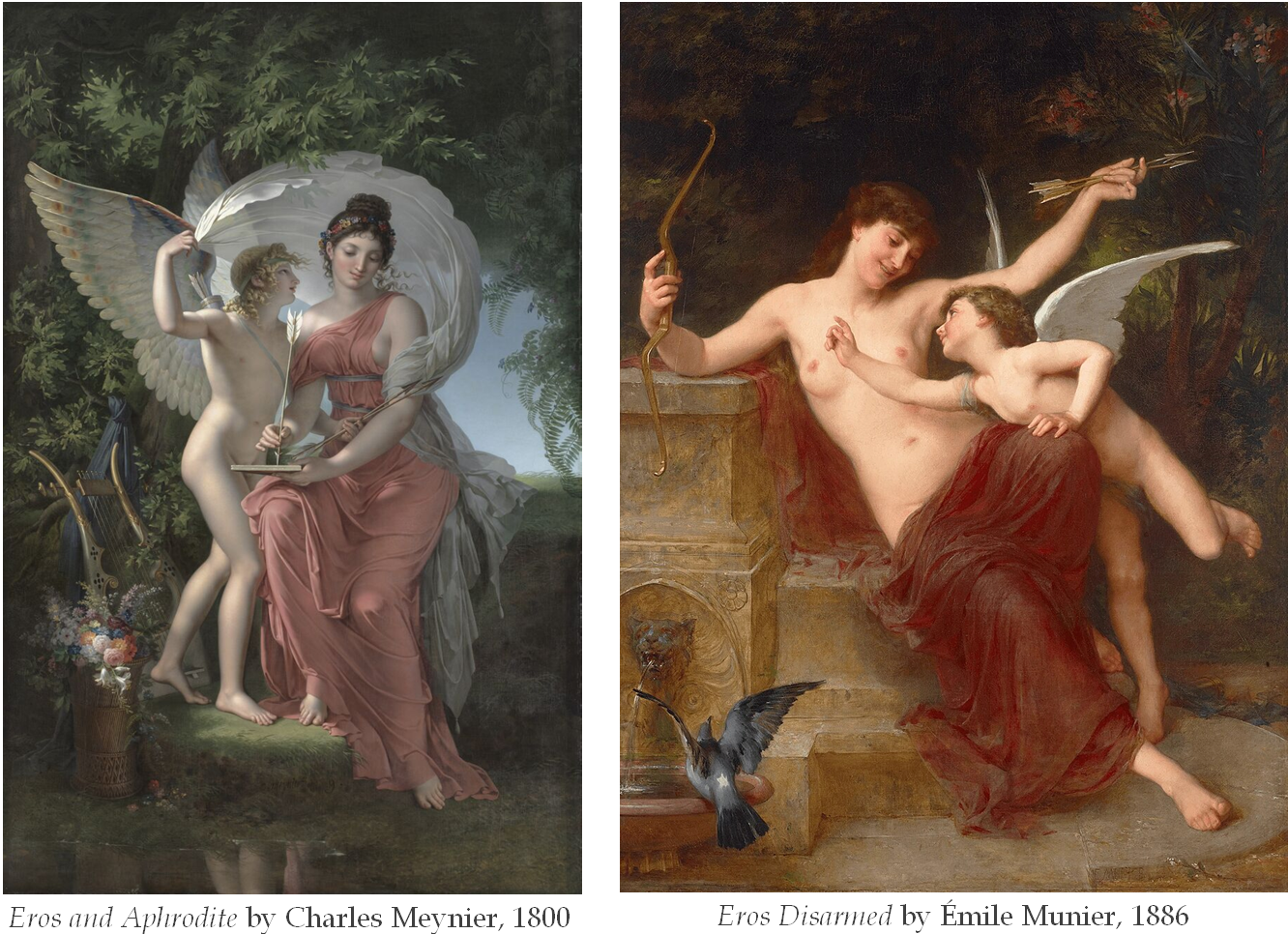
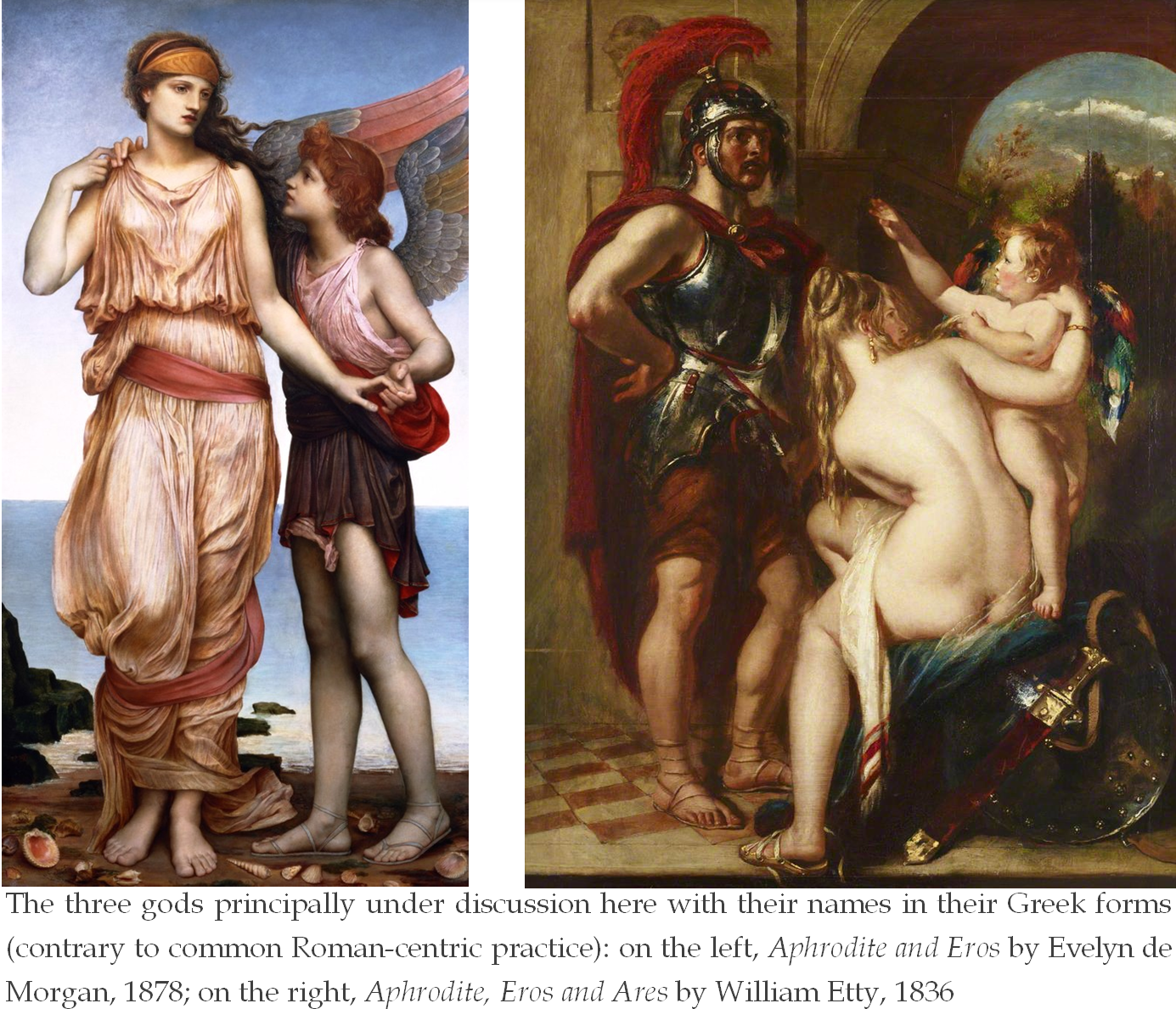
“So what is to be gained by the use of argument to make our belief in Zeus or Athena or Eros debatable or uncertain? Love is not now requesting his first altar and sacrifice. He is no alien intruder from some barbaric superstition like certain Attises and Adonises, as they are called. He does not, assisted by hermaphrodites and women, smuggle himself in to reap a harvest of honours to which he has no right, which would make him liable to indictment for illegal registration as a god, and bastardy. On the contrary, my friend, when you hear Empedokles[9] declaring, Among them Love is equal, far and wide; you must suppose that his verses apply also to Eros; for though he is not visibly among the most ancient divinities, he is there conceptually. If you are going to demand a proof of each one of them, probing every temple and attacking each altar with sophistic assault, not a god will you exempt from malicious prosecution and inquisition. “Not to go farther, Empedocles has called her’ giver of life’ and Sophocles ‘fruitful’; both epithets being perfectly just and apt. And yet this great and wonderful primary function of Aphrodite becomes only a secondary task of Eros when he accompanies the goddess. If he is not present, what occurs is precisely a dreary residue and becomes Unhonoured and without a friend. For intercourse without Eros is like hunger and thirst, which can be sated, but never achieve a noble end. It is by means of Eros that the goddess removes the cloying effect of pleasure and creates affection and fusion. This is the reason why Parmenides declares that Eros is the most ancient work of Aphrodite; his words in the Cosmogony are And first of all the gods she framed was Love. But Hesiod, in my opinion, was more scientific when he depicted Eros as the first-born of them all, in order to make him indispensable for the generation of all things. “If, then, we strip from Love any of his customary honours, even those given to Aphroditê will not remain undisturbed. Nor is it in fact possible to affirm that there are some who rail at Eros without disparaging Aphroditê. Rather on the selfsame stage we hear Love is idle and born god for idle men; and again My children, Cypris is not Cypris alone, In the same way practically none of the other gods has escaped unscathed the stupidity of those ready to slander. Look at the case of Ares who occupies a position diametrically opposite to that of Eros, as it were, on a design etched in bronze. Observe how great are the honours men give him and again how numerous are the invectives hurled against him: Ladies, Ares is blind and cannot see; |
“Τί οὖν διαφέρει τὴν περὶ τοῦ Διὸς δόξαν ἢ τῆς Ἀθηνᾶς ἢ τοῦ Ἔρωτος εἰς ἀμφίβολον τῷ λόγῳ θέσθαι ἢ καὶ ἄδηλον; οὐ γὰρ νῦν αἰτεῖ πρῶτον βωμὸν ὁ Ἔρως καὶ θυσίαν οὐδ᾿ ἔπηλυς ἔκ τινος βαρβαρικῆς δεισιδαιμονίας, ὥσπερ Ἄτται τινὲς καὶ Ἀδώνιοι λεγόμενοι, δι᾿ ἀνδρογύνων καὶ γυναικῶν παραδύεται κρύφα τιμὰς οὐ προσηκούσας καρπούμενος, ὥστε παρεισγραφῆς δίκην φεύγειν καὶ [d] νοθείας τῆς ἐν θεοῖς. ἀλλ᾿ ὅταν Ἐμπεδοκλέους ἀκούσῃς λέγοντος, ὦ ἑταῖρε, καὶ φιλότης ἐν τοῖσιν ἴση μῆκός τε πλάτος τε, ταῦτ᾿ οἴεσθαι χρὴ λέγεσθαι περὶ Ἔρωτος· οὐ γάρ ἐστιν ὁρατὸς ἀλλὰ δοξαστὸς ἡμῖν ὁ θεὸς οὗτος ἐν τοῖς πάνυ παλαιοῖς· ὧν ἂν περὶ ἑκάστου τεκμήριον ἀπαιτῇς, παντὸς ἁπτόμενος ἱεροῦ καὶ παντὶ βωμῷ σοφιστικὴν ἐπάγων πεῖραν, οὐδέν᾿ ἀσυκοφάντητον οὐδ᾿ ἀβασάνιστον ἀπολείψεις. “Πόρρω γὰρ οὐκ ἄπειμι [e] ‘ζείδωρον’ γὰρ αὐτὴν Ἐμπεδοκλῆς ‘εὔκαρπον’ δὲ Σοφοκλῆς ἐμμελῶς πάνυ καὶ πρεπόντως ὠνόμασαν. ἀλλ᾿ ὅμως τὸ μέγα τοῦτο καὶ θαυμαστὸν Ἀφροδίτης μὲν ἔργον Ἔρωτος δὲ πάρεργόν ἐστιν Ἀφροδίτῃ συμπαρόντος· μὴ συμπαρόντος δὲ κομιδῇ τὸ γινόμενον ἄζηλον ἀπολείπεται καὶ ἄτιμον κἄφιλον. ἀνέραστος γὰρ ὁμιλία καθάπερ πεῖνα καὶ δίψα πλησμονὴν ἔχουσα πέρας εἰς οὐδὲν ἐξικνεῖται καλόν· ἀλλ᾿ ἡ θεὸς Ἔρωτι τὸν κόρον ἀφαιροῦσα τῆς ἡδονῆς φιλότητα ποιεῖ καὶ σύγκρασιν. διὸ Παρμενίδης μὲν ἀποφαίνει τὸν Ἔρωτα τῶν Ἀφροδίτης ἔργων πρεσβύτατον, ἐν τῇ κοσμογονίᾳ γράφων [f] πρώτιστον μὲν Ἔρωτα θεῶν μητίσατο πάντων. Ἡσίοδος δὲ φυσικώτερον ἐμοὶ δοκεῖ ποιεῖν Ἔρωτα πάντων προγενέστατον, ἵνα πάντα δι᾿ ἐκεῖνον μετάσχῃ γενέσεως. “Ἂν οὖν τὸν Ἔρωτα τῶν νενομισμένων τιμῶν [757a] ἐκβάλλωμεν, οὐδ᾿ αἱ τῆς Ἀφροδίτης κατὰ χώραν μενοῦσιν. οὐδὲ γὰρ τοῦτ᾿ ἔστιν εἰπεῖν, ὅτι τῷ μὲν Ἔρωτι λοιδοροῦνταί τινες ἀπέχονται δ᾿ ἐκείνης, ἀλλ᾿ ἀπὸ μιᾶς σκηνῆς ἀκούομεν Ἔρως γὰρ ἀργὸν κἀπὶ τοιούτοις ἔφυ· καὶ πάλιν ὦ παῖδες, ἥ τοι Κύπρις οὐ Κύπρις μόνον, ὥσπερ οὐδὲ τῶν ἄλλων θεῶν σχεδὸν ἀλοιδόρητος οὐδεὶς ἐκπέφευγε τὴν εὐλοιδόρητον ἀμαθίαν. σκόπει δὲ τὸν Ἄρην καθάπερ ἐν πίνακι χαλκῷ τὴν ἀντικειμένην ἐκ διαμέτρου τῷ Ἔρωτι χώραν ἔχοντα πηλίκας εἴληχε τιμὰς ὑπ᾿ ἀνθρώπων καὶ πάλιν ὅσα κακῶς ἀκούει, [b] τυφλὸς γάρ, ὦ γυναῖκες, οὐδ᾿ ὁρῶν Ἄρης |
|
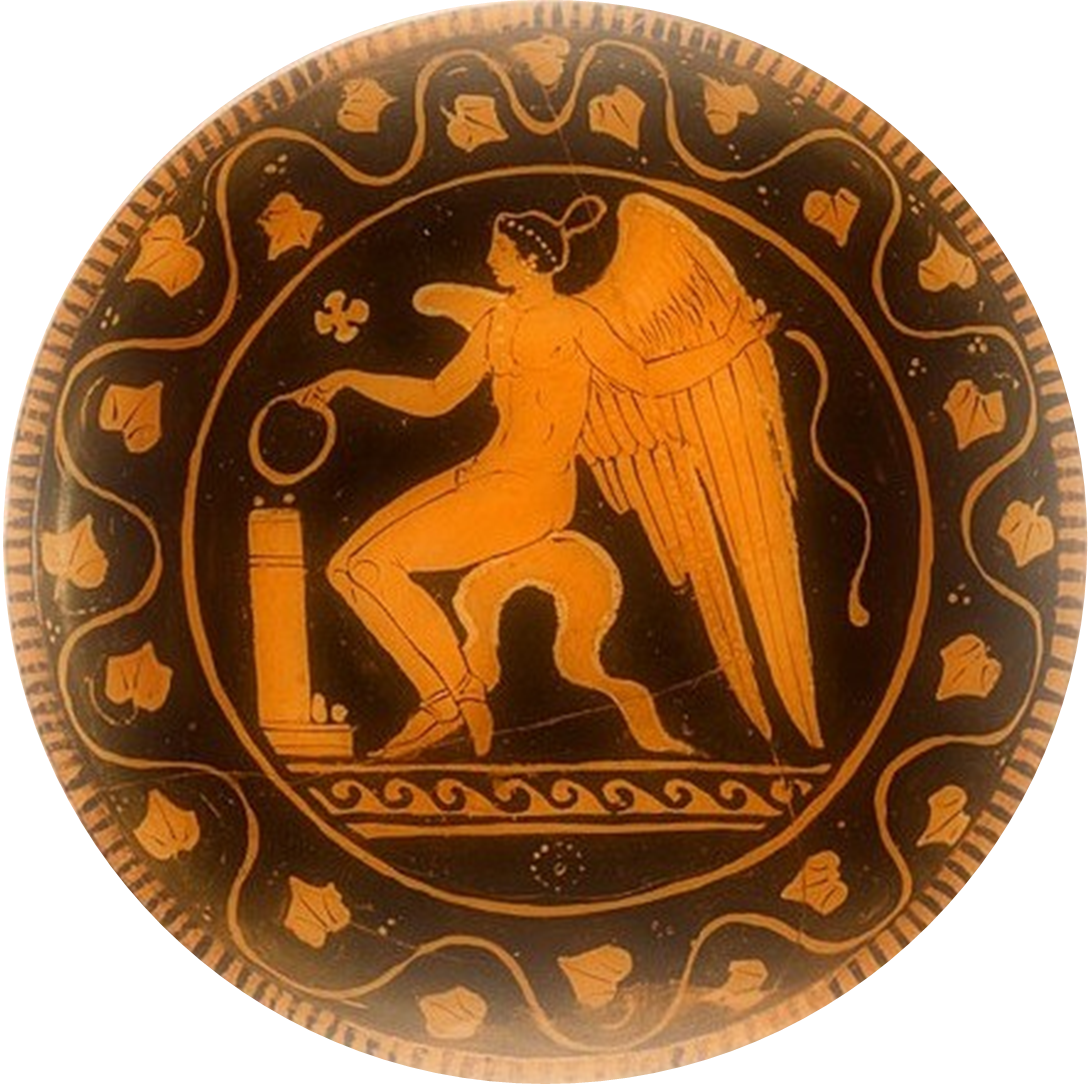
Homer calls him’ bloodstained’ and ‘turn-coat.’ Chrysippus’ explanation of the name is an accusation and an indictment of the god. He declares that Ares means Anaires (assassin), which gives an opening to those who believe that the contentious, argumentative, and spirited quality inside us is called ‘Ares.’ Others[10] in their turn will state that Aphroditê is merely desire and Hermes eloquence and the Muses the arts and Athena wisdom. You surely perceive the abyss of atheism that engulfs us if we list each several god on a roster of emotions, functions, and virtues.” “Yes, I do perceive it,” said Pemptides. “But if it is impious to identify the gods with our passions, it is equally so, on the other hand, to consider our passions as gods.” “Well now,” my father asked, “do you believe Ares to be a god or an emotion of ours?” Pemptides replied that he believed Ares to be a god who ordered the spirited and courageous element within us. “What is this, Pemptides?” cried my father. “So the warlike, inimical, and antagonistic element has a divinity, while the affectionate, sociable, coupling impulse is to be left without a god? When men slay and are slain, is there a god, Enyalios or Stratios, overseeing and presiding over their arms and arrows, their storming of towns and their driving off of booty, but when they desire marriage and an affection that will lead to concord and co-operation, is there no god to witness and direct, to lead and help us? “When men hunt roebucks and hare and deer, have they a goddess, Artemis Agrotera, to urge and halloo them on? Do those who trap wolves and bears with pits and nets pray to Aristaios, Who first set snares for beasts? When Herakles makes ready his bow to shoot at the bird, does he invoke another god to help him, as Aischylos says, May Hunter Apollo guide my shaft aright? But when a man sets out to catch the fairest prey, namely affection, does no god or spirit lead him straight and second his efforts? “As for me, no oak nor sacred olive nor that vine which Homer exalts with the epithet ‘cultivated’ seems to me a growth superior in beauty and value to the human plant, dear Daphnaios, since its vital force of growth reveals a youthful beauty that belongs to soul and body alike.” “In heaven’s name,” said Daphnaios, “who could think otherwise?” “Why, in heaven’s name,” said my father, “just these very men, all of them believe that agriculture—ploughing, sowing, planting—merits the gods’ attention. Don’t they have certain tree nymphs, to whom is Allotted a term of life as long as the years of a tree— as Pindar says? But the case is otherwise, of course, with boys and striplings: when they are at the ripening and flowering season and are being shaped and educated, it is the office of not a single god or divinity to sustain and promote their progress; nor is there a god whose care it is that a man grows straight in the direction of virtue with no deviation or crushing of the main stem of excellence through lack of a protector or by the viciousness of those he encounters. “Is it not, moreover, shocking and ungrateful of them to say such things, especially as they continue to profit by divinity’s love for man, which is everywhere dispensed and at no point fails him in his needs, even though some services are necessary rather than decorous? For example, there is the service connected with parturition which, with its accompaniment of blood and travail is no lovely thing, yet enjoys the divine supervision of Eileithyia and Locheia. It might, in fact, be better not to be born at all than to be born defective for lack of a good guardian and protector. Deity does not abandon man even when he is sick: there is a special god[11] whose mission it is to bring help and strength at such a time. Not even when a man dies is he forsaken: there is a god who cares for him and leads him to the other world, who is for the dead a lord of repose, an escort of souls to Pluto’s realm:[12] Night did not bear me lord of the lyre These matters, too, involve many disagreeable features. “Love, on the other hand, has a function as holy as any you could mention, nor is there any contest or competition more fitting for a god to preside over and umpire than the pursuit and tendance by lovers of beautiful youths.[13] Here there is no ignoble compulsion; instead persuasion and favour, prompting truly A labour sweet, a toil that is no toil, leads the way to virtuous friendship. Not Without a god does such friendship attain its proper goal, nor is the guide to it, to whose dominion it belongs, any other god than Eros, companion of the Muses, the Graces and Aphroditê. For it is he who, in the words of Melanippides, Sows secretly a delightful harvest mingling what is most pleasant with what is best. Well, Zeuxippos,” he said, “is this what we mean?” “Heavens, yes,” said the other. “Exactly right. The contrary would be quite absurd.” “And would not this also be absurd,” asked my father, “if in the four classes of friendship that the ancients distinguished: blood kinship, hospitality, comradeship, and love, the first three of these should have as their patron a god, of comrades or guests or clan or family, and that only love should be ignored as though it were profane and unsuitable for a god’s protection—and this when above all others it needs surveillance and guidance?” “Yes,” said Zeuxippos, “that would be very illogical.” |
καὶ ‘μιαιφόνον’ Ὅμηρος αὐτὸν καλεῖ καὶ ‘ἀλλοπρόσαλλον.’ ὁ δὲ Χρύσιππος ἐξηγούμενος τοὔνομα τοῦ θεοῦ κατηγορίαν ποιεῖ καὶ διαβολήν· Ἀναίρην γὰρ εἶναι τὸν Ἄρην φησίν, ἀρχὰς διδοὺς τοῖς τὸ μαχητικὸν ἐν ἡμῖν καὶ διάφορον καὶ θυμοειδὲς Ἄρην κεκλῆσθαι νομίζουσιν. ἕτεροι δ᾿ αὖ φήσουσι τὴν Ἀφροδίτην ἐπιθυμίαν εἶναι καὶ τὸν Ἑρμῆν λόγον καὶ τέχνας τὰς Μούσας καὶ φρόνησιν τὴν Ἀθηνᾶν. ὁρᾷς δήπου τὸν ὑπολαμβάνοντα βυθὸν ἡμᾶς ἀθεότητος, ἂν εἰς πάθη καὶ δυνάμεις καὶ [c] ἀρετὰς διαγράφωμεν ἕκαστον τῶν θεῶν;” [14] “Ὁρῶ,” εἶπεν ὁ Πεμπτίδης, “ἀλλ᾿ οὔτε πάθη τοὺς θεοὺς ποιεῖν ὅσιον οὔτ᾿ αὖ πάλιν τὰ πάθη θεοὺς νομίζειν.” Καὶ ὁ πατήρ, “τί οὖν,” ἔφη, “τὸν Ἄρην, θεὸν εἶναι νομίζεις ἢ πάθος ἡμέτερον;” Ἀποκριναμένου δὲ τοῦ Πεμπτίδου θεὸν ἡγεῖσθαι τὸν Ἄρην κοσμοῦντα τὸ θυμοειδὲς ἡμῶν καὶ ἀνδρῶδες, ἀνακραγὼν ὁ πατήρ, “εἶτ᾿,” ἔφη, “τὸ μὲν μαχητικόν, ὦ Πεμπτίδη, καὶ πολεμικὸν καὶ ἀντίπαλον θεὸν ἔχει, τὸ δὲ φιλητικὸν καὶ κοινωνικὸν καὶ συνελευστικὸν ἄθεόν ἐστι; καὶ κτείνοντας μὲν ἄρα καὶ κτεινομένους ἀνθρώπους ὅπλα τε καὶ [d] βέλη καὶ τειχομαχίας καὶ λεηλασίας ἔστι τις ἐφορῶν καὶ βραβεύων θεὸς Ἐνυάλιος καὶ Στράτιος, ποθοῦσι δὲ γάμου καὶ φιλότητος εἰς ὁμοφροσύνην καὶ κοινωνίαν τελευτώσης οὐδεὶς θεῶν μάρτυς οὐδ᾿ ἐπίσκοπος οὐδ᾿ ἡγεμὼν ἢ συνεργὸς ἡμῖν γέγονεν; “Ἀλλὰ δορκάδας μὲν θηρεύουσι καὶ λαγωοὺς καὶ ἐλάφους Ἀγροτέρα τις συνεπιθωΰσσει καὶ συνεξορμᾷ θεός, εὔχονται δ᾿ Ἀρισταίῳ δολοῦντες ὀρύγμασι καὶ βρόχοις λύκους καὶ ἄρκτους, ὃς πρῶτος θήρεσσιν ἔπηξε ποδάγρας; ὁ δ᾿ Ἡρακλῆς ἕτερον θεὸν παρακαλεῖ μέλλων ἐπὶ τὸν ὄρνιν αἴρεσθαι τὸ τόξον, ὡς Αἰσχύλος φησίν, ἀγρεὺς δ᾿ Ἀπόλλων ὀρθὸν ἰθύνοι βέλος; [e] ἀνδρὶ δὲ τὸ κάλλιστον ἐπιχειροῦντι θήραμα φιλίαν ἑλεῖν οὔτε θεὸς οὔτε δαίμων ἀπευθύνει καὶ συνεφάπτεται τῆς ὁρμῆς; “Ἐγὼ μὲν γὰρ οὐδὲ δρυὸς οὐδὲ μορίας οὐδ᾿ ἣν Ὅμηρος ‘ἡμερίδα’ σεμνύνων προσεῖπεν ἀκαλλέστερον ἔρνος οὐδὲ φαυλότερον ἡγοῦμαι φυτὸν ἄνθρωπον, ὦ φίλε Δαφναῖε, βλαστήσεως ὁρμὴν ἔχοντα διαφαίνουσαν ὥραν καὶ κάλλος ἅμα σώματος καὶ ψυχῆς.” [15] Καὶ ὁ Δαφναῖος, “τίς δ᾿ ἄλλως,” εἶπεν, “ὦ πρὸς τῶν θεῶν;” “Οὗτοι νὴ Δί᾿,” ἔφη, “πάντες,” ὁ πατήρ, “οἱ νομίζοντες ἀρότου καὶ σπόρου καὶ φυτείας ἐπιμέλειαν θεοῖς προσήκειν. ἢ γὰρ οὐ νύμφαι τινὲς αὐτοῖς δρυάδες εἰσὶν ἰσοδένδρου τέκμαρ αἰῶνος λαχοῖσαι· κατὰ Πίνδαρον; μειρακίων δ᾿ ἄρα καὶ παίδων ἐν ὥρᾳ καὶ ἄνθει πλαττομένων καὶ ῥυθμιζομένων τροφαὶ καὶ αὐξήσεις οὐδενὶ θεῶν ἢ δαιμόνων προσήκουσιν, οὐδ᾿ ἔστιν ᾧ μέλει φυόμενον ἄνθρωπον [758a] εἰς ἀρετὴν ὀρθὸν ἐλθεῖν καὶ μὴ παρατραπῆναι μηδὲ κλασθῆναι τὸ γενναῖον ἐρημίᾳ κηδεμόνος ἢ κακίᾳ τῶν προστυγχανόντων; “Ἢ καὶ τὸ λέγειν ταῦτα δεινόν ἐστι καὶ ἀχάριστον, ἀπολαύοντάς γε τοῦ θείου τοῦ φιλανθρώπου πανταχόσε νενεμημένου καὶ μηδαμοῦ προλείποντος ἐν χρείαις, ὧν ἀναγκαιότερον ἔνιαι τὸ τέλος ἢ κάλλιον ἔχουσιν; ὥσπερ εὐθὺς ἡ περὶ τὴν γένεσιν ἡμῶν, οὐκ εὐπρεπὴς οὖσα δι᾿ αἵματος καὶ ὠδίνων, ὅμως ἔχει θεῖον ἐπίσκοπον Εἰλείθυιαν καὶ Λοχείαν· ἦν δέ που μὴ γενέσθαι κρεῖττον ἢ γενέσθαι κακόν, ἁμαρτάνοντα κηδεμόνος ἀγαθοῦ καὶ φύλακος. οὐ μὴν [b] οὐδὲ νοσοῦντος ἀνθρώπου θεὸς ἀποστατεῖ τὴν περὶ τοῦτο χρείαν καὶ δύναμιν εἰληχώς, ἀλλ᾿ οὐδ᾿ ἀποθανόντος· ἔστι δέ τις ἐκείνου κομιστὴρ ἐνθένδε καὶ ἀγωγὸς τῶν ἐν τέλει γενομένων κατευναστὴς καὶ ψυχοπομπὸς εἰς Πλούτωνος, οὐ γάρ με Νὺξ ἔτικτε δεσπότην λύρας, καὶ τὰ τοιαῦτα πολλὰς ἔχει δυσχερείας. “Ἐκείνου δ᾿ οὐκ ἔστιν εἰπεῖν ἔργον ἱερώτερον οὐδ᾿ ἅμιλλαν ἑτέραν οὐδ᾿ ἀγῶνα θεῷ πρέπειν μᾶλλον ἐφορᾶν καὶ βραβεύειν ἢ τὴν περὶ τοὺς καλοὺς καὶ ὡραίους ἐπιμέλειαν τῶν ἐρώντων καὶ δίωξιν· οὐδὲν γάρ ἐστιν αἰσχρὸν οὐδ᾿ ἀναγκαῖον, ἀλλὰ πειθὼ καὶ χάρις ἐνδιδοῦσα ‘πόνον ἡδὺν’ ὡς ἀληθῶς ‘κάματόν [c] τ᾿ εὐκάματον’ ὑφηγεῖται πρὸς ἀρετὴν καὶ φιλίαν, οὔτ᾿ ‘ἄνευ θεοῦ’ τὸ προσῆκον τέλος λαμβάνουσαν, οὔτ᾿ ἄλλον ἔχουσαν ἡγεμόνα καὶ δεσπότην θεὸν ἀλλὰ τὸν Μουσῶν καὶ Χαρίτων καὶ Ἀφροδίτης ἑταῖρον Ἔρωτα. γλυκὺ γὰρ θέρος ἀνδρὸς ὑποσπείρων πραπίδων πόθῳ κατὰ τὸν Μελανιππίδην, τὰ ἥδιστα μίγνυσι τοῖς καλλίστοις· ἢ πῶς,” ἔφη, “λέγωμεν, ὦ Ζεύξιππε;” [16] Κἀκεῖνος, “οὕτως,” ἔφη, “νὴ Δία παντὸς μᾶλλον· ἄτοπον γὰρ ἀμέλει τοὐναντίον.” “Ἐκεῖνο δ᾿,” ὁ πατήρ, “οὐκ ἄτοπον,” εἶπεν, “εἰ τέσσαρα γένη τῆς φιλίας ἐχούσης, ὥσπερ οἱ [d] παλαιοὶ διώρισαν, τὸ φυσικὸν πρῶτον εἶτα τὸ ξενικὸν ἐπὶ τούτῳ καὶ τρίτον τὸ ἑταιρικὸν καὶ τελευταῖον τὸ ἐρωτικόν, ἔχει τούτων ἕκαστον ἐπιστάτην θεὸν ἢ φίλιον ἢ ξένιον ἢ ὁμόγνιον καὶ πατρῷον· μόνον δὲ τὸ ἐρωτικὸν ὥσπερ δυσιεροῦν ἀνόσιον καὶ ἀδέσποτον ἀφεῖται, καὶ ταῦτα πλείστης ἐπιμελείας καὶ κυβερνήσεως δεόμενον;” “Ἔχει καὶ ταῦτα,” ὁ Ζεύξιππος εἶπεν, “οὐ μικρὰν ἀλογίαν.” |
|
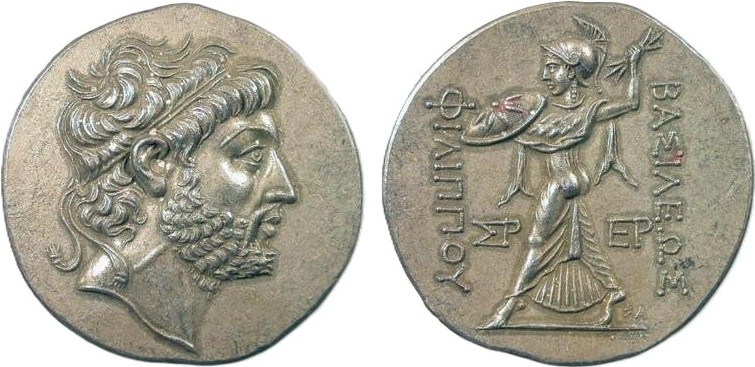
“But,” my father said, “Plato’s doctrine might help in the discussion at this point, though it is a digression. There is one form of madness that rises from the body to the soul: when a noxious exhalation is put into circulation as a result of distempers or commixtures of a certain sort, a madness ensues that is savage, harsh, and diseased. There is a second kind, however, which does not exist without divine inspiration. It is not intrinsically generated but is, rather, an extrinsic afflatus that displaces the faculty of rational inference; it is created and set in motion by a higher power. This sort of madness bears the general name of’ enthusiasm.’ For just as what possesses breath within it is called ‘breathing’ and what has sense is called ‘sensible,’ just so this kind of agitation in the soul has been named ‘enthusiasm’ because it shares in and participates in a power that is divine.[14] “There are several kinds of enthusiasm: the prophetic comes from the inspiration and possession of Apollo; the Bacchic from Dionysos— Dance after the Korybantes, says Sophokles, for the festivals of Kybelê and Pan have much in common with the Bacchic revels. “‘The third kind comes from the Muses. It takes a pure and virgin soul,’ strikes a spark in it and fans it into a blaze of poetic and musical creation. As for that kind which is called ‘mad with Ares’ and is concerned with war, everyone knows which of the gods it honours in its frenzied inspiration: It calls Ares to arms, the stranger to dance and lyre, “There remains within the class of mutations and aberrations that man is subject to yet another kind, Daphnaios, that is neither inconspicuous nor quiescent. I have a question about it to put to Pemptides here …[15] Which god shakes the thyrsus of fair fruits— this enthusiasm which arouses affection for virtuous boys and chaste women, which is much the fiercest and warmest of all our enthusiasms? “You have observed, have you not, that as soon as the soldier lays down his arms he is relieved from the madness of war— And then his joyful servants he sits still, an unwarlike spectator of everything else. Likewise in Bacchic orgies and Korybantic revels the dance grows milder and comes to rest when the musicians switch from the trochaic rhythm and the Phrygian mode. In the same way the Pythia regains calm and tranquillity once she has left her tripod and its exhalations. In erotic madness, however, when once it has really seized upon a man and set him on fire, there is no reading of literature, no ‘magic incantation,’ no change of environment, that restores him to calm. He loves when present and longs when absent, pursues by day and haunts the door by night, summons his lad when sober and sings his praises while he drinks. “Someone has said that the images entertained by the poetic imagination, because they impose themselves so vividly, are dreams of those wide awake; but this is much more true of the images entertained by the imagination of lovers who speak to the beloved and embrace him or chide him as though he were present. For our sight seems to paint its other pictures on wet plaster: they fade away quickly and slip from mind; the images of the beloved, however, burned into the mind by sight, as if using encaustic technique, leave behind in the memory shapes that move and live and speak and remain forever and ever. “Roman Cato[16] declared that the soul of the lover is ever present in that of the beloved ...[17] form, character, way of life, and every act. By these he is led to make a long journey with great swiftness; he has found, as the Cynics say, the passage to virtue ‘strenuous and short at the same time.’ And in fact to friendship ... as it were borne along on the wave of affection with the help of a god. “To sum up: it is clear that neither is the lover’s enthusiasm without divine assistance, nor does it have as director and charioteer any god other than him whose festival and sacrifice we are now engaged in celebrating. “It is, however, principally in respect to power and benefits that we distinguish between the gods, just as there are two human goods, kingship and virtue, that are held and said to be the most divine. Let us first, then, see whether Love yields to any other god in power. Though Mighty the victory which the Cyprian bears away, as Sophokles says; yet the strength of Ares is also mighty. Indeed we see the two-way distribution of the power of all the other gods illustrated in the case of these two. For the one power, which makes us receptive to beauty, and the other, which leads us to combat evil and ugliness, are fundamentally and from the beginning present in our souls as, I dare say, Plato also ... the kinds. For example, then, let us recognize that the work of Aphroditê, if Love is not present, can be bought for a drachma and that no one not in love ever endured pain or danger merely for the sake of Aphroditê’s pleasures. This is not the place to mention Phrynê, my friend, while some girl like Lais or Gnathainion Kindles at evening the gleam of her lamp; and bring with it love and desire in all its force: at once to this same activity it gives a worth equal to the fabulous wealth of Tantalos and the kingdom of Gyges. So weak and quickly sated are the favours of Aphroditê if Love has not inspired them. “You will find this even more clearly indicated by the fact that many have shared their pleasure with others, playing the pander not merely to their mistresses, but even to their wives. An example, my friend, is that notorious Roman, Gabba. He was, they say, giving a dinner to Maecenas and observed the latter toying amorously with his wife when given the signal to do so; so he let his head nod gently as if he were sound asleep. But meanwhile one of his slaves glided into the dining room and started to steal wine. ‘Damn you!’ cried Gabba, glaring. ‘Don’t you know that it’s only for Maecenas that I’m asleep?’ This, perhaps, is not so shocking, for Gabba was a buffoon.[18] But at Argos Nikostratos was the political opponent of Phayllos. When King Philip[19] came to town, everyone thought that Phayllos, who had a wife of great beauty, would obtain a dominant position for himself if his wife should become intimate with Philip. Nikostratos’ party got wind of this and patrolled the street before Phayllos’ door. The latter, however, put soldiers’ boots on his wife and a cape and a Macedonian hat and got her undetected to Philip, since she passed for one of the royal pages. |
“Ἀλλὰ μήν,” ὁ πατὴρ ἔφη, “τά γε τοῦ Πλάτωνος ἐπιλάβοιτ᾿ ἂν τοῦ λόγου καὶ παρεξιόντος. μανία γὰρ ἡ μὲν ἀπὸ σώματος ἐπὶ ψυχὴν ἀνεσταλμένη δυσκρασίαις τισὶν ἢ συμμίξεσιν πνεύματος βλαβεροῦ περιφερομένου τραχεῖα καὶ χαλεπὴ [e] καὶ νοσώδης· ἑτέρα δ᾿ ἐστὶν οὐκ ἀθείαστος οὐδ᾿ οἰκογενής, ἀλλ᾿ ἔπηλυς ἐπίπνοια καὶ παρατροπὴ τοῦ λογιζομένου καὶ φρονοῦντος ἐκ κρείττονος δυνάμεως ἀρχὴν ἔχουσα καὶ κίνησιν, ἧς τὸ μὲν κοινὸν ἐνθουσιαστικὸν καλεῖται πάθος· ὡς γὰρ ἔμπνουν τὸ πνεύματος πληρωθὲν ἔμφρον δὲ τὸ φρονήσεως, οὕτως ὁ τοιοῦτος σάλος ψυχῆς ἐνθουσιασμὸς ὠνόμασται μετοχῇ καὶ κοινωνίᾳ θειοτέρας δυνάμεως. “Ἐνθουσιασμοῦ δὲ τὸ μαντικὸν ἐξ Ἀπόλλωνος ἐπιπνοίας καὶ κατοχῆς, τὸ δὲ βακχεῖον ἐκ Διονύσου, κἀπὶ Κυρβάντεσι χορεύσατε, φησὶ Σοφοκλῆς· τὰ γὰρ μητρῷα καὶ πανικὰ κοινωνεῖ [f]τοῖς βακχικοῖς ὀργιασμοῖς. “‘Τρίτη δ᾿ ἀπὸ Μουσῶν λαβοῦσ’ ἁπαλὴν καὶ ἄβατον ψυχὴν’ τὸ ποιητικὸν καὶ μουσικὸν ἐξώρμησε καὶ ἀνερρίπισεν. ἡ δ᾿ ἀρειμάνιος αὕτη λεγομένη καὶ πολεμικὴ παντὶ δῆλον ὅτῳ θεῶν ἀνίεται καὶ βακχεύεται ἄχορον ἀκίθαριν δακρυογόνον Ἄρη [759a] “Λείπεται δὲ τῆς ἐξαλλαγῆς ἐν ἀνθρώπῳ καὶ παρατροπῆς οὐκ ἀμαυρὸν οὐδ᾿ ἡσυχαῖον, ὦ Δαφναῖε, μόριον, ὑπὲρ οὗ βούλομαι τουτονὶ Πεμπτίδην ἐρέσθαι ... τίς καλλίκαρπον θύρσον ἀνασείει θεῶν, τὸν φιλητικὸν τοῦτον περὶ παῖδας ἀγαθοὺς καὶ σώφρονας γυναῖκας ἐνθουσιασμὸν πολὺ δριμύτατον ὄντα καὶ θερμότατον; “Ἢ γὰρ οὐχ ὁρᾷς, ὡς ὁ μὲν στρατιώτης τὰ ὅπλα θεὶς πέπαυται τῆς πολεμικῆς μανίας, τοῦ μὲν ἔπειτα καὶ κάθηται τῶν ἄλλων ἀπόλεμος θεατής, ταυτὶ δὲ τὰ βακχικὰ καὶ κορυβαντικὰ σκιρτήματα τὸν ῥυθμὸν [b] μεταβάλλοντες ἐκ τροχαίου καὶ τὸ μέλος ἐκ Φρυγίου πραΰνουσι καὶ καταπαύουσιν, ὡς δ᾿ αὔτως ἡ Πυθία τοῦ τρίποδος ἐκβᾶσα καὶ τοῦ πνεύματος ἐν γαλήνῃ καὶ ἡσυχίᾳ διατελεῖ; τὴν δ᾿ ἐρωτικὴν μανίαν τοῦ ἀνθρώπου καθαψαμένην ἀληθῶς καὶ διακαύσασαν οὐ μοῦσά τις οὐκ ἐπῳδὴ θελκτήριος οὐ τόπου μεταβολὴ καθίστησιν· ἀλλὰ καὶ παρόντες ἐρῶσι καὶ ἀπόντες ποθοῦσι καὶ μεθ᾿ ἡμέραν διώκουσι καὶ νύκτωρ θυραυλοῦσι, καὶ νήφοντες καλοῦσι τοὺς καλοὺς καὶ πίνοντες ᾄδουσι. [c] “Καὶ οὐχ ὥς τις εἶπεν αἱ ποιητικαὶ φαντασίαι διὰ τὴν ἐνάργειαν ἐγρηγορότων ἐνύπνιά εἰσιν, ἀλλὰ μᾶλλον αἱ τῶν ἐρώντων, διαλεγομένων ὡς πρὸς παρόντας, ἀσπαζομένων, ἐγκαλούντων. ἡ γὰρ ὄψις ἔοικε τὰς μὲν ἄλλας φαντασίας ἐφ᾿ ὑγροῖς ζωγραφεῖν, ταχὺ μαραινομένας καὶ ἀπολειπούσας τὴν διάνοιαν· αἱ δὲ τῶν ἐρωμένων εἰκόνες ὑπ᾿ αὐτῆς οἷον ἐν ἐγκαύμασι γραφόμεναι διὰ πυρὸς εἴδωλα ταῖς μνήμαις ἐναπολείπουσι κινούμενα καὶ ζῶντα καὶ φθεγγόμενα καὶ παραμένοντα τὸν ἄλλον χρόνον. “Ὁ μὲν γὰρ Ῥωμαῖος Κάτων ἔλεγε τὴν ψυχὴν τοῦ ἐρῶντος ἐνδιαιτᾶσθαι τῇ τοῦ ἐρωμένου· … καὶ τὸ εἶδος καὶ τὸ ἦθος καὶ ὁ βίος καὶ αἱ πράξεις, ὑφ᾿ ὧν ἀγόμενος ταχὺ συναιρεῖ πολλὴν ὁδόν, ὥσπερ [d] οἱ Κυνικοὶ λέγουσι ‘σύντονον ὁμοῦ καὶ σύντομον εὕρηκε τὴν πορείαν ἐπ᾿ ἀρετήν’· καὶ γὰρ ἐπὶ τὴν φιλίαν . . . καθάπερ ἐπὶ κύματος τοῦ πάθους ἅμα θεῷ φερομένη. “Λέγω δὴ κεφάλαιον, ὡς οὔτ᾿ ἀθείαστον ὁ τῶν ἐρώντων ἐνθουσιασμός ἐστιν οὔτ᾿ ἄλλον ἔχει θεὸν ἐπιστάτην καὶ ἡνίοχον ἢ τοῦτον, ᾧ νῦν ἑορτάζομεν καὶ θύομεν. “Ὅμως δ᾿ ἐπεὶ δυνάμει καὶ ὠφελείᾳ μάλιστα θεοὺς διακρίνομεν καθότι καὶ τῶν ἀνθρωπίνων ἀγαθῶν δύο ταῦτα, βασιλείαν καὶ ἀρετήν, θειότατα [e] καὶ νομίζομεν καὶ ὀνομάζομεν, ὥρα σκοπεῖν πρότερον, εἴ τινι θεῶν ὁ Ἔρως ὑφίεται δυνάμεως. καίτοι μέγα μὲν σθένος ἁ Κύπρις ἐκφέρεται νίκας, ὥς φησι καὶ Σοφοκλῆς, μεγάλη δ᾿ ἡ τοῦ Ἄρεος ἰσχύς· καὶ τρόπον τινὰ τῶν ἄλλων θεῶν νενεμημένην δίχα τὴν δύναμιν ἐν τούτοις ὁρῶμεν· ἡ μὲν γὰρ οἰκειωτικὴ πρὸς τὸ καλὸν ἡ δ᾿ ἀντιτακτικὴ πρὸς τὸ αἰσχρὸν ἀρχῆθεν ἐγγέγονε ταῖς ψυχαῖς, ὥς που καὶ Πλάτων ... τὰ εἴδη. σκοπῶμεν οὖν εὐθύς, ὅτι τῆς Ἀφροδίτης τοὔργον ἔρωτος μὴ παρόντος ὤνιόν ἐστι δραχμῆς, καὶ οὔτε πόνον οὐδεὶς οὔτε κίνδυνον ἀφροδισίων ἕνεκα μὴ ἐρῶν ὑπέμεινε. καὶ ὅπως ἐνταῦθα μὴ Φρύνην ὀνομάζωμεν, ὦ ἑταῖρε, Λαΐς τις ἢ Γναθαίνιον [f] ἐφέσπερον δαίουσα λαμπτῆρος σέλας σὺν ἔρωτι πολλῷ καὶ πόθῳ ταὐτὸ τοῦτο τῶν Ταντάλου λεγομένων ταλάντων καὶ τῆς Γύγου ἀρχῆς ἀντάξιον ἐποίησεν. οὕτως ἀσθενὴς καὶ ἁψίκορός ἐστιν ἡ τῆς Ἀφροδίτης χάρις, Ἔρωτος μὴ ἐπιπνεύσαντος. “Ἔτι δὲ μᾶλλον κἀκεῖθεν ἂν συνίδοις· πολλοὶ γὰρ ἀφροδισίων ἑτέροις ἐκοινώνησαν, οὐ μόνον ἑταίρας ἀλλὰ καὶ γαμετὰς προαγωγεύοντες· ὥσπερ καὶ ὁ Ῥωμαῖος ἐκεῖνος, ὦ ἑταῖρε, Γάββας εἱστία [760a] Μαικήναν ὡς ἔοικεν, εἶθ᾿ ὁρῶν διαπληκτιζόμενον ἀπὸ νευμάτων πρὸς τὸ γύναιον, ἀπέκλινεν ἡσυχῆ τὴν κεφαλὴν ὡς δὴ καθεύδων· ἐν τούτῳ δὴ τῶν οἰκετῶν τινος προσρυέντος ἔξωθεν τῇ τραπέζῃ καὶ τὸν οἶνον ὑφαιρουμένου, διαβλέψας, ‘κακόδαιμον,’ εἶπεν, ‘οὐκ οἶσθ᾿ ὅτι μόνῳ Μαικήνᾳ καθεύδω;’ τοῦτο μὲν οὖν ἴσως οὐ δεινόν ἐστιν· ἦν γὰρ ὁ Γάββας γελωτοποιός. ἐν δ᾿ Ἄργει Νικόστρατος ἀντεπολιτεύσατο πρὸς Φάυλλον· ἐπιδημήσαντος οὖν Φιλίππου τοῦ βασιλέως, ἐπίδοξος ἦν διὰ τῆς γυναικὸς ὁ Φάυλλος ἐκπρεποῦς οὔσης, εἰ συγγένοιτο [b] τῷ Φιλίππῳ, διαπράξεσθαί τινα δυναστείαν αὑτῷ καὶ ἀρχήν. αἰσθομένων δὲ τῶν περὶ Νικόστρατον τοῦτο καὶ παρὰ τὰς θύρας τῆς οἰκίας περιπατούντων, ὁ Φάυλλος ὑποδήσας τὴν γυναῖκα κρηπῖσι καὶ χλαμύδα περιθεὶς καὶ καυσίαν Μακεδονικήν, ὡς ἕνα τῶν βασιλικῶν νεανίσκων παρεισέπεμψε λαθοῦσαν. |
|
“On the other hand, of all the throngs of lovers past and present, do you know of a single one who sold the favours of his beloved even to gain the honours of Zeus himself? I think not. How could this happen, when even tyrants, whom no one dares to contradict, whose policies no one dares to oppose, have had many rivals in love, many competitors for the friendship of handsome young lads? You know the tales of Aristogeiton of Athens[20] and Antileon of Metapontion and Melanippos of Akragas[21]: they had at first no quarrel with their tyrants, though they saw that these were acting like drunkards and disfiguring the state; but when the tyrants tried to seduce their beloveds, they spared not even their own lives in defending their loves, holy, as it were, and inviolable shrines. “The tale is told that Alexander wrote to Theodoros, the brother of Proteas, ‘If you’re not in love with your music-girl, please send her to me for ten talents.’ Another of Alexander’s Companions, Antipatrides, came to a drinking party with his lyre-player. The wench pleased Alexander and he asked Antipatrides, ‘Of course, you aren’t in love with her, are you?’ ‘Very much so,’ said the other. ‘Well, damn you to hell the worst way!’ cried Alexander. But he restrained himself and did not touch the woman. |
“Ἆρ᾿ οὖν, ἐραστῶν τοσούτων γεγονότων καὶ ὄντων, οἶσθ᾿ ἐπὶ ταῖς τοῦ Διὸς τιμαῖς προαγωγὸν ἐρωμένου γενόμενον; ἐγὼ μὲν οὐκ οἶμαι· πόθεν γάρ, ὅπου καὶ τοῖς τυράννοις ἀντιλέγων μὲν οὐδεὶς οὔτ ἀντιπολιτευόμενός ἐστιν, ἀντερῶντες δὲ πολλοὶ καὶ φιλοτιμούμενοι περὶ τῶν καλῶν καὶ ὡραίων; [c] ἀκούετεγὰρ ὅτι καὶ Ἀριστογείτων ὁ Ἀθηναῖος καὶ Ἀντιλέων ὁ Μεταποντῖνος καὶ Μελάνιππος ὁ Ἀκραγαντῖνος οὐ διεφέροντο τοῖς τυράννοις, πάντα τὰ πράγματα λυμαινομένους καὶ παροινοῦντας ὁρῶντες· ἐπεὶ δὲ τοὺς ἐρωμένους αὐτῶν ἐπείρων, ὥσπερ ἱεροῖς ἀσύλοις καὶ ἀθίκτοις ἀμύνοντες ἠφείδησαν ἑαυτῶν. “Λέγεται καὶ Ἀλέξανδρος ἐπιστεῖλαι Θεοδώρῳ Πρωτέου ἀδελφῷ, ‘πέμψον μοι τὴν μουσουργὸν δέκα τάλαντα λαβών, εἰ μὴ ἐρᾷς αὐτῆς’· ἑτέρου δὲ τῶν ἑταίρων Ἀντιπατρίδου μετὰ ψαλτρίας ἐπικωμάσαντος, ἡδέως διατεθεὶς πρὸς τὴν ἄνθρωπον ἐρέσθαι τὸν Ἀντιπατρίδην, ‘οὐ δήπου σὺ τυγχάνεις [d] ἐρῶν ταύτης;’ τοῦ δέ, ‘καὶ πάνυ,’ φήσαντος, εἰπών, ‘ἀπόλοιο τοίνυν κακὸς κακῶς,’ ἀποσχέσθαι καὶ μὴ θιγεῖν τῆς γυναικός. |
[1] For maximum accuracy on the important question of age, “young men” has been replaced by ephebes as a translation of ἐφήβων. [Website note]
[2] Where the women, by a concerted and synchronized effort, slew all the men: Apollodorus, i. 9. 17. [Translator’s note]
[3] This time the reference has a sly twist and refers to the dalliance of the widowed Lemnian ladies with the Argonauts, the first gentry to visit their island since their bereavement. [Translator’s note]
[4] That is, the paederasts having departed, we can be frank and admit the worst: women in love may be dangerous. [Translator’s note]
[5] Young man” has been replaced by “youth” as a translation of νεανίσκου, which simply means a young male. [Website note]
[6] Since Pemptides has not been introduced before, there may well be an undetected lacuna in 749 b supra. [Translator’s note]
[7] Epilepsy; see Mor. 981 d and the note. [Translator’s note]
[8] Euripdes, Bakchai 203 [Website note]
[9] Frag. 17. 20 f. “Plutarch is guilty here of gross misrepresentation (or extreme irony); for the pronoun (‘among them’) refers to the four roots, not the Olympians, while the verse itself is a statement of the pervasion of the roots by the force of Love and does not attribute to Love equality of rank with the Olympians” (Rabinowitz). [Translator’s note]
[10] Especially the Stoics. [Translator’s note]
[11] Asklepios. [Translator’s note]
[12] The god meant is Hermes. [Website note]
[13] The translator’s inaccurate “handsome young men” has been replaced by “beautiful youths” as a translation of τοὺς καλοὺς καὶ ὡραίους. More literally, the meaning is “the beautiful and youthful” with “of male gender” implicit. [Website note]
[14] En-thusimsm is derived from entheos, “having a god within.” [Translator’s note]
[15] There is a short lacuna in the mss. at this point. [Translator’s note]
[16] M. Porcius Cato the elder (234-149 BC), as described in Plutarch’s life of him IX. [Website note]
[17] There is a lacuna at this point, though it is not indicated in the mss. Rabinowitz thinks that this corrupt passage has conceptual affinities with Plato, Phaidros, 252 e—253 b, and has somewhat the following meaning:
“That is to say, the form (τὸ εἶδος) or character of the beloved—his way of life, his actions—affect (note τοῦ πάθους below) the soul of the lover and lead him to achieve a lengthy journey in swift compass. As the Cynics say, he comes to discover that the passage to virtue is ‘strenuous and short at the same time,’ For the soul of the lover proceeds first to friendship and then to virtue, moving swiftly, as it were, on the wave of affection with the god’s help.” [Translator’s note]
[18] That is, a court jester of Augustus. But Gabba is really quoting a famous literary joke of Lucilius (frag. 251 Warmington): “non omnibus dormio,” echoed in Juvenal, i. 57: “vigilanti stertere naso.” [Translator’s note]
[19] Philip V king of the Macedonians (reigned 221 to 179 BC). [Website note]
[20] See the article Harmodios and Aristogeiton, 514 BC where all the sources on these Athenian lovers and tyrannicides are collected together. [Website note]
[21] For the story of Melanippos and his loved boy Chariton, see Aelian, Historical Miscellany II 4. [Website note]
Comments powered by CComment