
THE AUTOBIOGRAPHY OF A SCHOOLBOY
A MEMOIR BY THOMAS TOMKINS, VIII
Presented here with his kind permission is Chapter Eight of the hitherto unpublished memoir of his youth of a retired English publisher written under the pen name Thomas Tomkins and finished in 2026.
[Return to the beginning of this memoir]
Chapter Eight
Back at school, I knew that I had to face the rigours of the Scholarship examination. In discussion with the Headmaster and my parents, we had decided upon Flamborough School as the one offering the best prospects. It was a school of middling rank, not an ancient foundation like Winchester, but founded in the nineteenth century and with a good record of academic successes. The Scholarship examinations would involve three papers, one each in English, Mathematics and Latin, plus an additional paper in General Studies.
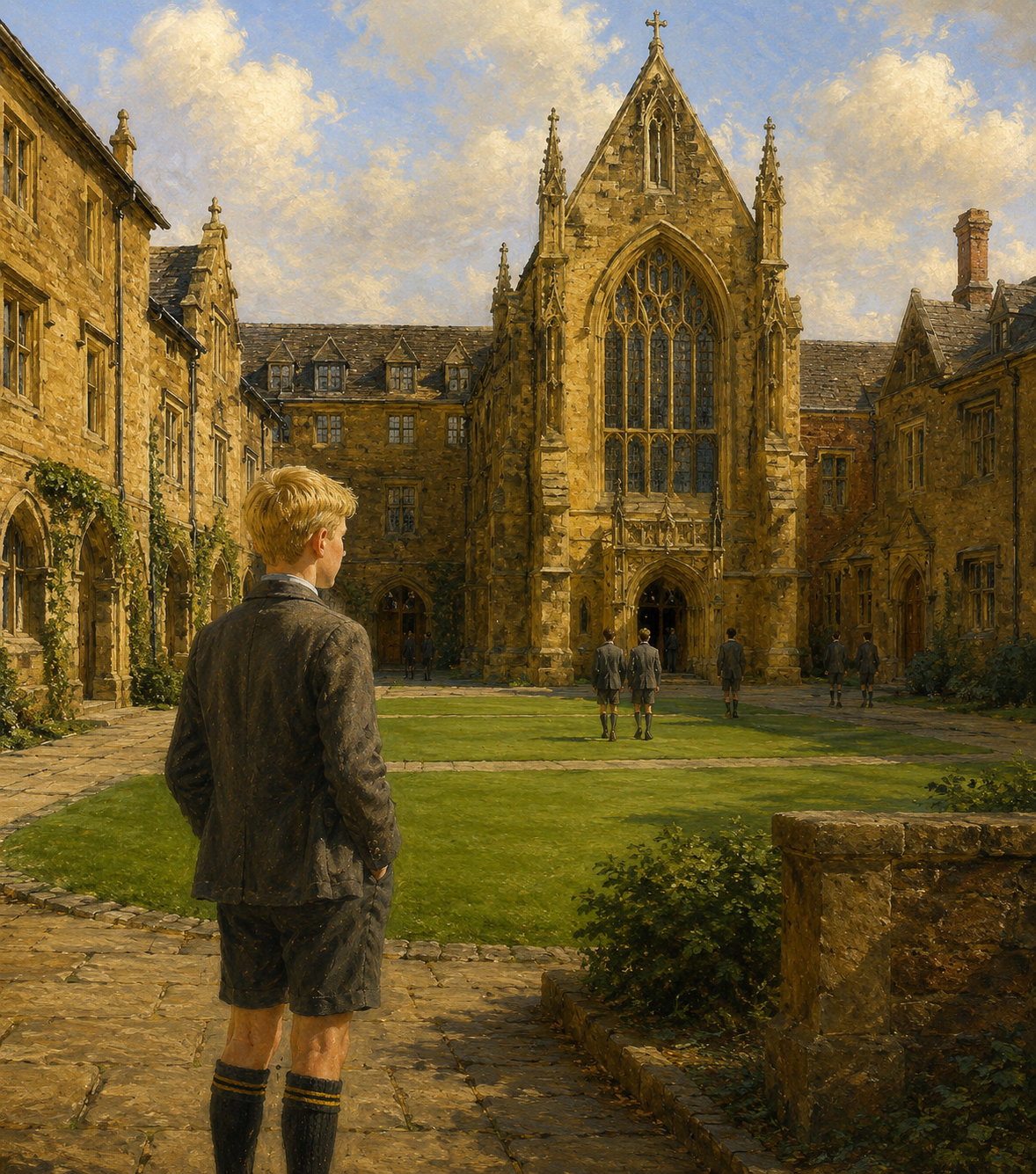
Flamborough was about eighty miles from St Mark’s, and the Headmaster drove me over there in his car. I would be expected to stay overnight as the examinations were spread over two days. I was happy with the opportunity to look over the school, which was architecturally, perhaps, pleasant rather than distinguished, built mainly of warm coloured stone and with a magnificent Chapel at its heart.
I knew that the Mathematics paper would be the most difficult, and so I found it. The English papers were straightforward enough, with questions on Shakespeare, Milton, Dickens and, as a concession to modernity, Wilfred Owen and the Great War poets. The questions were couched in broader terms than was generally the rule then, and gave ample opportunity for me to demonstrate not only my knowledge of the set texts, but the breadth of my reading generally.
The Latin paper seemed so easy that I was anxious over whether I might have mis-read it or even been given the wrong paper. I did not realise then, what I do now, that Allan Pascoe’s inspired teaching – not all of it in the classroom! – had given me a grounding in Latin language and culture which was well beyond that of most boys of my age.
Last came the General Studies paper. Some of the questions were beyond me; I had taken no interest in politics or most “current affairs”, but I was surprised to find some questions on historical and classical subjects which I could answer quite fully. I drew not only on my general reading but also on that never-to-be-forgotten visit to the British Museum.
I returned to St Mark’s, uncertain how I had fared, but hopeful of some kind of award. A minor scholarship or Exhibition would gain me perhaps half of my fees, but a full scholarship considerably more. Whether my parents would be willing, or even able, to pay the difference between a minor scholarship and the full fees was something on which I felt great doubt.
Two days later, at the end of Chapel, the Headmaster asked me to come to his Study. This summons was, as often as not, concerned with some misdemeanour requiring punishment. However, when I was admitted he greeted me pleasantly and asked me to sit down. There were comfortable armchairs either side of the fireplace, and I perched uneasily on one while the Gaffer sat on the other.
“I have had the report from Flamborough on your Scholarship papers”, he began. I may as well tell you now that you have been awarded a full academic Scholarship and that they look forward to welcoming you next term."
I was aware of a mixture of emotions: jubilation that I had done well, nervousness as to what might be coming next, gratitude to St Mark’s (and in particular to Allan Pascoe) for helping me to achieve this award and, suddenly, trepidation and even sorrow at the thought of leaving St Mark’s and going on to a new, large and unknown school.
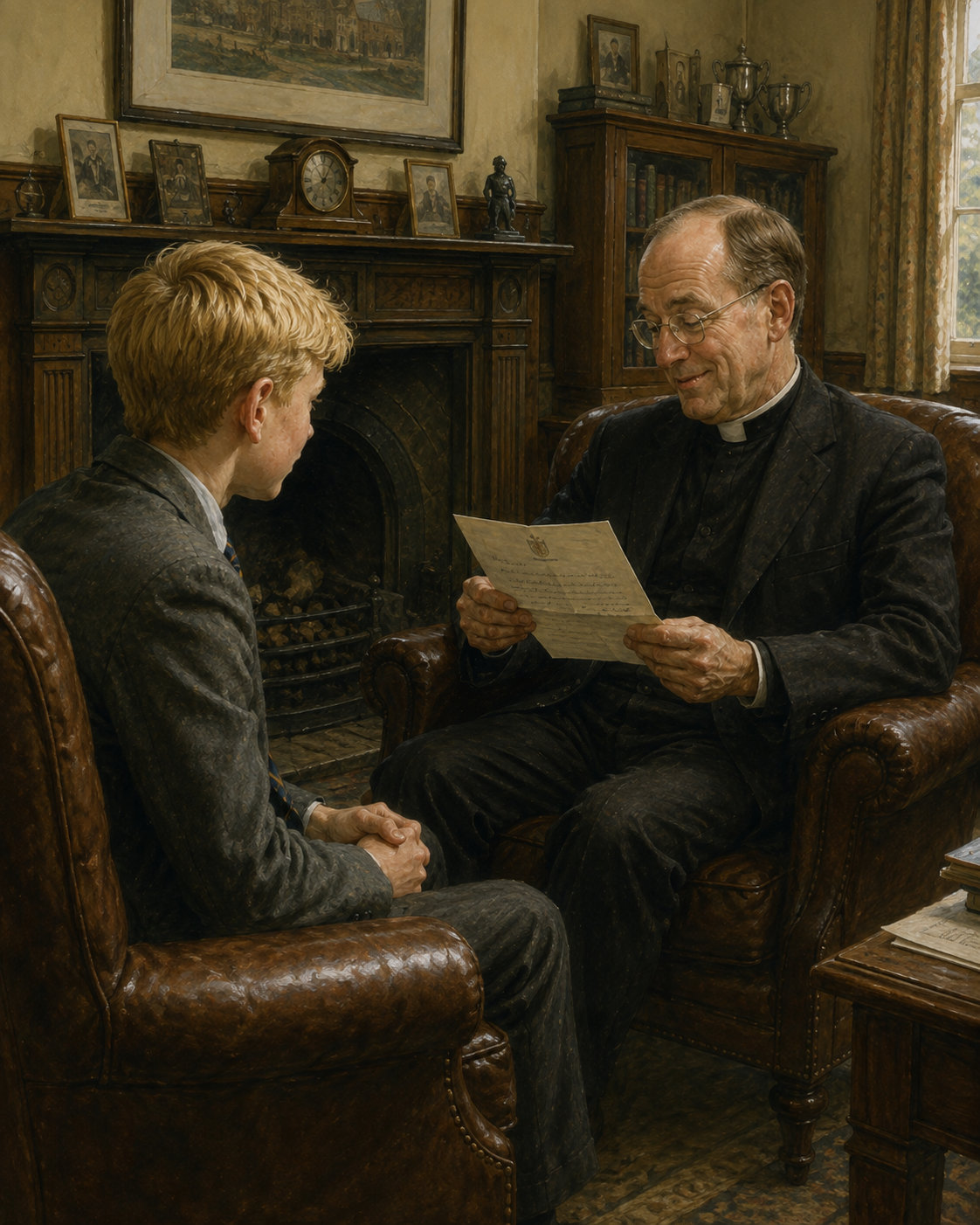
“Specifically”, went on the Headmaster, “your English paper gained an Alpha Plus, your Mathematics a Beta Minus, your Latin an Alpha Plus and your General Studies an Alpha Plus. A note from the Headmaster added to the results states, and I quote, ‘Thomas Tomkins is clearly an academically very able boy, and the breadth of his knowledge both of Classical civilizations and of language and modern literature is most impressive.’”
I must have just looked at him open-mouthed. He continued, “They have awarded you a Scholarship of the full amount of your fees. This means your parents will only have to find the extra things for you: uniform and so on. My heartiest congratulations to you.”
At luncheon the Gaffer announced my success to the whole school and, greatly to the benefit of my popularity with the younger boys, gave the whole school a half-holiday to celebrate it. What I did not know then, and did not find out until the day I left the school, when the Bursar himself told me, was that the maximum scholarship ever awarded at Flamborough was for ninety per cent of the fees, but that 'a Master at your Prep School' had asked the Bursar to give it out as covering the full fees, and had told them that he would see that the difference was paid to the Scholarship Foundation. This was, of course, Allan Pascoe – who else? – who knew how important it was to me to go on to a good School and be recognized as a Scholar. But, characteristically, he had done it privately, and had specifically asked that I should not be told.
Only a week or so of the term remained, and of course I had no work to do. I spent most of the time helping with re-organizing the Library, which had needed doing for quite a while. It was quite a surprise to me to find that St Mark’s had become very special to me and I resolved to visit often. But the end of the term came, with its Gaudy Day at which I took several prizes. My parents were in the audience, having come over in my father’s car (how he had contrived to remain sober enough to drive safely I have no idea, but we made it back to London without mishap), and I think they began to realize for the first time not only that I was genuinely gifted academically, but also that I was growing away from them. These two things made a conundrum for my father that I don’t think he ever resolved. My mother was, characteristically, concerned mainly with appearances and the social advantages which would accrue from my attending a respectable Public School.
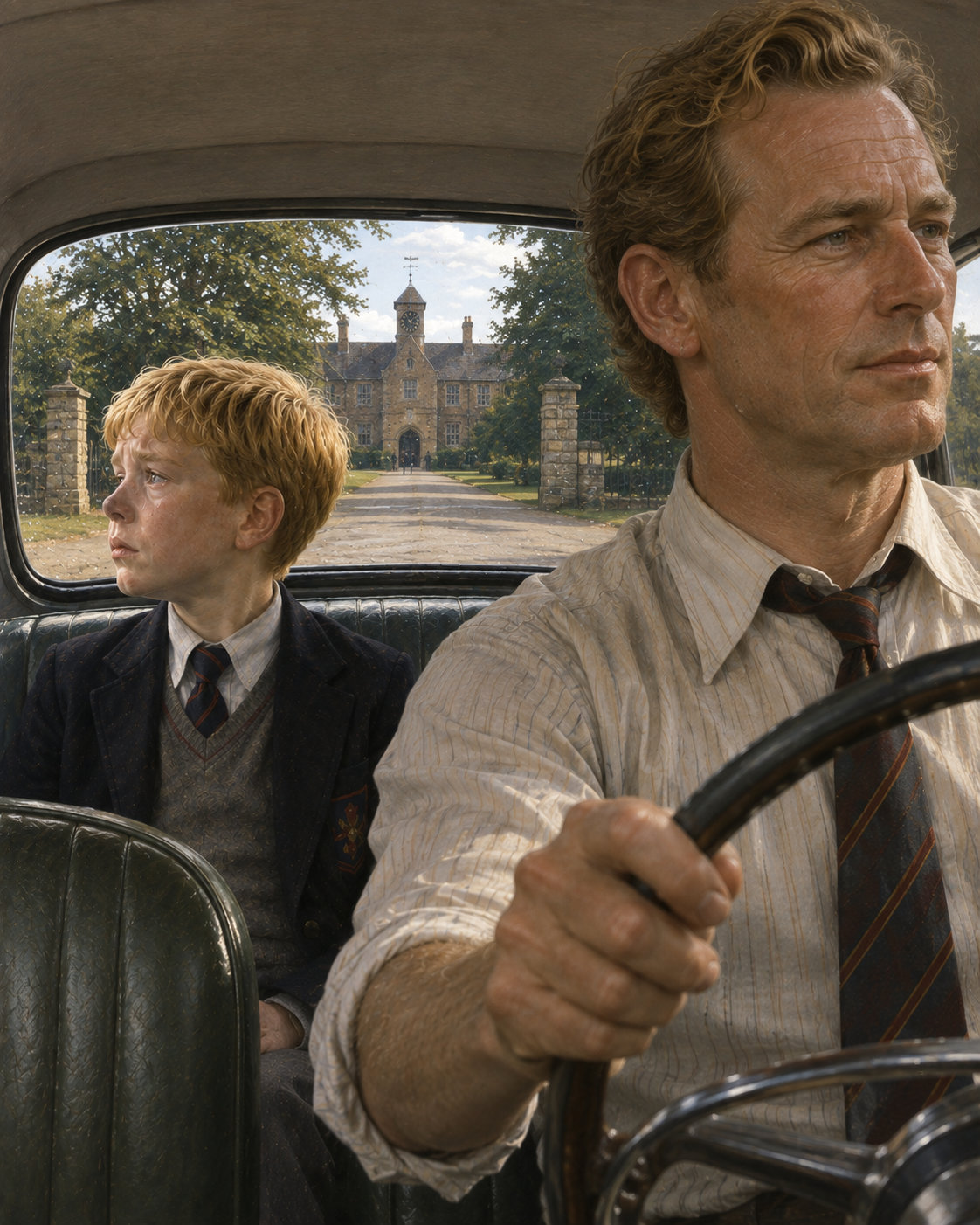
Finally, my trunk was packed and loaded into the car, I had said my farewells to my friends, to the Gaffer and to the rest of the staff, and we moved away down the long, sweeping drive. I am not ashamed to admit that tears filled my eyes as we passed out of sight of the school which had been almost my second home for the past six years – and I had, indeed, spent considerably more time there than with my parents – and I heartily wished that I could have remained there indefinitely. I resolved again that I would visit often, and that as soon as I had a car of my own I would drive it into the school grounds. The former ambition I did not keep nearly as much as I had intended, but the latter one was amply fulfilled. When I had my first car I did indeed drive it to St Mark’s. Some of the masters I had known had retired, others had moved on, but the Gaffer was still there, as was Allan who had become Second Master. And I drove many times to and from St Mark’s in later years, bringing my own sons to and from the school which had given me so good a start in life.
Comments powered by CComment