
SAYINGS OF SPARTANS
BY PLUTARCH
Ἀποφθέγματα Λακωνικά meaning Sayings of Spartans by the Boiotian Greek historian and philosopher Plutarch Πλούταρχος of Chaironeia (ca. AD 46-120) who won Roman imperial favour and rose to become procurator of Achaia, was one of the essays (covering 208b-236e) in his eclectic Moralia, written around AD 100.
The translation is by Frank Cole Babbitt in Plutarch, Moralia, Volume III, Loeb Classical Library Volume 245, London: William Heinemann, 1931. His Romanisations of Greek names have been replaced by transliterations of the Greek.
209d-f Agesilaos the Great Αγησιλάου του μεγάλου
Amongst the sayings of Agesilaos II (ca. 445-360/1 BC) King of the Spartans:
|
[15] When Megabates, Spithridates’ son, who was most fair of form, came near to him as if to greet him with a kiss because the boy felt that he was held in affection by Agesilaos, Agesilaos drew back. And when the boy stopped coming to see him, Agesilaos asked for him; whereupon his friends said that he had only himself to blame, because he shrank from coming within kissing distance of the fair one, and if he would not act the coward, the boy would come again. Agesilaos, reflecting by himself for no brief time in uninterrupted silence, finally said, “There is no need of our trying to persuade him; for I feel that I had rather be above such things than to take by storm the most populous city of our opponents, since it is better to preserve one’s own liberty than to deprive others of theirs.”[1] […] [17] Such, then, was Agesilaos in his friends’ behalf in most matters; but there are instances when, in meeting a critical situation, he showed more regard for the general weal. At any rate, on a time when camp was being broken in some disorder, and Agesilaus was leaving behind his loved boy who was ill, and the loved boy implored him and called him back with tears, Agesilaos, turning round, exclaimed, “How hard it is to be merciful and sensible at the same time!”[2] |
[15, d] Μεγαβάτου δὲ τοῦ Σπιθριδάτου παιδός, ὃς ἦν κάλλιστος τὴν μορφήν, προσελθόντος αὐτῷ ὡς ἀσπασομένου καὶ φιλήσοντος διὰ τὸ σφόδρα δοκεῖν ἀγαπᾶσθαι, ἐξέκλινεν· ὡς δ᾿ ἐπαύσατο ἐκεῖνος προσιών, ἐπεζήτησεν αὐτὸν ὁ Ἀγησίλαος· τῶν δὲ φίλων φαμένων ὡς αὐτὸς εἴη αἴτιος τρέσας τὸ Eτοῦ καλοῦ ἐντὸς φιλήματος ἐλθεῖν, [e] κἂν μὴ ἀποδειλιᾷ, ἥξειν ἐκεῖνον, χρόνον οὐκ ὀλίγον πρὸς αὑτῷ γενόμενος ὁ Ἀγησίλαος καὶ διασιωπήσας “οὐδέν,” ἔφη, “δεῖ πείθειν ἐκεῖνον ἡμᾶς· ἐγὼ γάρ μοι δοκῶ τῶν τοιούτων βούλεσθαι ἐπάνω εἶναι, ἢ τὴν εὐανδροτάτην τῶν ἀντιτεταγμένων πόλιν κατὰ κράτος ἑλεῖν· ἄμεινον γὰρ ἑαυτῷ φυλάττειν τὴν ἐλευθερίαν τοῦ ἑτέρων ἀφαιρεῖσθαι.” […] [17, f] Ἐν μὲν οὖν τοῖς πλείστοις ὑπὲρ τῶν φίλων τοιοῦτος ὁ Ἀγησίλαος· ἔστι δὲ ὅπου πρὸς τὸ συμφέρον ἐχρῆτο τῷ καιρῷ μᾶλλον. ἀναζυγῆς γοῦν ποτε γενομένης θορυβωδεστέρας, ἀσθενοῦντα καταλιπὼν τὸν ἐρώμενον, ἐκείνου δεομένου καὶ ἀνακαλοῦντος μετὰ δακρύων αὐτόν, ἐπιστραφεὶς εἶπεν “ὡς χαλεπόν ἐστιν ἐλεεῖν ἅμα καὶ φρονεῖν.’ |
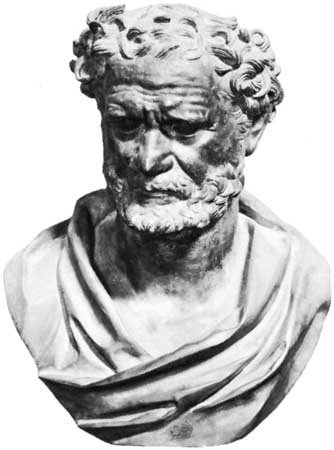
220b Demaratos 6
Amongst the sayings of Demaratos King of the Spartans from ca. 515 to 491 BC:
| [6] When one of the Persians, by unremitting bribery, had got away from him his beloved youth, and said to him, “Ho, Spartan, I have captivated your beloved,” he said, “Not you, I swear, but you have bought and paid for him!”[3] | [6] Τῶν δὲ Περσῶν τινος διὰ τὸ συνεχὲς τῆς δωροδοκίας τὸν ἐρώμενον αὐτοῦ ἀπαγαγόντος καὶ λέγοντος, “ὦ Λάκων, τεθήρευκά σου τὸν ἐρώμενον,” “μὰ τοὺς θεούς,” ἔφη, “οὐχὶ σύ γε, ἀλλ᾿ ἠγόρακας.” |
[1] This anecdote was recounted by Plutarch in greater detail in his Life of Agesilaos XI 2-7, and also by Xenophon in his Agesilaos V 4–5.
[2] This anecdote was similarly recounted by Plutarch in his Life of Agesilaos XIII 4 (where it was attributed to “Hieronymos the philosopher”), and also in “The Sayings of Kings and Commanders” section of his Moralia, 191a.
“Loved one” has been replaced twice by “loved boy” as a translation of ἐρώμενον, as the latter makes the gender clear.
[3] Following his deposition as King in 491 BC, Demaratos took refuge with the King of Persia, so presumably this anecdote belongs to his time in exile. He was still living in Persia as late as 465 BC.
Comments powered by CComment