
DESERT PATROL VII: MANILA IV
BY GUIDO FRANCO
Presented here is the seventh part of Desert Patrol (une aventure sous les tropiques), a travel memoir by French Swiss photographer Guido Franco published in 1980 and introduced here. It concerns what Franco saw of the pederastic scene involving local boys and foreigners on his return visit to Manila in early 1980.
Manila (a year later)
The San Carlos Hotel[1] hasn’t changed. It’s just a little more decrepit than last year, but the change is almost imperceptible.
“Why don’t you move in somewhere else, in a rather better district, somewhere a little more respectable?” I am asked politely.
But no, I’m perfectly happy to live in a brothel.
I found Lapu-Lapu[2] again at the airport with Dong—a new friend—and Eddie.[3]
They have been living for a month on payments tourists made to one or the other, sleeping the rest of the time in the streets and parks.
And now I am back! I don’t know whether he is pleased, finie la Liberté!
* * *
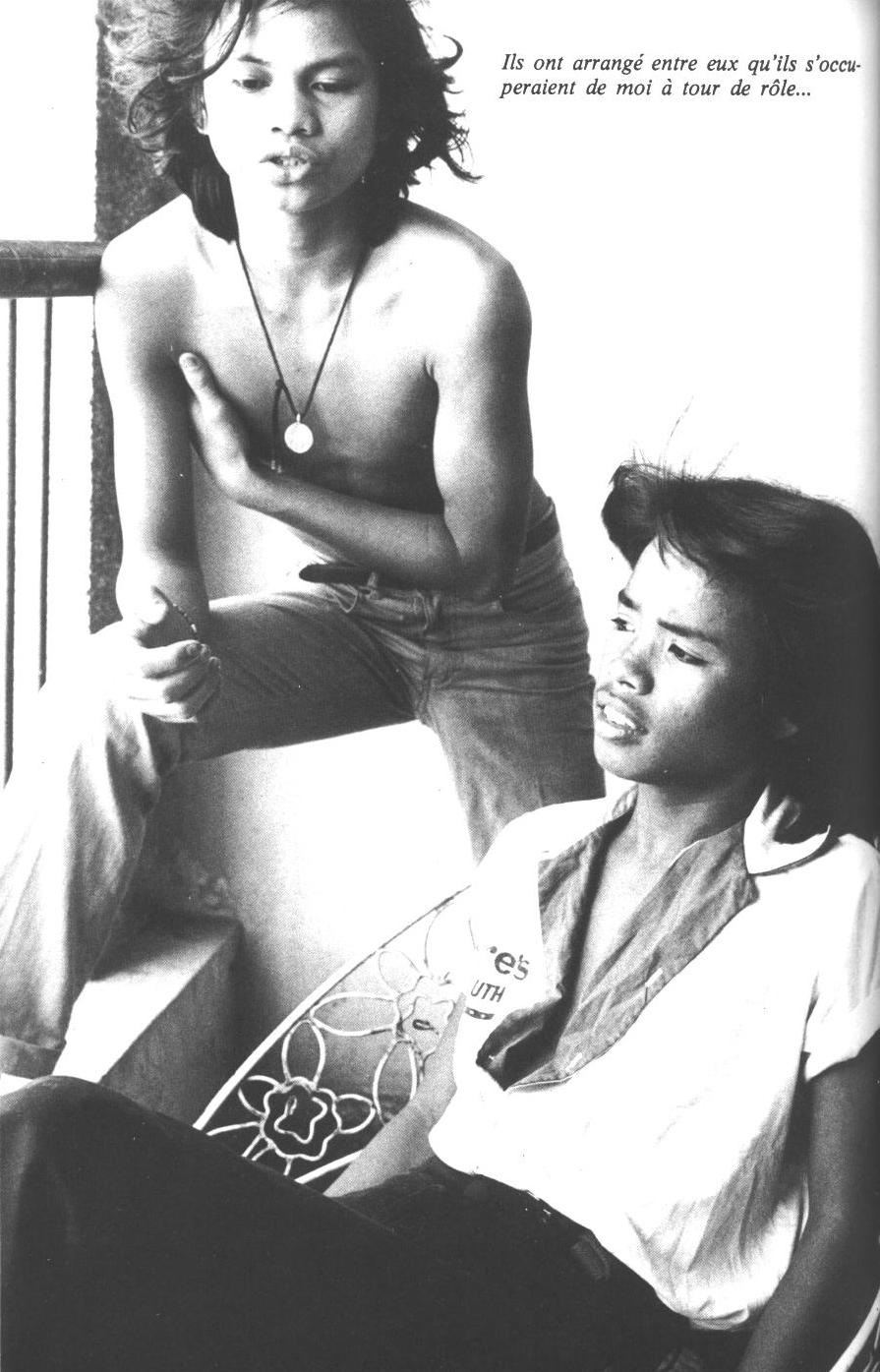
However that may be, after coming with me to the San Carlos, Lapu-Lapu wanted to go off that same evening with Dong to the Bahag, the new disco, and they left me with Eddie.
I believe they arranged it between themselves that they would take it in turns to be with me, and that Dong would do the cooking, but I’m going to put all that right and tell Lapu-Lapu that he will have to make his grilled rice himself.
I’m not going to start again like last year, with five boys in my room. There’s no question of that! I’m keen on peace and quiet. Eddie still comes, still comes because he’s my friend. But not Dong, nor the others! So they have it laid down as a rule.
“I see that,” cries Lapu-Lapu, “you want to separate me from my friends, but we don’t separate ourselves, that’s how it is. Don’t you know what friendship is?”
We meet halfway. Eddie stays. Dong doesn’t.
“And what is Dong going to do?” Lapu-Lapu worries.
“Listen, I really don’t know; he’s going to do more or less what he did before I arrived….”
“But that’s the limit, we planned everything! And I swear to you that he’s a good cook!”
* * *
In short, Lapu-Lapu goes off to the Bahag and I stay with Eddie. I understood at once that he no longer goes to school. He’s on the job now, as a professional.
“Oh yes, I’m a hospitality-boy!”
(In Manila hospitality-girl refers to the tarts, when one wishes to be polite.)
“Hospitality-boy!”
That made Eddie laugh for five minutes, in fact everything makes him laugh.
“But I thought you were going to be a sailor!” I attempt.
But no! Being a sailor is something vague and distant. Are we not living to-day?
He shows me a tattoo that he now has on his bottom. The B.C.J. gang.[4]
“Eh! Why did you do that?”
“It’s necessary,” the kid answered. “To have protection.”
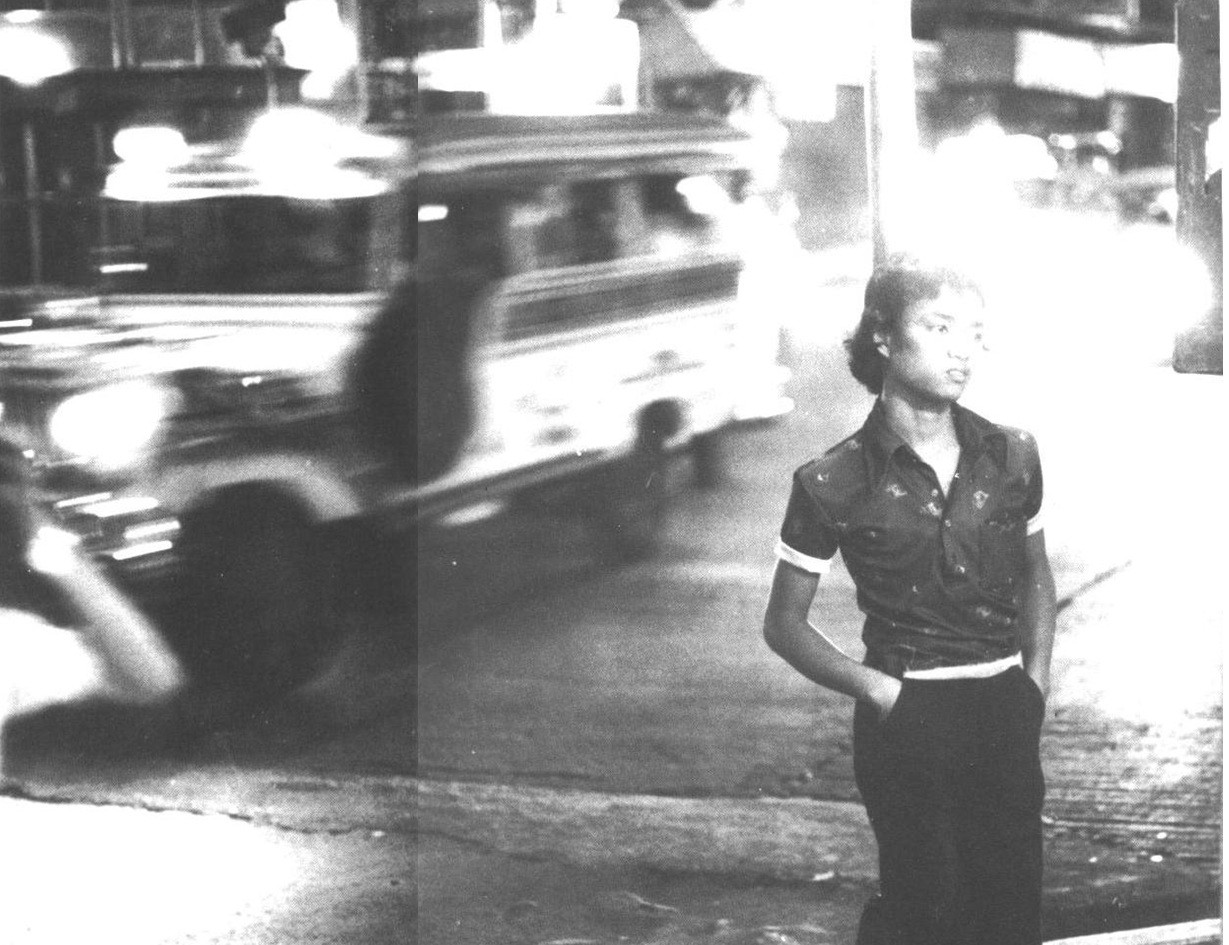
I learn at the same time that Harrison has gone to the Bahala Na.[5] But the B.C.J. control Tondo, Quiapo and the area around Fishnet, Rizal Park. No question of crossing the borders of those territories! That could be dangerous. Lapu-Lapu and Eddie no longer set foot in Harrison, and the boys who “work” there close their windows and lock their doors when they pass the Fishnet. Both sides will warn you:
“Very bad boys.”
And on that subject, as on everything else, they ask no questions.
The Universe is a perpetual flow of Jeepneys, which run from Blumentritt to Pasay, from Quezon City to Ermita, starting in the morning and finishing, perhaps, this evening. There is no tomorrow, certainly no yesterday, and never any why.
Between here and Paris, where everything is analysed and explained, and where for every question there is a remedy, I am well aware of where the madness is, but I won’t tell you.
Lapu-Lapu suggests we go to a farewell party in room 807, a German who is leaving. His cases are packed, a boy from the Yakan is dancing naked, one hand between his legs, and two others are waiting for God knows what behind their beer bottles. I ask myself why Lapu-Lapu got me to go there….
The German seems to be in a bad mood. He’s tall and thin, and he’s sitting opposite me at a table.
“Where’s Eddie?” I ask. (I had been told that he was Eddie’s punter, and how this was his farewell party . . .)
“He’s unreliable,” the fellow reminded me. “We make appointments with them and then they disappear. In fact I haven’t seen him for several days.”
I made a rapid calculation. That must have been since Eddie was sleeping at our place, but I wasn’t going to tell him that, he was in a bad enough way as he was.
“Unreliable,” said the Kraut, while the others inspected the bottom of their bottles. “Joselito, I liked him a lot, I have given him a thousand pesos for his family and voilà, he ran off with my cassette recorder.”
“He must have had a greater need of the cassette recorder than of you,” I suggest, to comfort him.
The German was nervously squeezing lemons into a glass.
“That’s where you’re wrong. That boy needed affection, a direction in life.”
Anyway, he had replaced Eddie, he tells me; now he was with Nelson.
“The little chap who was with Billy the American in room 605 last year?”
The German drew a deep breath.
“We’re certainly not talking about the same Nelson,” he said in a sinister tone. “How could he be your Nelson?”
“He looked like a cherub with a towel around his hips,” I explain.
“That can’t be him,” the German tells me. “Anyway I called the police and all that. To-morrow I’m getting out.”
“That sounds like an excellent idea,” I say. “Perhaps they will find you recorder.”
“The recorder, I couldn’t care less,” he explodes, “it’s the lost love, the lost love! I trusted him!”
I leave him with the two boys and their bottles of beer, as well as the one dancing in the nude.
“If you ever need anything, you can find me at the Yakan,” the little one whispers as I pass.
* * *
Marcos is organizing elections in the towns and in the countryside. According to the most recent predictions, his party, the KBL, is going to win.[6]
The elections will take place over several days, but no one doubts the result, even those in Tondo and Santa Ana will vote for him.
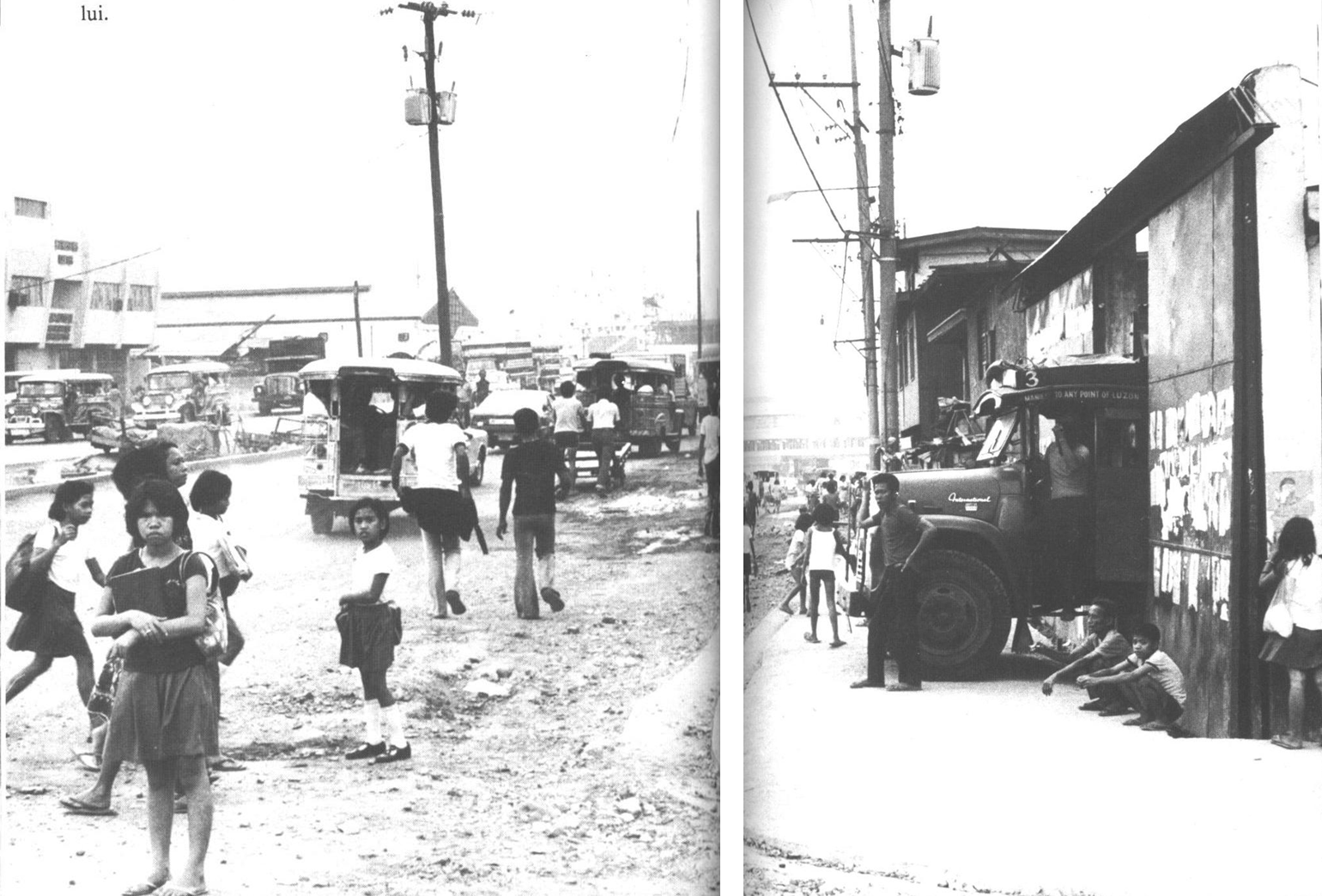
Imelda (Marcos)[7] has just violently protested, because an entire row of palm trees along Roxas Boulevard has been cut down. And that on the very day when the Singapore Prime Minister is arriving. She has sent the contractors to prison without trial, and it is well deserved. It’s incredible to cut down half the trees in Roxas Boulevard like that. Rather like knocking down the Arc de Triomphe in Paris. We can only agree with Imelda and Marcos. They locked up the communists, confiscated firearms, and at election time they donated several houses to the poor people of Tondo and San Andres. It’s true, they do exist, I’ve seen them. It was Lapu-Lapu’s father who showed them to me. He too voted KBL because he is hoping they will give him a spot to rebuild a stand when the bulldozers have removed his at Santa Ana.
It has now been stuck there for several years, in the middle of the street, and, as he says, it isn’t worth going to the trouble of improving it because in any case they are going to destroy it soon.
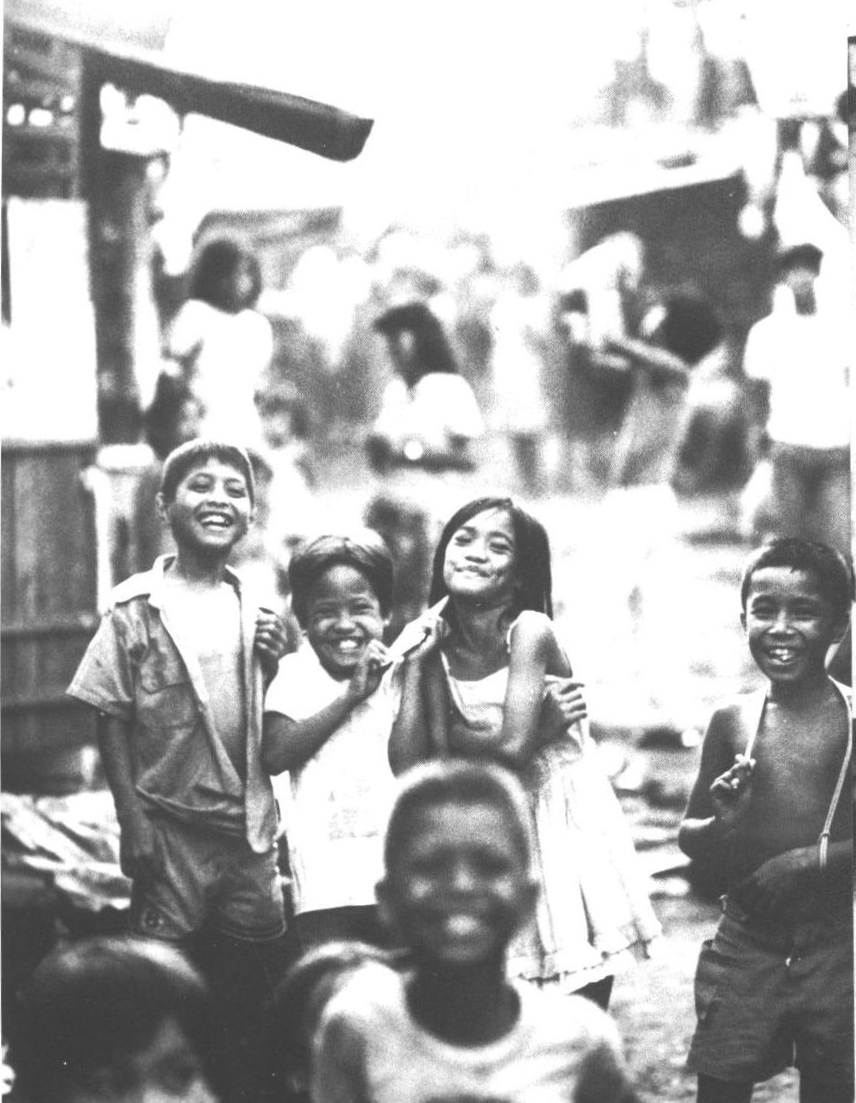
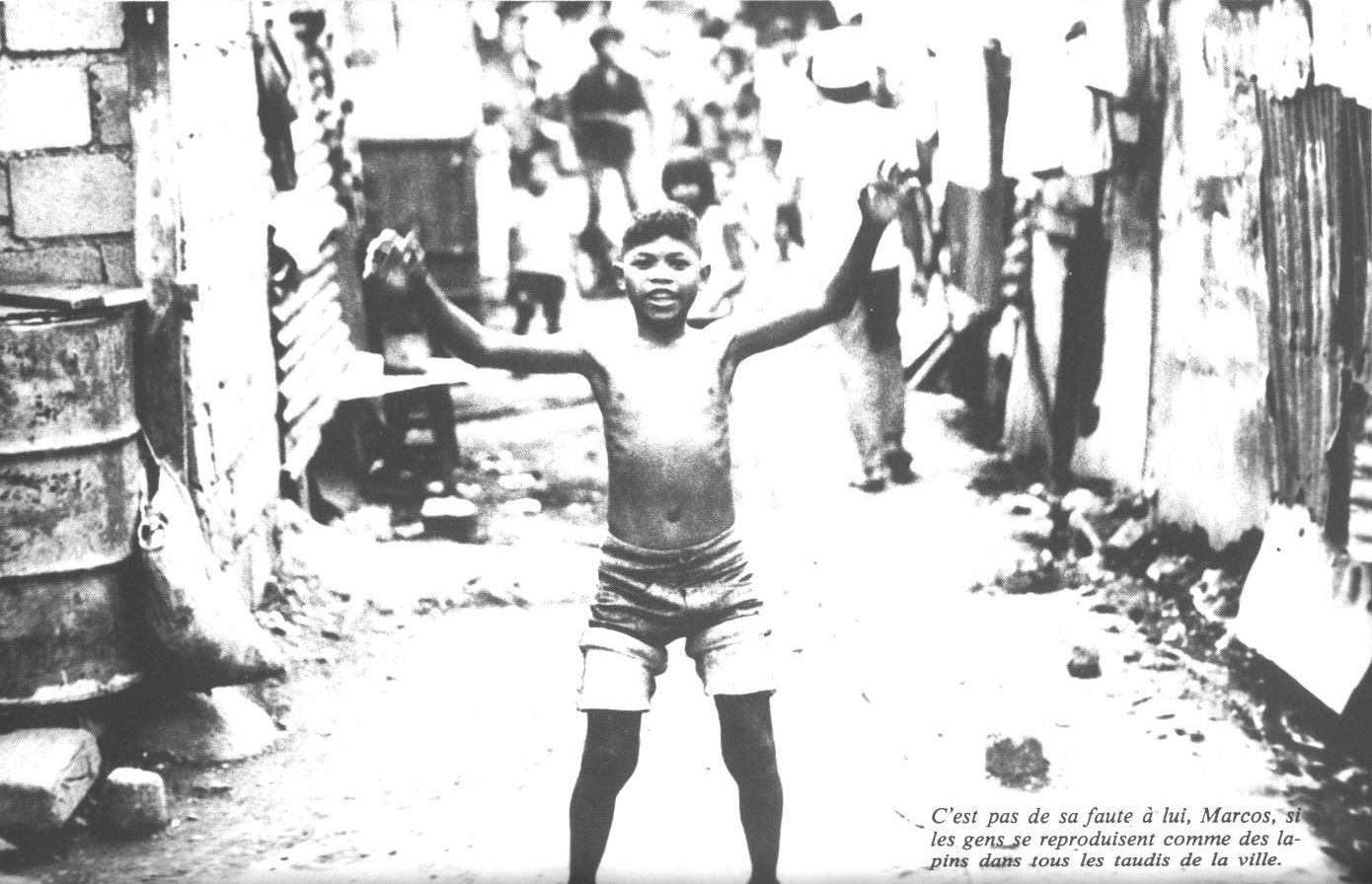
It seems to me that God will pardon much for Imelda and Marcos. Obviously that is a personal opinion. They appear to throw into prison everyone who doesn’t agree with them, but after all I do not see why anyone should disagree. It is after all not their fault if in Tondo and elsewhere people multiply like rabbits. Lapu-Lapu’s father has had sixteen or seventeen children, he no longer remembers exactly. He has two official wives, plus a third and a fourth who are spoken of without any precise knowledge of the subject. His daughter sells cigarettes at night, in front of Romeo’s at M.H. del Pilar, and his wife a little further along, in front of Gaiety. In fact the cops carted her off the other night, because she didn’t have a licence. They wanted 110 pesos to release her in the morning. It’s not Marcos’s fault that people reproduce like rabbits in the city’s slums, or sell cigarettes without a licence. How can you find work for everyone? It’s impossible. Lapu-Lapu’s father has one daughter who is a dancer in Amsterdam, and one son who waits for Japanese at the Sheraton exit to take them to the brothel. Another son is in gaol for murder, but he didn’t do anything. It was two policemen who killed the youngsters mucking about at the Harbour, an M.H. del Pilar club, but Lapu-Lapu’s brother made the mistake of being there. One should never be there when the cops are shooting bullets into young kids at M.H. del Pilar. It’s not Marcos’s fault if people don’t know that. The two cops have come out of prison, but Lapu-Lapu’s brother is still inside. Seeing what happens in the city I wonder whether he wants to come out! But certainly, everyone wants to be free!
When I get home I find a note in my pigeonhole. A Professor Wolfgang Amadeus Stockelmann wants to meet me.
“This must be an error,” I tell the girl. “I don’t know German, and certainly not this Professor . . . You must have made a mistake.”
“No,” she insists, screwing up her eyes, “it’s certainly for you.”
I examine the card. It’s true, room 405. There’s a telephone on the counter. The one the boys use to call their customers in the rooms.
“But here he is,” the girl points out to me.
Quite well dressed, not too commonplace, the Kraut.
“Ach ja,” he says to me. “I took the liberty of writing you zis little note. (He takes me to a corner.) It is because your boy. I vould like to ask you a great fafour…. Could I take of him a photograph.”
“Which one,” I ask him. “the big one or the little one?”
“Ze little one,” he affirms. “Him with the long hair. He is apsolutely atorable.”
“Good, good,” I reflect. “Perhaps we can arrange that.”
But I can already see my Raphael[8] naked at his place in exotic poses and so on. I’m not going to inflict that on him.
“Listen,” I point out, “the kid has nothing to do with the business here.”
“Opfiously! I haff no doubt,” declares the Professor, rubbing his hands. “He ist reserved to you for your personal usage ... Just a photograph . . .”
“You don’t understand,” I insist. “He’s not my boy, he’s my son, my natural descendant, if you prefer.”
The professor looked shocked.
“Oh excush me, I don’t know. You vant to say your true son?”
“Yesh, yesh,” I add.
The situation is clarified at once. Nonetheless he goes to find his Canon, but one feels his heart is no longer in it.
“Where would you like to take these photographs?” I ask him, as we are strolling along the San Carlos corridors.
“Er . . . anywhere . . . at your place if you wish.”
But when he enters the room there is a further shock.
“Oh Lapu-Lapu! I knew him when he was very small.” He goes into raptures. “He went to Europe, didn’t he. How interesting. Vith you??”
Lapu-Lapu pulled a face, he didn’t seem to want to renew his acquaintance with this fellow.
“Why did you bring that idiot,” he reproaches me, as the Professor is snapping Raphael bolt upright on the balcony.
“Ach,” my flash iss not going, it iss always like that in such cases,” he laments. There iss here a little thing which should light up and sometimes it does not light up.”
“Your batteries are flat,” I suggest.
He sits down exhausted.
“Ach, Lapu-Lapu! he was vun of the best in the past,” he assures me, “a true professional. Do you remember, my darlink, when we have been together at Pagsanjan?”
“I’ve never been to Pagsanjan with this idiot,” Lapu-Lapu protests.
“It doesn’t matter, it doesn’t matter,” says the German magnanimously.
Lapu-Lapu is looking at him with a really evil eye, but the Kraut doesn’t seem to notice.
He tells me that he occupies the chair of applied Psychology at the University of Dübingen in Bavaria. His group undertakes research into psychotherapeutic methods, and he lists a dozen such, half of which are quite unknown to me. He is married, with two adoptive children, but during the holidays he comes here. Obviously neither his wife not his colleagues suspect anything.
“I live in fear,” he explains.
Nevertheless I have a better opinion of Professor Stockelmann of the Dübingen Faculty of Applied Psychology when, with his Canon and his flash, he leaves us.
“A pleasant chap,” I tell Lapu-Lapu. “Not like the others.”
“Who?”
“Well ... Wolfgang.”
“What, Wolfgang? That one calls himself Peter here. He’s worse than the others.”
“Worse?”
“He’s the one who took our photos with Rodel, made up, disguised as girls, in black briefs with sequins. Ten pesos per photo.”
“Good, well none of that’s very terrible.”
“What? But then the pig wanted to make us suck him off,” complained Lapu-Lapu. “Fortunately it was Eric who did the job for us. And his dad’s a cop.”
And bang! [He left.]
* * *
San Carlos
From the street a kid is calling out to me, telling a friend, there they are, pointing me out with a finger, doing the bum dance, as they have seen done at night in the Yakan, the gay bar in Mabini.
I’m very amused. Success! thinks the little one, may I come up to your room? Definitely not! I try to convey to him through signs, but the kid has already disappeared, he is dashing towards the San Carlos entrance.
I call on Lapu-Lapu to help.
“Hey! Supud[9]!” shouts Lapu-Lapu. “Little bum-boy! Dickhead! Don’t you dare come up to this room. You’ll be sorry if you do.”
“It’s not me, it’s him,” maintains the kid, pointing to his companion.
“The one who dances in the street, showing his bum? My tourist friend isn’t interested in you.”
“It’s him!”
“It’s him!”
“Go and get screwed somewhere else,” shouts Lapu-Lapu. “Supud mabaho! your cock stinks!”
* * *
His friends had warned me:
“You’ll see. Noel[10] has cut his hair.”
“My God, why?”
“Lice, sure to be,” the evil tongues added.
To-day he came to San Carlos. By Jove, it’s true. Shaven. . . . Three big lines have formed on his forehead, and that gives him a worried look.
What is more, it’s clear enough that “it’s not working”, so it’s useless to ask him.
“But your hair? What did you do with it?”
“An idea,” he says.
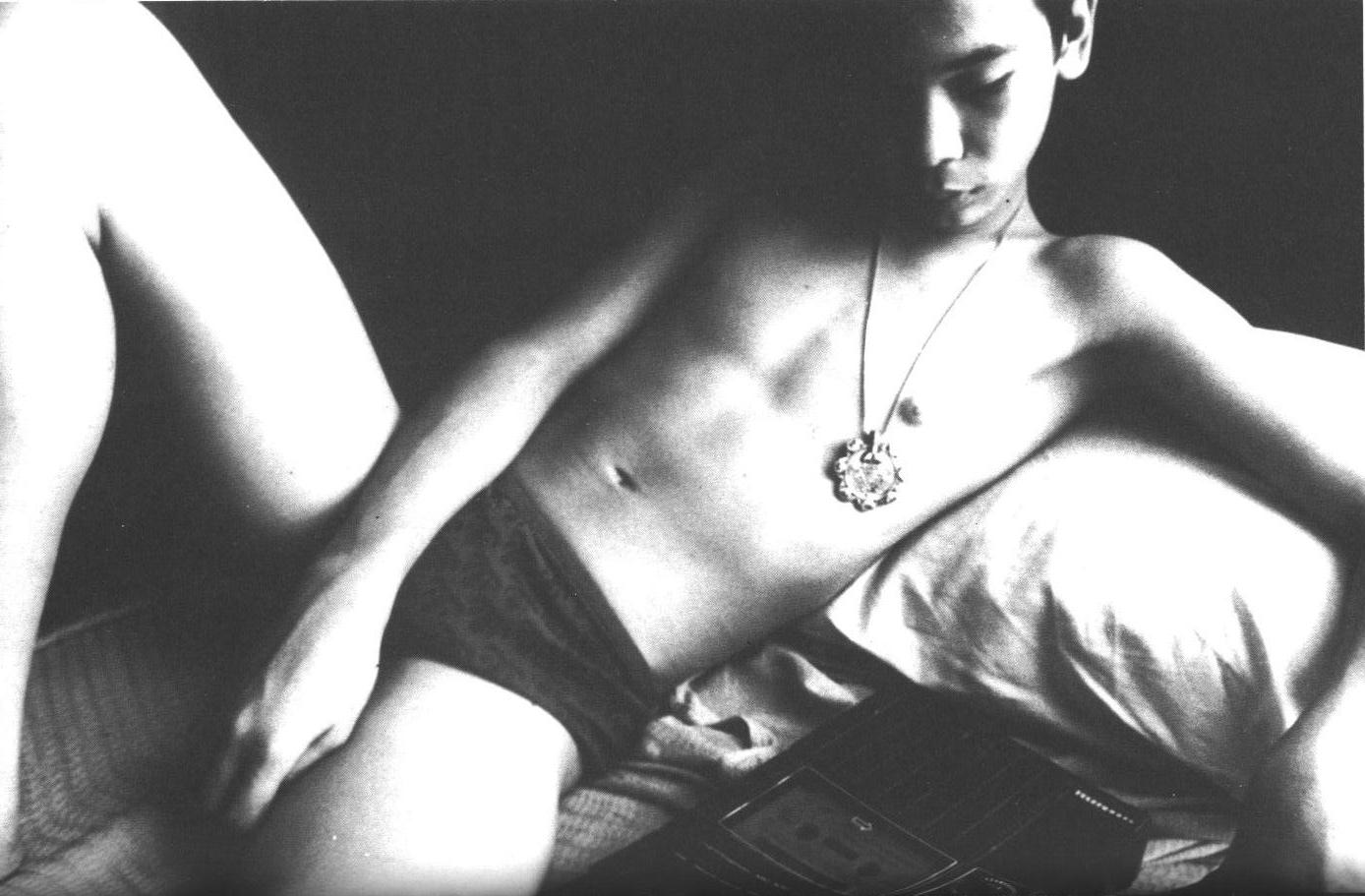
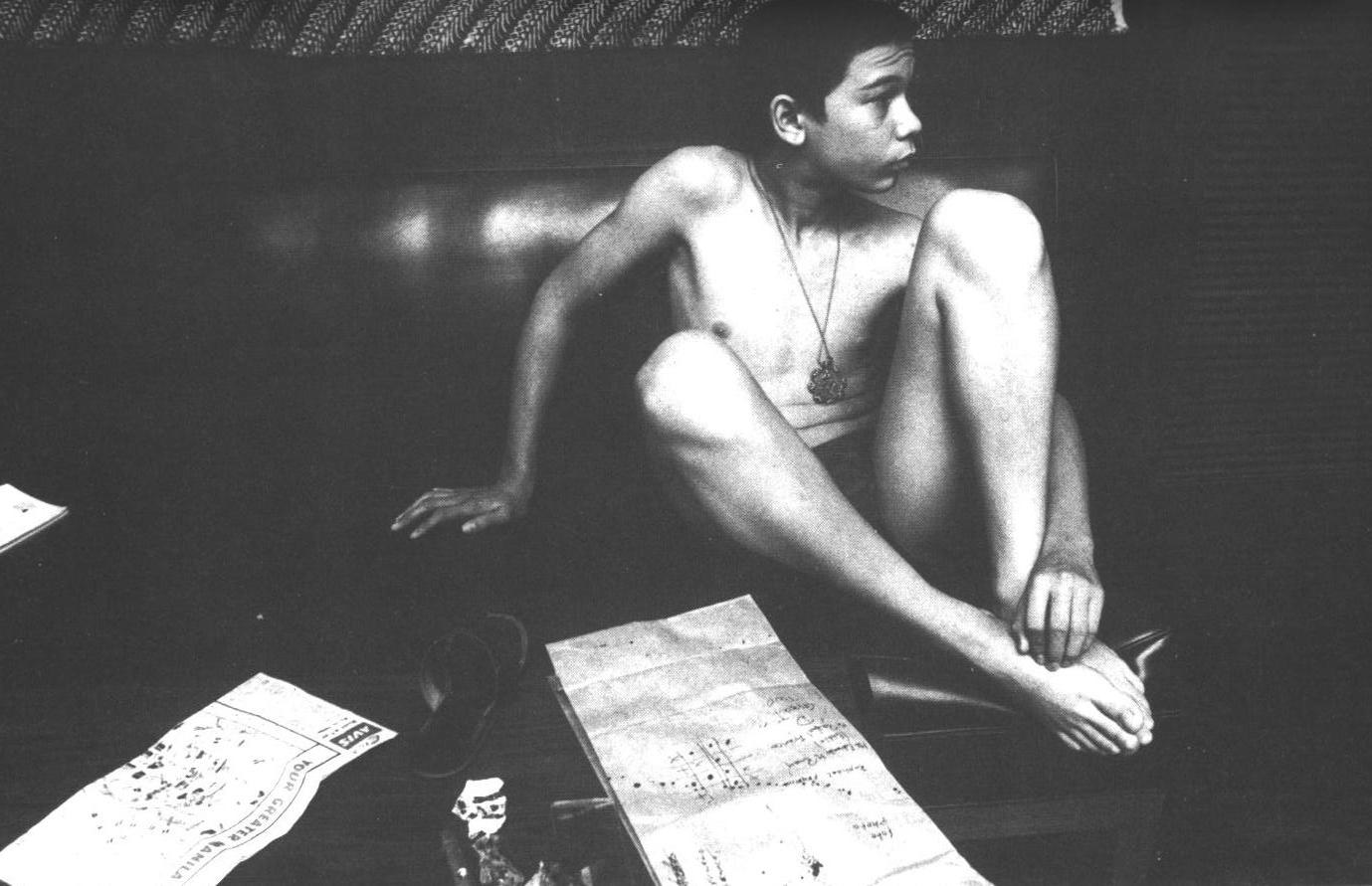
In fact it seems that it was his girl friend, Belle, who tipped a pot of Rugby over his head one crazy evening.
And the cops picked him up, he admits, but they let him go with the promise that he would stop taking drugs.
“I don’t take drugs any more, I swear,” he tells me. “And Belle no longer wants me ...”
Continue to Desert Patrol VIII: Pagsanjan, 1980
[1] The San Carlos Apartment Hotel, 777 San Carlos Street, was the Manila hotel Franco had stayed in the previous year. [Website note]
[2] Lapu-Lapu, now aged 14, was a boy the author had met in Manila the year before, gown close to and had intended to take to Europe, which it emerges from what follows that he had already done. [Website note]
[3] Eddie, who must now have been 16, was another boy Franco had got to know in Manila a year earlier, at that time in the face of Lapu-Lapu’s opposition. [Website note]
[4] B.C.J., short for Batang City Jail, was a gang in Manila whose name implies they were young and associated with the city jail. [Website note]
[5] Harrison Plaza was Manila’s first shopping-mall. Opened in 1976, it quickly became a popular place for city kids to hang out and a popular place for foreign boysexuals to meet interested local boys. It’s having “gone to the Bahala Na” presumably means that this latter violent street gang (founded by adolescent boys in the early ‘40s) had gained a monopoly over the criminal activities there. [Website note]
[6] Ferdinand Marcos had been President since 1965. His party was the Kilusang Bagong Lipunan (KBL), meaning New Society Movement. The elections were local ones held on 30 January. The KBL did win them, but they were contested, they were hardly quite free and fair since Marcos was ruling through martial law. [Website note]
[7] Imelda was the President’s powerful wife and the Governor of Metro Manila. [Website note]
[8] Raphael was the author’s natural son, born in Rome in 1967 and so then aged 12 or 13. Franco was usually seen in his company and the boy was already seriously learning from his father the profession of photographer that he was to pursue for life. A photo of him on a horse will be found in the fourth section of this book. Presumably the big boy with whom he is contrasted is Lapu-Lapu, living with them. [Website note]
[9] Not circumcised. [Author’s note]
[10] Noel Lavalle, 15, was a half-Filipino, half-French boy whom Franco had also met in Manila a year earlier and been close to. [Website note]
Comments powered by CComment