
DESERT PATROL VIII: PAGSANJAN, 1980
BY GUIDO FRANCO
Presented here is the eighth part of Desert Patrol (une aventure sous les tropiques), a travel memoir by French Swiss photographer Guido Franco published in 1980 and introduced here. It concerns what Franco saw of the pederastic scene involving local boys and foreigners on his return visit to Pagsanjan[1] in the Philippines in early 1980.
Pagsanjan
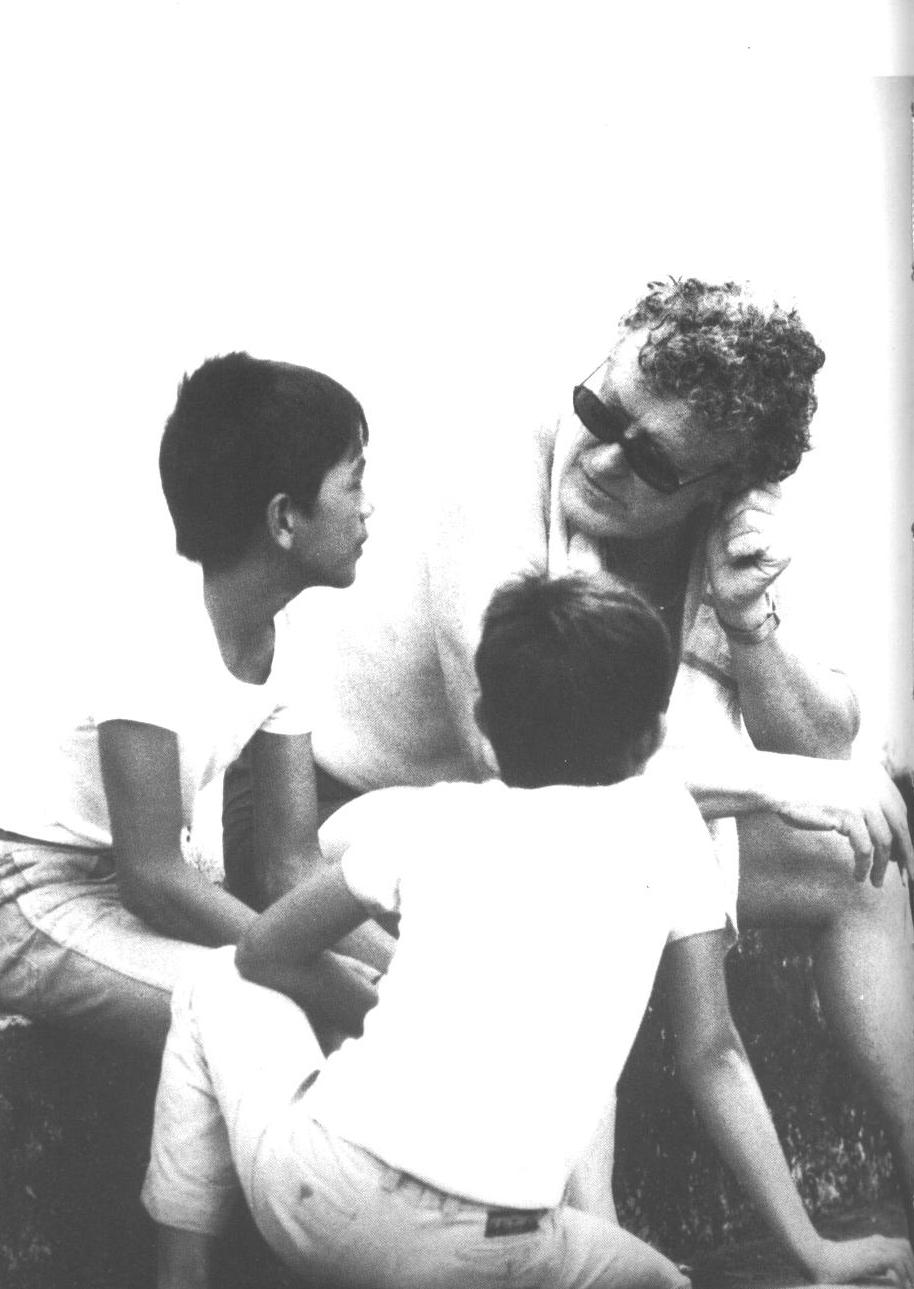
I came back to Pagsanjan as one returns to Paradise. Here Paradise and Hell are superimposed. Everything, Nature, the kids, the river gives the idea of Paradise. But Hell is present at the same instant, the absurd movement of the tourists being towed along the river, the incessant chattering of the Chinese who have come to pick-nick for their New Year, the sexual maniacs around the swimming pool. At first I saw myself among them as in a mirror. Now there is a kind of backward movement, not like that.
In Europe, everything that could resemble the Pool has been suppressed. You will be told that it is to protect the children. I myself believe it comes from fear. Mirrors are very dangerous. For who wants to see his own image? Come on, go to Pagsanjan and see whether you can bear the sight!
As is well known, you have no fear of making war, that has always defended the supreme values of civilization. You are not frightened of war, but you are frightened of the Pool. You reject it utterly. Unanimously. So come on, come closer. What are you prohibiting? The children? no, it is obvious that they are behaving well, better than yours who are strong on the subject in Paris. What then, if it is not the children? You? a certain idea of the age of adulthood? a certain civilization? Yes, that’s it, you are defending a certain civilization. Here, on the other hand, it is the Jungle, and the jungle makes one frightened. It is inhabited by rats and the rats resemble you.
* * *
Noel[2] has followed us. He turned up on the bus, and he came to the front of our lodge. It’s absolutely clear that I didn’t tell him to come. I already have Raphael, Eddie and Lapu-Lapu,[3] and for the present that is more than enough. So ...
I think he hasn’t been finding any more clients since he cut his hair. All the tourists have the same view: Noel is not as sweet as last year, hardly recognizable. He very nearly gets on one’s nerves.
We invited him to Durapé’s,[4] but not to sleep in the room.
“Listen Noel, no,” I tell him. “You see, I’m already with Eddie and Lapu-Lapu.”
“I see how it is. You’re cross with me.”
Sad, he went off to sleep in a public garden. But this morning he was here again.
* * *
Lapu-Lapu took me to Carlo and Jerby’s house, and showed me his little brother. He was there with a bike in the yard, among poultry and other children. Lapu took the bike to try it out, and he went off up the road. I had heard talk of Orly before. I had been told that he had been to Pagsanjan, on holiday with his “godmother”. What I had not known was that he was one of Klaus’s boys.
I no longer know how I found out. I think it was Carlo, one evening when he was drunk, after having taken the boys to the Falls. Eddie was puking silently in the bog, and Carlo spoke, spoke while holding my arm, and I felt the warm breath from his mouth.
“Klaus,” he told me. “He’s one of Klaus Schultze’s boys.
In everything the people of Pagsanjan say, Klaus is somewhere. He comes here several times a year. It is said that he is a former Swiss pilot. Others say that he lives in Ecuador and sells radios for Marcos’s army.
I have never set eyes on him. I’ve only heard people talking about him. It was he who found Lapu-Lapu when he was a little shoe-shine boy in front of the Hotel Filipinas, and invited him up to his room. It was he who took him to Pagsanjan, removing him from school with his easy cash, and made a “call-boy” of him.
I don’t like him.
That seems understandable enough. I don’t like the way he makes himself out as a Benefactor (at Pagsanjan he is said even to have built a school) when he buys boys from their parents, such as Lito for whom he is said to have paid a thousand pesos, or Lapu-Lapu’s brother who is eight years old.
“A very good man,” they say here. He was here last week. “Lapu-Lapu came here. He didn’t tell you?” Perhaps he didn’t dare. Klaus. If you had come a week later I could have seen you.
Why didn’t Lapu-Lapu tell me anything about it?
“Would you like a cigarette?” Carlo asks.
“No, and I would ask you not to smoke in my room. You already smell bad enough like that.”
“No,” he told me. “Klaus is no longer interested in him. He is not interested in big boys. He has other boys now, Lito and your friend’s little brother, Orly.”
“The one who was in the yard with the bike and the chickens?
“Yes, he only likes the little ones,” said Carlo with a laugh.
Lapu-Lapu shouts and weeps.
“That’s not your business! Don’t get mixed up in that.” He is furious, and doesn’t want to speak to me any more.
So it was with Klaus that his little brother was staying in Pagsanjan.
“Why didn’t you say anything? Why didn’t you tell me that you came here?”
“Because it isn’t important,” screams Lapu-Lapu. “What can it matter to you that I came here.” He screams that he wanted to take his little brother back, but that Klaus had sent him packing. Klaus is very strong. He was frightened.
The boy had suddenly become cold, his teeth were chattering.
“Look, he gave me a hundred pesos. And he gave my dad four hundred pesos.” (Implying, my dad needs it, so shut up.)
I shut up. Besides, I couldn’t care less about Klaus and his collection of little kids. Why bother. Where am I? Who is talking?
* * *
“If only they didn’t march around with their little kids like Emperors with their retinue,” Frank remarked to me. “They make me laugh. Having it off with little boys, that’s one thing, but feeling obliged to parade around!”
As in everything he says, Frank is right.
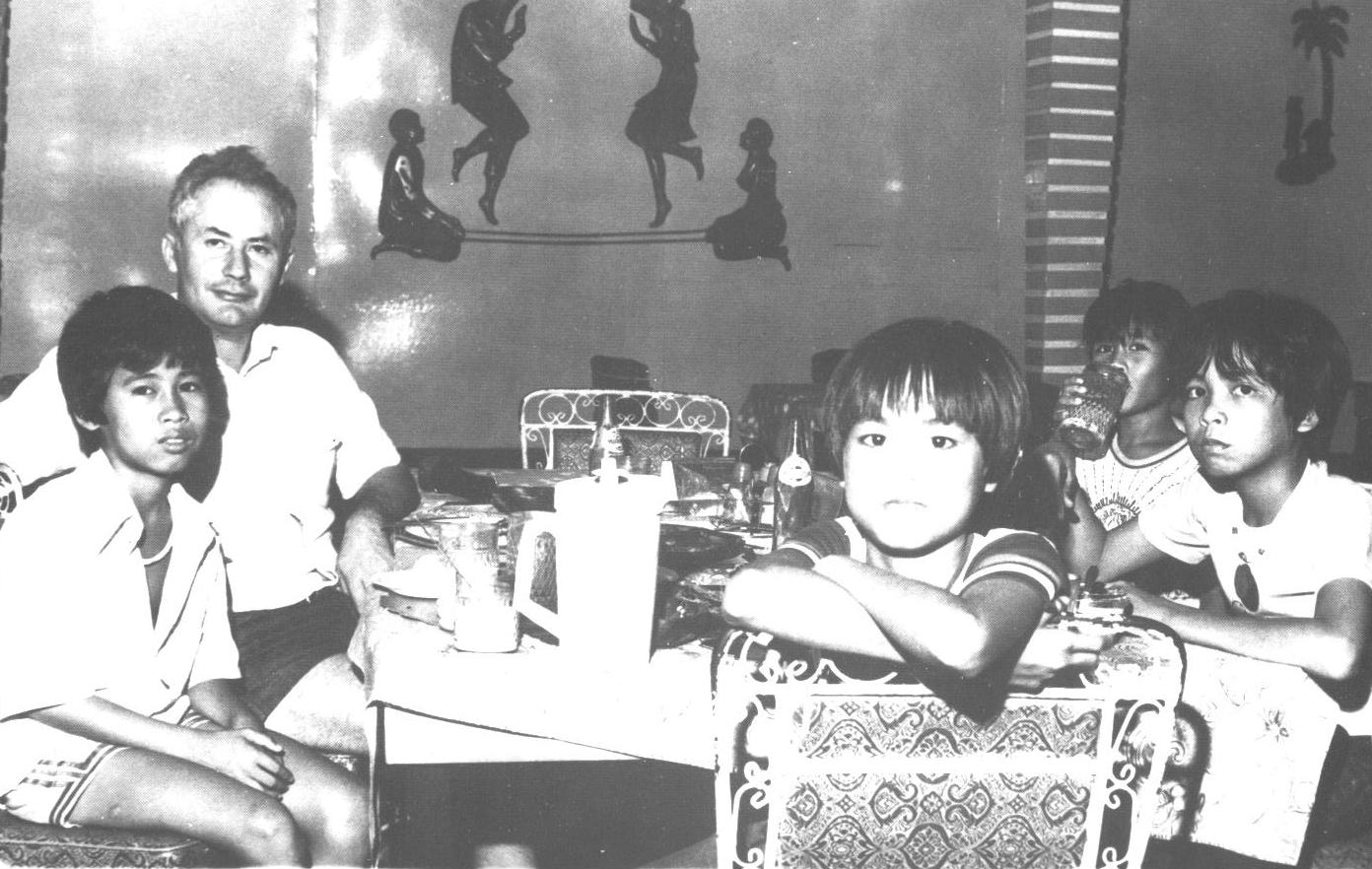
To Durapé in the evening, we had to put up with all the local peds, who came with their little class, all dolled up, with their new T-shirts, their harmonicas, and we had to listen to:
“My little one had the runs to-day, the other one is very affectionate, the third has a lovely voice, etc.”
I myself almost started to tell everyone about my boys.
Look at what I’m doing now!
* * *
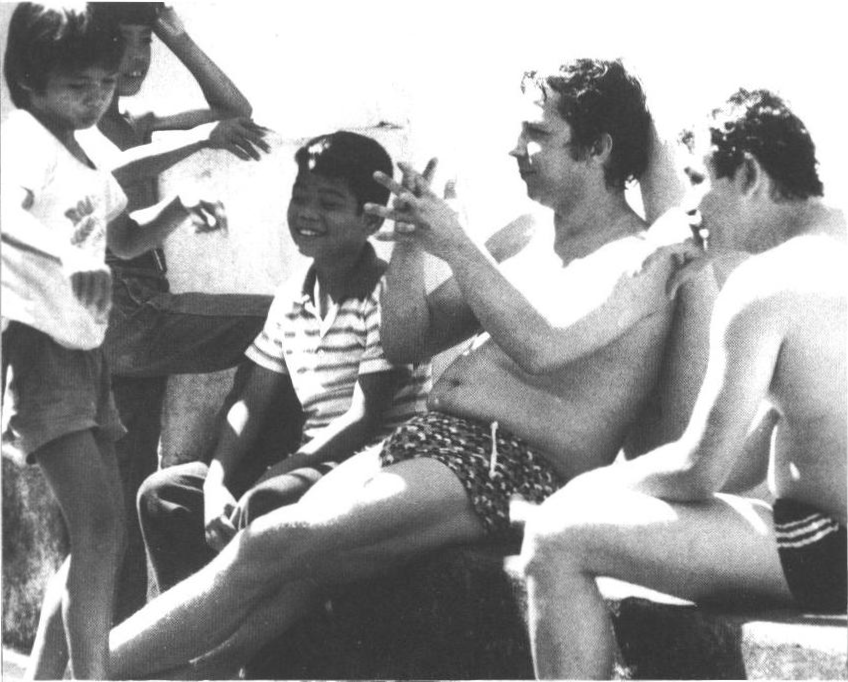
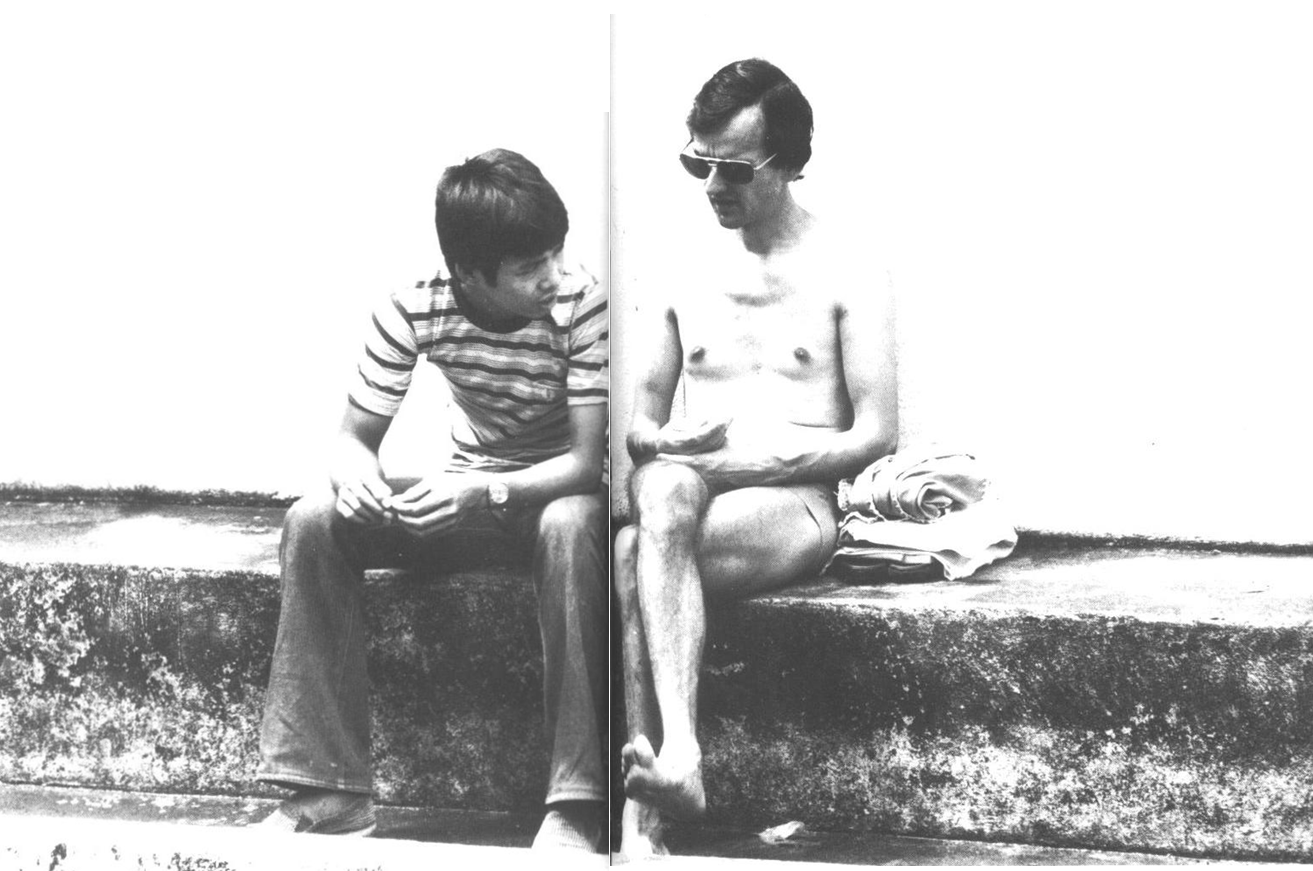
There are two little boys, sitting next to each other, at the side of the pool. They must be eleven or twelve years old.
“Chupa?” the first one asks me.
And then, as though I had not understood, he adds:
“Suck?”
“You?”
“No, him.”
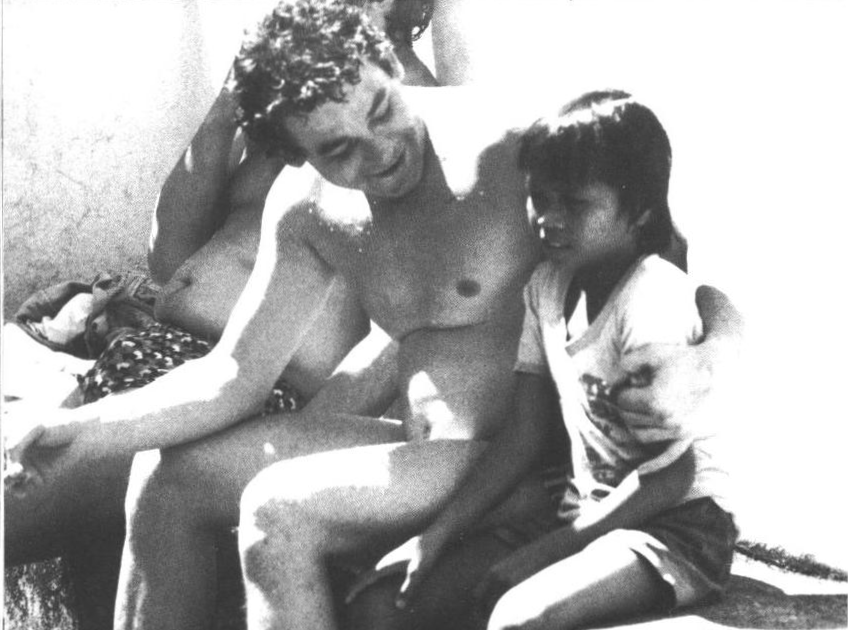
He is offering me the ugly one, who has two teeth missing.
“But you?”
He considers.
“All right,” he says.
“Now,” suggests the one with two missing teeth; doubtless he is afraid I will forget.
“Impossible.”
“Why?”
“I have some things to do, I have to change my room, and my friends are waiting for me ...”
“You’re moving to no. 2 aircon,” the little one said. “Yes, exactly, that’s it.”
“That’s no problem, we can go to the no. 2 aircon.”
“To-morrow, to-morrow.”
“You promise?”
“Ah no, I don’t promise anything. How much do you want?”
They consult.
“Twenty pesos, for the two boys, him and me. Chupa.”
“Hm.”
“Him and me. Come now.”
* * *
Noel came to the Lodge this morning with a hundred pesos in his pocket. He found a tourist last night, a German. I had seen him at the pool, haggling with the boys. Apparently to-day the tourist wanted to get Lapu-Lapu or Raphael, and it had to be explained to him that this was not possible.
“But why? But how?”
He was told that Lapu-Lapu had retired from business. That seemed to disarrange his habits!
It struck them like an abnormality, and therein they discerned God knows what fabrication or trickery.
Anyway, satisfied or not, he was obliged to content himself with our explanations.
As for Noel, with his cash he could now go back to Manila, he was told.
“No, I’ll go back to San Miguel and my mother! I will also retire! I won’t come back again.
“So you say, so you say,” said Lapu-Lapu. “Next week you’ll be back at Cultural.[5]”
“Benny give me one peso! Benny give me one peso!”
Rolly and the other kids are besieging the big German in shorts.
“Ach ja was! all they want is money. Benny one peso! All day long I hear that, all they want is money. But no love for me, none.”
He tells me he is a teacher in Germany, and is staying at the Holiday Lodge.
“Benny, one peso!”
“Ich gebe nights mehr. I’m not giving any more. I’m tired of hearing that all day long.”
“Benny one peso, to buy rice for my mum.”
* * *
Continue to Desert Patrol IX: Manila V
[1] Pagsanjan, a town in Luzon, 91 km. from Manila, which arose beside the famous Pagsanjan Falls, was at this time home to the most vibrant boysexual scene in the world. Much the fullest account of this was given by Richard Rawson in his Paggers Papers (Amsterdam: Acolyte Press, 1993), which takes its name from the American nickname for Pagsanjan and describes how literally all the pubescent boys there sought sexual liaisons with visiting foreign men for remuneration, generally with strong parental approval.
[2] Noel Lavalle, 15, was a half-Filipino, half-French boy whom Franco had also met in Manila a year earlier and once been close to. [Website note]
[3] Raphael, aged 12 or 13, was Franco’s son (usually with him), Lapu-Lapu a Manileño boy of 14 who had been Franco’s special friend for a year, and Eddie another Manileño of 16 who had likewise been his friend for a year. [Website note]
[4] Durapé’s was the restaurant in Pagsanjan most recommended by the Spartacus International Gay Guide, 1979 edition, whose editor remarked that large parties of boys and tourists were often to be seen there, including himself (p. 387). [Website note]
[5] One of the parks in Manila, where Noel sleeps. [Author’s note]
Comments powered by CComment