
TOKUGAWA TSUNAYOSHI, THE GENROKU SHOGUN
BY DONALD H. SHIVELY
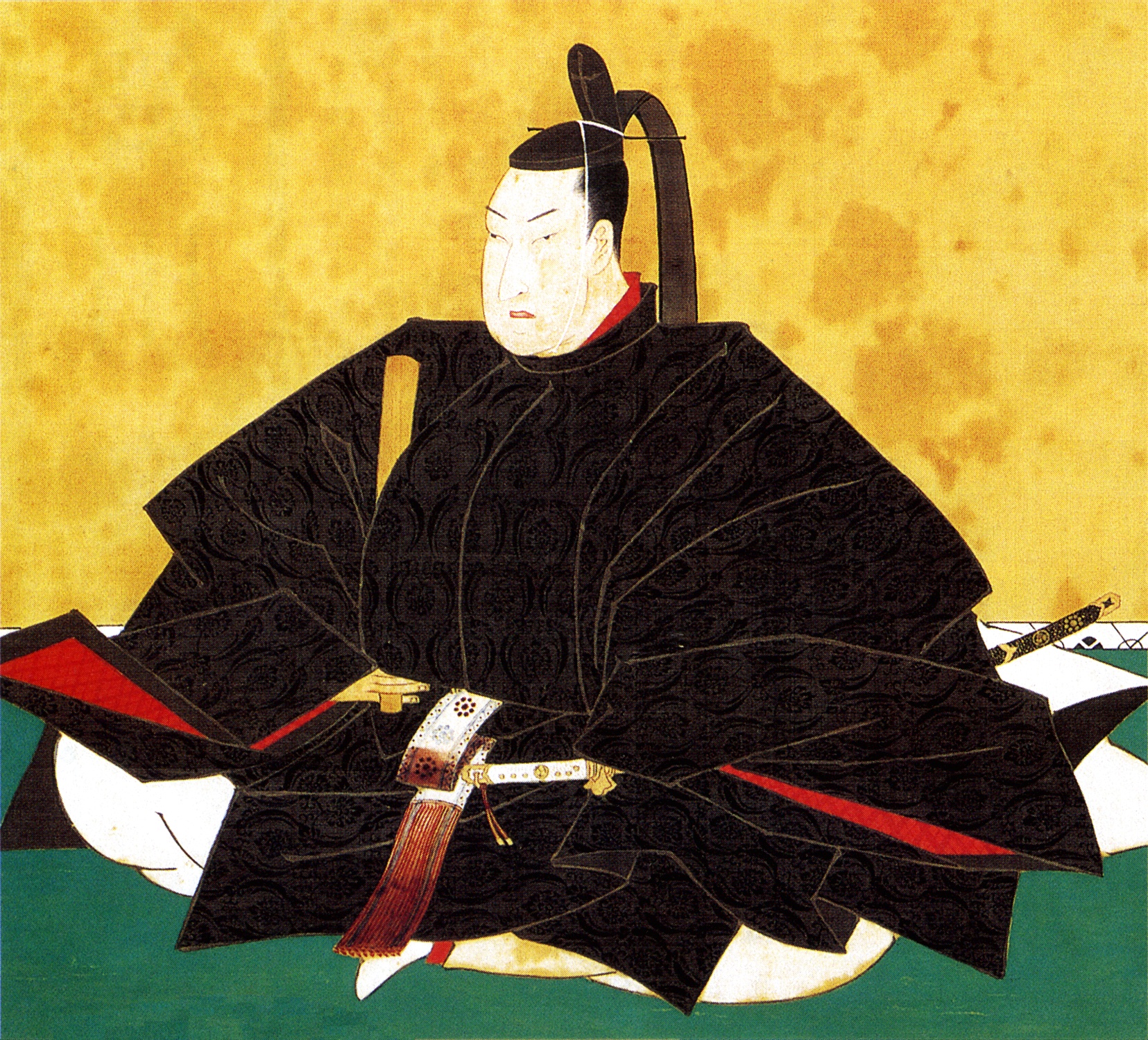
Tokugawa Tsunayoshi 徳川 綱吉 (23 February 1646 – 19 February 1709) was, from 1680 onwards, the fifth of the last dynasty of shoguns (de facto and imperially-appointed rulers) of Japan.
Presented here is everything of Greek love interest in the first biography of him by American Japanologist Donald Howard Shively (1921-2005), “Tokugawa Tsunayoshi, the Genroku Shogun”, published as pages 85-126 of Personality in Japanese History, edited by A. M. Craig and D. H. Shively, Berkeley: University of California Press, 1970. The footnotes are all the author’s.
Tsunayoshi’s reputation suffered also from the excessive manner in which he indulged his sexual proclivities and the air of scandal that emanated from his affairs with handsome boys as well as women. Homosexuality was still common, perhaps even customary, among military aristocrats in the seventeenth century, and it could not have been considered remarkable that the shogun preferred boys to women. His father Iemitsu had a similar preference. His great-grandfather Ieyasu,[1] though he produced eleven sons and six daughters by his thirteen wives and concubines, and had six additional acknowledged concubines as well, had more than his share of boys[2]. What was unusual was the degree of Tsunayoshi’s indulgence; he appointed a large number of youths of all classes to posts as attendants, and he promoted eleven or more of them to daimyo.[3]
Another scandal was that some of his favorites rose to be leading officials. The most spectacular case was that of Yanagisawa Yoshiyasu. The son of a samurai of only 150 koku, and twelve years Tsunayoshi’s junior, Yoshiyasu became Tsunayoshi’s disciple in Confucian studies and went with him to Edo castle and became an attendant (konando) in 1680. In 1688, he rose to daimyo rank, became a grand chamberlain, and for the remaining twenty years of Tsunayoshi’s rule he was the most powerful minister. He received successive increases in income until in 1703 he was given the Kofu domain, assessed at 150,000 koku.[4] He was evidently clever in anticipating and pandering to Tsunayoshi’s whims. He does, however, seem to have been in addition intelligent, well-educated, and an able administrator.
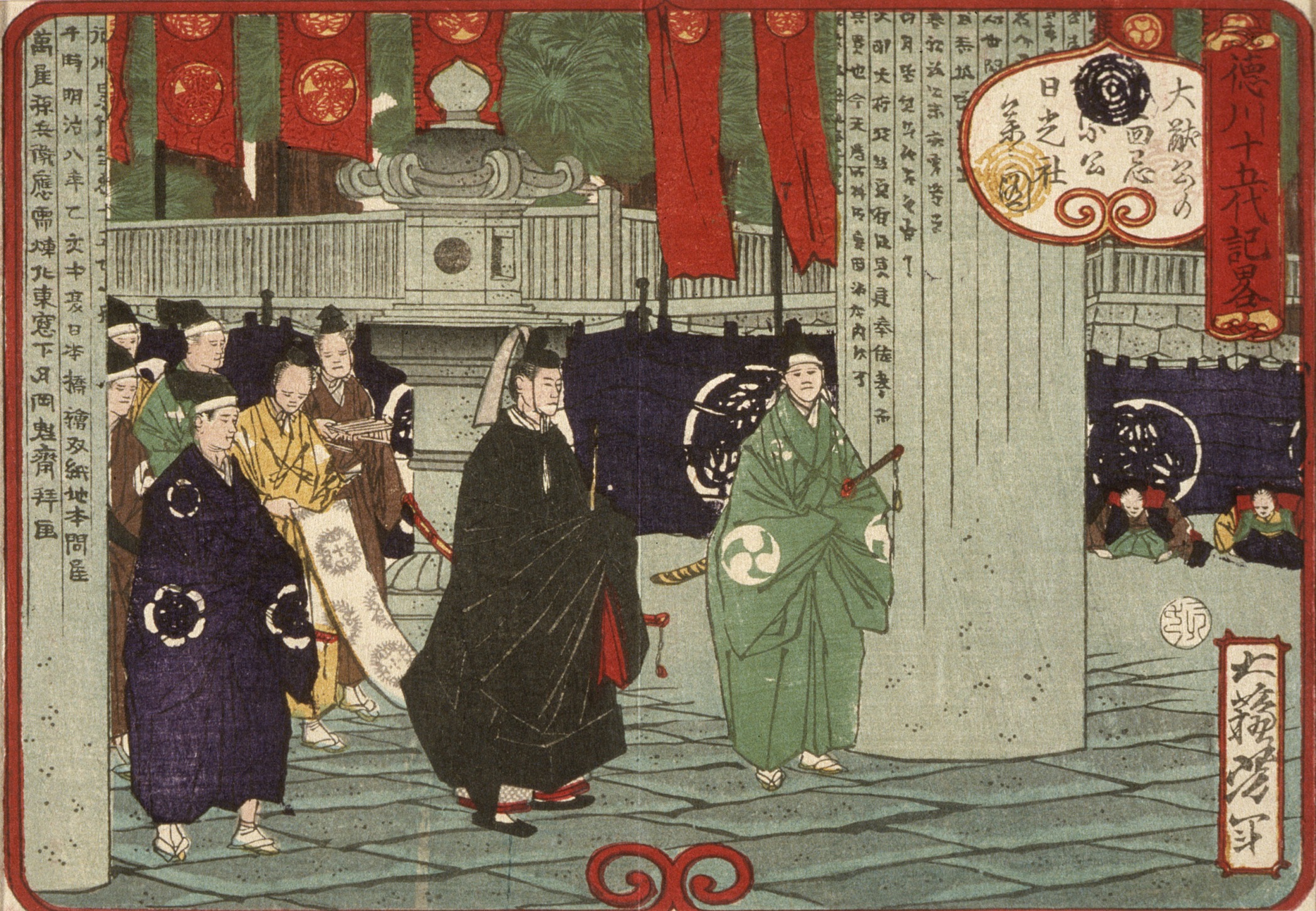
The Sannō gaiki, in its terse Chinese style, states bluntly,
The ruler liked sex with males. From among the sons of tozama daimyo and hatamoto down to soldiers and housemen, no matter how humble, if they were handsome, he appointed them as attendants. [The text lists the names of nineteen daimyo or daimyo’s sons.] They were all selected because of sex. There were only a few who were not appointed attendant because of sex [three names listed]. Both Yanagisawa Yoshiyasu and Kuroda Naoshige pleased him with love from the time they were young pages, and finally they were promoted to daimyo…. Others who pleased with sexual love and received stipend and rank are too numerous to count.[5]
There is record of at least 130 of these youths, and it was rumored that a special official was appointed in 1693 to select handsome boys.[6] The favorites were jealously guarded from the possibility of other liaisons by being confined like the concubines in the women’s quarters.[7] Tsunayoshi was extremely generous in giving his favorite youths fiefs, advancements in rank, increases in stipends, and gifts and honors.[8] He did violence to the traditions of hereditary social status and privileges by making daimyo’s sons, and even young tozama daimyo, serve as pages in company with boys of all social backgrounds from samurai down to commoners and budding nō actors.[9]
Tsunayoshi’s preference for boys and his indiscriminate promotion of them did not set a good example for the daimyo. According to the Sannō gaiki, “Many tozama daimyo imitated him like stupid children. The Lord of Nakatsu [Ogasawara] Nagatane loved a fellow called Akimoto and made him his leading minister, whereupon the administration of the domain fell into disorder….”[10]
There is less information concerning Tsunayoshi’s relations with women. In addition to his official wife, he had three recognized concubines, well below the average number for a Tokugawa shogun. Two were from the lower court nobility, reputed to be beautiful and talented women, and with his consort they formed a small Heian-kyō harem from the years before he became shogun, but these unions produced no children. The other concubine, Oden, was the favorite.[11] She bore him his only children, [… pp. 97-100].
Nō performers, as professional entertainers, traditionally were regarded as of the lowest social class, and were, in theory, outcastes. Tsunayoshi, however, favored handsome and talented young performers and musicians and appointed them gokenin and made them pages at the castle.[12] [p. 102 …]
[…] His private life was even more difficult to reconcile with his pose as a moral exemplar; sexual indulgence and willful handling of attendants and retainers showed scant concern for ethical conduct or social proprieties. Although his personal life could be considered to some extent a separate “private face” which he showed in the inner rooms of the castle as a release from the demands of his office, it was not always strictly private. Did he not see something incongruous in his own conduct if, on a visit to a daimyo’s mansion, he delivered a lecture on the Classic of Filial Piety, performed an edifying nō dance, and then bedded down with the daimyo’s son or wife? The Tsunayoshi of the Sannō gaiki is a parody of the sage-king. [p. 123 …]
Concluding paragraph of the biography:
His personal life set a peculiar example of extravagance and reckless improvidence, indulgence in nō dancing and in sex, absorption in parlor pastimes to the neglect of his family calling as head of the military class. He abandoned the way of the samurai. His relaxation of personal discipline and his impulsive, free-living ways echoed the spirit of the Genroku era. [p. 126]
[1] Tokugawa Ieyasu (1543-1616), who established his family as the last dynasty of shoguns in 1603, is best known in popular global culture as “Yoshi Torunaga”, the name given to him in Shogun, a best-selling novel by James Clavell twice adapted to television. The portrait of him there is justifiably admiring, and arguably the main theme and charm of the story is its generally sympathetic depiction of Japanese culture in conflict with European values, which does include contrasting Japanese matter-of-fact acceptance of Greek love as normal with European shock at this attitude (as shown in the English hero’s shock and incomprehension when he is offered a boy for his pleasure). Nevertheless, Ieyasu’s own passion for boys was omitted, the prejudices of the intended anglo audience presumably being deemed unsurmountable on this topic. [Website footnote]
[2] Saiki Kazuma, “Tokugawa shōgun seibō narabi ni saishō kō,” in Nihon Rekishi Gakkai, ed., Rekishi to jimbutsu (Tokyo, 1964), pp. 421-426. [Author’s footnote]
[3] Tokugawa jikki in Kuroita Katsumi, ed., (Shintei zōho) Kokushi taikei (Tokyo, 1929-1935), 43:733b. [Author’s footnote]
[4] The yield of the Kōfu domain was actually in excess of 200,000 koku. In 1701, Yoshiyasu was given permission to use the Tokugawa clan name of Matsu-daira, and the shogun gave him the character “Yoshi” from his name. (Hitherto Yoshiyasu’s name had been Yasuaki.) He was also given the privilege of minting coins in Kōfu. His two younger sons were made daimyo. Kurita Mototsugu, Edo jidai (Tokyo, 1937), part 1, vol. 9 of Nihonshi taikei, 1:443- 444; Sannō gaiki, published by Gajikanga Shoya, Tokyo, in 1880, p. 8b. [Author’s footnote]
[5] Sannō gaiki, published by Gajikanga Shoya, Tokyo, 1880, p. 3. [Author’s footnote]
[6] Kurita Mototsugu, Edo jidai (Tokyo, 1937), part 1, vol. 9 of Nihonshi taikei, p. 437. [Author’s footnote]
[7] The most prized youths were kept in a dormitory at the residence of Yanagisawa Yoshiyasu according to the Sannō gaiki, published by Gajikanga Shoya, Tokyo, 1880, (pp. 4b-5a): “The ruler liked youths. They were promoted, for the most part, because of sex. Of several tens of attendants, twenty-odd were favored, and they were kept at the residence of the Lord of Kawagoe [Yoshiyasu]. Some had wives, others not. They were under regulations concerning their travel to the castle every day, their return from the castle, their rising, eating, studying, and so forth. There were four men in charge of watching them. They waited for an evening call…. Whether they were at the castle or not, they could not look around [to flirt] or talk on the street. Even their fathers and brothers could rarely see them or correspond with them. Twenty-two or twenty-three boys from daimyo families became such attendants, and three were sons of court nobles. Sons of hatamoto and gokenin, even if lowly, were summoned if they were beautiful.” [Author’s footnote]
[8] Tokugawa jikki in Kuroita Katsumi, ed., (Shintei zōho) Kokushi taikei (Tokyo, 1929-1935), 43:733b. Some youths who later displeased him, including some who had been made daimyo, were stripped of their rank and sent into exile or put into the custody of daimyo. There were several youths who caught his eye but who, fearful of the risks that went with an appointment, declined the offer. They too were exiled. [Author’s footnote]
[9] The Tokugawa jikki in Kuroita Katsumi, ed., (Shintei zōho) Kokushi taikei (Tokyo, 1929-1935), 43:739b, lists the names of forty-seven attendants who were of daimyo background or who were made daimyo, and it notes that the next shogun, Ienobu, returned them all to their “original status.” [Author’s footnote]
[10] Sannō gaiki, published by Gajikanga Shoya, Tokyo, 1880, p. 3a. In 1698, Nagatane was instructed to retire in favor of his younger brother, and the domain was cut from 80,000 to 40,000 koku for “negligence.” Tokugawa jikki in Kuroita Katsumi, ed., (Shintei zōho) Kokushi taikei (Tokyo, 1929-1935), 43:733a; Arai Hakuseki, (Shinhen) Hankampu (Tokyo, 1967), 3:16. [Author’s footnote]
[11] Saiki Kazuma, “Tokugawa shōgun seibō narabi ni saishō kō,” in Nihon Rekishi Gakkai, ed., Rekishi to jimbutsu (Tokyo, 1964), pp. 431-433. Tsunayoshi appears to have been devoted to Oden and is said to have treated her as if she had the status of his consort. […] [Author’s footnote]
[12] The Tokugawa jikki records that during the six years, 1685 to 1690, the shogun appointed as pages ten nō actors, two kyōgen actors, two reciters, a flutist, and four drummers. In 1696, eight more actors were appointed and thirteen others were put on stipend, but evidently they were not appointed to posts at the castle. following: Kurita Mototsugu, Edo jidai (Tokyo, 1937), part 1, vol. 9 of Nihonshi taikei; Nakamura Kōya, Genroku jidai kan, Tokyo, 1919), pp. 95-97. The Tokugawa jikki records that “because of his excessive liking [for nō], he summoned members of the troupes and frequently appointed them to fine posts. Hence, many people would practice hand gestures and foot movements day and night so that there was [as in the Shu-ching] ‘drinking and singing in the chambers and constant dancing in the palace’” (in Kuroita Katsumi, ed., (Shintei zōho) Kokushi taikei (Tokyo, 1929-1935), 43:752a). [Author’s footnote]
Comments powered by CComment