
THE MOVING PICTURE BOY ARCHIVE
A REVIEW OF THE FILMS THE BLACK PHONE (2021) AND THE BLACK PHONE 2 (2025)
by Sam Hall
The 2021 American film The Black Phone was directed by Scott Derrickson and starred Mason Thames as Finney and Ethan Hawke as The Grabber. The 2025 sequel, The Black Phone 2, saw these two actors reprise their roles from the earlier movie. Movie poster and screenshot images (the latter enhanced to increase brightness) were supplied by the Editor. All screenshot images show Mason Thames in The Black Phone. Clicking on any image will open the full-size image in a new tab.
 Collect Call to Nobody
by Sam Hall, 19 Nov 2025
There ought to be an Academy Awards devoted to boys in movies. Call it, perhaps, the Antinous Awards. It would be a suitably gala annual occasion, the red carpet replete with boy-stars dressed in exquisitely refined formal attire, showing the try-hard lingerie gals of the increasingly clapped-out adult version what it’s all about.
The categorical possibilities are endless: Best Actor, Sexiest Supporting Actor, Naughtiest Tease, Brightest Personality, Most Sinfully Decadent, Most Ethereally Out-of-Reach, Most Fun at a Boring Family BBQ, etc, etc.
The premier award, the Golden Antinous, would go to the boy most suited to an ideal Greek love relationship. The winner of this prestige award would, it goes without saying, have to stab the gut with his devastating sex appeal, but he’d also have to bring in a barrow-load of more subtle and painfully heart-breaking qualities.
A nomination hard to beat in any year would be Mason Thames’ portrayal of Finney Blake in The Black Phone (2021). The movie sees Finney traverse a fairly straight-forward, if hideous, rites-of-passage: he’s kidnapped by the psychotic Grabber monster, locked in a basement to await imminent torture and death, and must dig deep to find the qualities to survive. Finney’s vulnerable early-adolescent masculinity, so grotesquely imperilled, adrift in a world devoid of one good man, is a tremendous goad to a man’s capacity for White Knight fantasies. The entire film relentlessly provokes the ordinary chap’s desire to get involved, lift his game to a higher level. It’s a strangely brewed yearning that marries primal lust to more idealistic cravings: to rescue, protect, mentor, love.
Director Scott Derrickson spent months doggedly going through audition tapes before selecting Mason Thames for the role. And, true to Derrickson’s talent for the film game, he scored a bullseye, trusting his project to a boy with no prior experience to speak of.

Thirteen-year-old Thames is perfect, embodying exactly the right sweet-natured lad conflicted by lingering timidity and hesitancy while obviously harbouring a nascent manly character and braveness not far below. In other words, the ideal heart-stopper for any half-decent man with Greek love on his mind. And this is a vital part of this curious film, which offers up such interesting fruit to a boysexual reading.
Incidentally, I use the term “embodying” for Thames’ performance advisedly. In Black Phone 2, seventeen-year-old Thames’ compelling boyish presence fades to reveal a perfectly respectable young man with no hint of acting talent. His younger sister took over the story’s emotional centre while Finney stood around rather listlessly, looking like a youth desperately in need of a career path.
As a filmmaker, Scott Derrickson is motivated by pedophobia. His two previous writer-director horror flicks were powered by the unspeakable evil of child abuse. Derrickson has piously spoken of drawing on his own childhood trauma. Given his success at mining the genre, one could possibly paraphrase Camille Paglia’s comment on Sinead O’Connor, another tiresome abuse-monger: “In the case of Scott Derrickson, child abuse was justified.” It’s certainly earned him good coin.
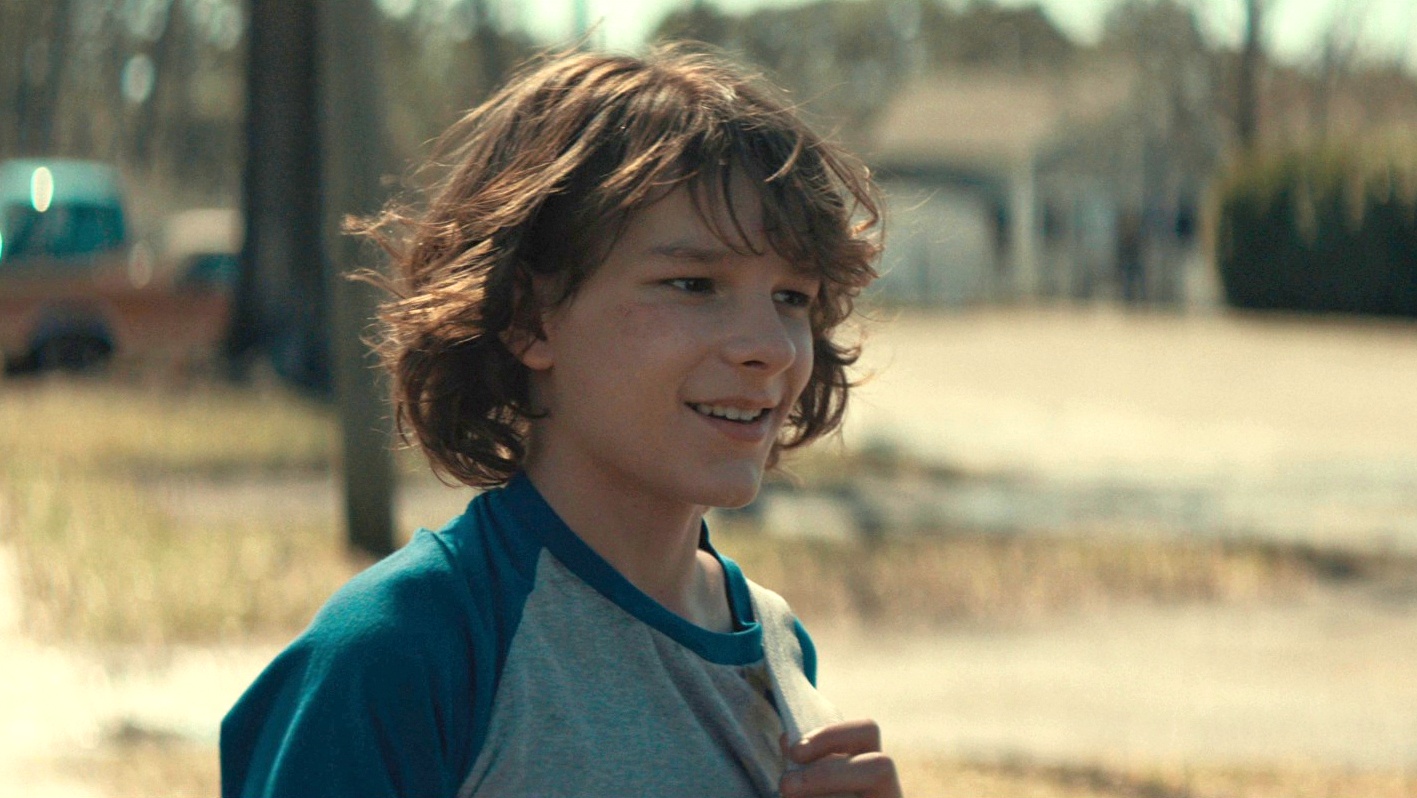
In The Black Phone, Finney Blake can’t yet fend for himself. His dad’s a broken alcoholic wreck, and while his tough best-friend, Robin Arellano, comes to his rescue against the standard bullies, Robin gives Finney some pointed advice: you need to stand up for yourself. Robin’s got his own adolescent challenges to negotiate, he can’t fill the role of mentor that Finney so desperately needs.
Enter the Grabber. The town is abuzz. A monster is snatching local boys and most likely murdering them…if they’re lucky. A telling scene precedes Finney’s kidnapping. Gwen, his feisty younger sister, teases Finney about his refusal to say the Grabber’s name out loud. Finney insists, unconvincingly, he doesn’t believe the myth that speaking the monster’s name will cause him to materialise. Nonetheless, he won’t be teased into saying it. Finney’s intuitive fear was more correct than either he or his sister could know. He didn’t have to speak the monster’s name out loud; he was already bruiting his need via a boy’s naturally acquired pubescent body-language. The call used to be answered by any near-by fella with genuine Greek love in his repertoire. Today, such a need is only allowed to dial up a monstrous perversion of manhood and certain death.
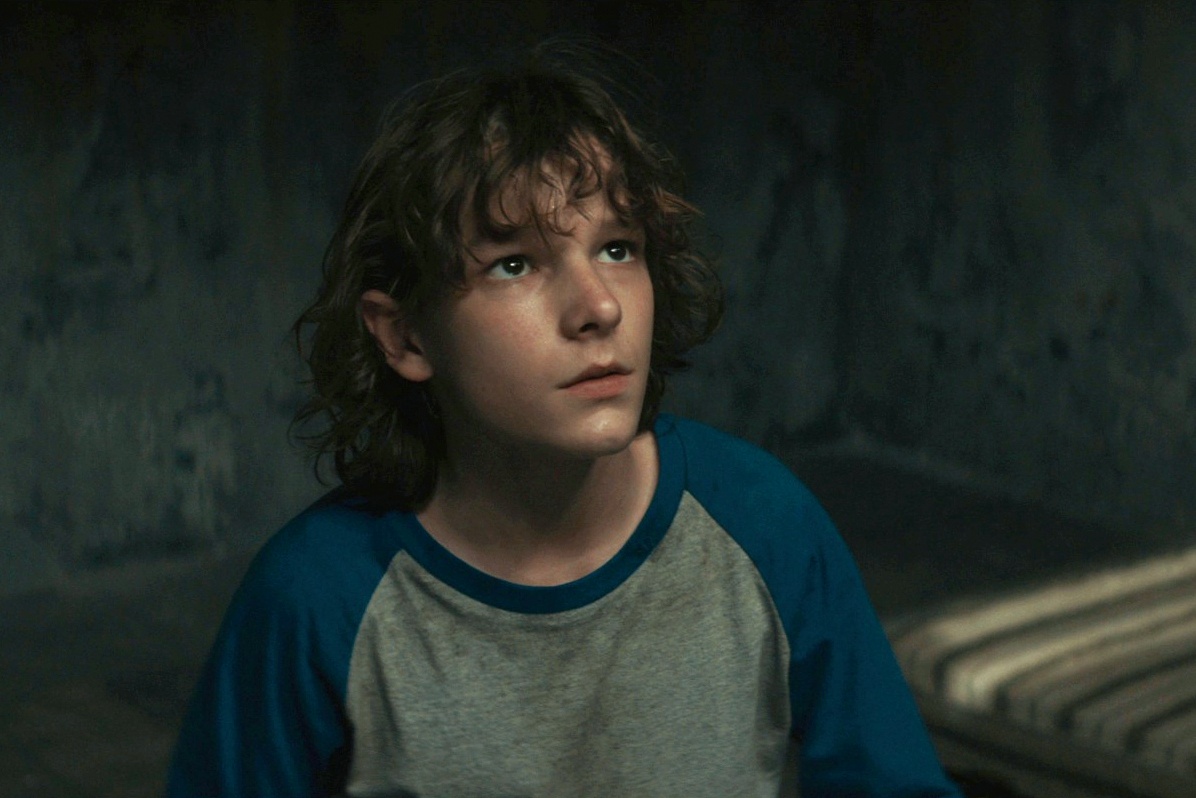
In the only scene which hints at the old relations between men and boys, Finney tentatively smiles at the sudden appearance of a man keen to engage him. Such foolishness is met with its instant tabloid punishment. Finney is grabbed, drugged, and tossed in the back of a van. After throwing the boy into the basement, the Grabber makes explicit his sexual interest in Finney. This component is quietly dropped in favour of more palatable threats of torture, mutilation and death, but Ethan Hawke’s superb portrayal of the Grabber never leaves one in doubt as to the monster’s creepily fruity intent.
The film involves a now-famous prop: the Grabber’s mask. It’s a well-designed piece, strongly invoking the archaic origins of theatre. Greek origins. The mask is stark and frightening. In a rude stone basement stripped of any modern appurtenances, we are thrust backwards into some dark nightmare preceding communal memory. With a man kidnapping an early-adolescent boy, it’s impossible not to think of the ancient Cretan ritual where a boy is “kidnapped” by an admiring, respected warrior, with the boy and his family’s full approval. The source of our film’s nightmare turns out, highly ironically, to be founded on loving mentorship.
Christianity’s shrill nature-fear turned daemon into demon. In The Black Phone, honourable Cretan warrior becomes evil pedo Grabber. Both the ancient Cretan ritual and Derrickson’s pedophobic perversion remove a boy from the female hearth to learn the manly arts. In Crete the boy-love ritual resulted in a boy being ushered into adult society with an enhanced and much celebrated rise in status. In Derrickson’s dystopic boy-hate version, Finney also learns to man up, to bravely fight for his right to join the greater community. And the final scene suggests a similar rise in status.

But is it convincing? Is surviving a ghastly attack from a grabber really a useful maturation ritual? We now have Black Phone 2 to answer this question. I think Derrickson a genuine artist, so he can’t help but put food for thought in his films, even food he’s not likely to have ordered in. Finney at seventeen is a loner and a stoner. A sad case, really. Apparently the monster has continued to own Finney’s psyche, even though soundly defeated. Conventional wisdom will hum at the way sexual abuse—even thwarted sexual abuse—causes irreparable harm. But that doesn’t fit the films we’re given. Finney should have been off to the races after defeating the Grabber. The message couldn’t have been clearer: exterminate the pedo monster and happiness will reign unimpeded. So why, in the film’s world, did his victory turn to ashes?
The key is aloneness. At thirteen, Finney found the resources to win a brave victory, but he did it alone. Which further cemented his pre-existing aloneness. He had the ghostly help of all the other boys the Grabber had killed, and they continued to call him, but the lost boys’ supernatural prattle was of little worth in the real world. The boy-ghosts were ambassadors from a growing community of disconnected and very alone boys, their only comfort the thought they might one day see a pedo burn. A dreadfully depressing community of which to see Finney elected conquering hero. His sinking into isolation, drugs and depression seems an artistically sound choice. It’s doubtful he even had a girlfriend in the interim between movies.
Both films together try hard to resolve an impossible paradox: How can boys rise to strong, proud, useful manhood while maintaining a pristine, impermeable aloneness? Black Phone 2 doesn’t even bother with much positivity after the second, and hopefully final, defeat of the demonic Grabber. The closing scene is actually bizarrely lame, with Finney’s dad making some weirdly irrelevant jokes about Finney maybe fancying one of the bit-part girl-characters. Possibly the upside we’re offered is this: if Dad represents the quality of good men on offer for the Finney Blakes of today, aloneness mightn’t be the worst option after all.

If you would like to see one of your own movie reviews published in the Archive, then please send your review to mpba@tutamail.com, along with the pseudonym by which you wish to be known on this site.
Comments powered by CComment